








- /
- Librarie online
- /
- Carti in engleza
- /
- Social Science
- /
- Media Studies
- /
- Politics of Rightful Killing: Civil Society, Gender, and Sexuality in Weblogistan - Sima Shakhsari
Politics of Rightful Killing: Civil Society, Gender, and Sexuality in Weblogistan
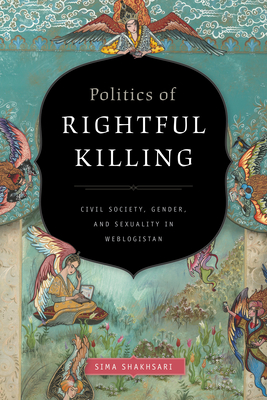
Politics of Rightful Killing: Civil Society, Gender, and Sexuality in Weblogistan
In the early 2000s, mainstream international news outlets celebrated the growth of Weblogistan--the online and real-life transnational network of Iranian bloggers--and depicted it as a liberatory site that gave voice to Iranians. As Sima Shakhsari argues in Politics of Rightful Killing, the common assumptions of Weblogistan as a site of civil society consensus and resistance to state oppression belie its deep internal conflicts. While Weblogistan was an effective venue for some Iranians to "practice democracy," it served as a valuable site for the United States to surveil bloggers and express anti-Iranian sentiment and policies. At the same time, bloggers used the network to self-police and enforce gender and sexuality norms based on Western liberal values in ways that unwittingly undermined Weblogistan's claims of democratic participation. In this way, Weblogistan became a site of cybergovernmentality, where biopolitical security regimes disciplined and regulated populations. Analyzing online and off-line ethnography, Shakhsari provides an account of digital citizenship that raises questions about the internet's relationship to political engagement, militarism, and democracy.
PRP: 269.24 Lei

Acesta este Prețul Recomandat de Producător. Prețul de vânzare al produsului este afișat mai jos.
215.39Lei
215.39Lei
269.24 LeiPrimești 215 puncte

Livrare in 2-4 saptamani
Descrierea produsului
In the early 2000s, mainstream international news outlets celebrated the growth of Weblogistan--the online and real-life transnational network of Iranian bloggers--and depicted it as a liberatory site that gave voice to Iranians. As Sima Shakhsari argues in Politics of Rightful Killing, the common assumptions of Weblogistan as a site of civil society consensus and resistance to state oppression belie its deep internal conflicts. While Weblogistan was an effective venue for some Iranians to "practice democracy," it served as a valuable site for the United States to surveil bloggers and express anti-Iranian sentiment and policies. At the same time, bloggers used the network to self-police and enforce gender and sexuality norms based on Western liberal values in ways that unwittingly undermined Weblogistan's claims of democratic participation. In this way, Weblogistan became a site of cybergovernmentality, where biopolitical security regimes disciplined and regulated populations. Analyzing online and off-line ethnography, Shakhsari provides an account of digital citizenship that raises questions about the internet's relationship to political engagement, militarism, and democracy.
Detaliile produsului




