





Álvar Núñez Cabeza de Vaca: American Trailblazer
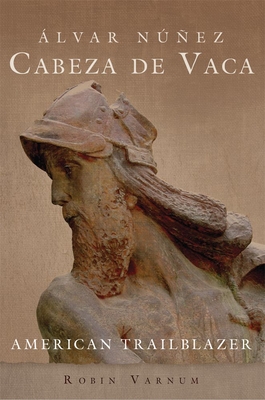
Álvar Núñez Cabeza de Vaca: American Trailblazer
In November 1528, almost a century before the Pilgrims landed at Plymouth Rock, the remnants of a Spanish expedition reached the Gulf Coast of Texas. By July 1536, eight years later, Álvar Núñez Cabeza de Vaca (c. 1490-1559) and three other survivors had walked 2,500 miles from Texas, across northern Mexico, to Sonora and ultimately to Mexico City. Cabeza de Vaca's account of this astonishing journey is now recognized as one of the great travel stories of all time and a touchstone of New World literature. But his career did not begin and end with his North American ordeal. Robin Varnum's biography, the first single-volume cradle-to-grave account of the explorer's life in eighty years, tells the rest of the story. During Cabeza de Vaca's peregrinations through the American Southwest, he lived among and interacted with various Indian groups. When he and his non-Indian companions finally reconnected with Spaniards in northern Mexico, he was horrified to learn that his compatriots were enslaving Indians there. His Relación (1542) advocated using kindness and fairness rather than force in dealing with the native people of the New World. Cabeza de Vaca went on to serve as governor of Spain's province of Río de La Plata in South America (roughly modern Paraguay). As a loyal subject of the king of Spain, he supported the colonialist enterprise and believed in Christianizing the Indians, but he always championed the rights of native peoples. In Río de La Plata he tried to keep his men from robbing the Indians, enslaving them, or exploiting them sexually--policies that caused grumbling among the troops. When Cabeza de Vaca's men mutinied, he was sent back to Spain in chains to stand trial before the Royal Council of the Indies. Drawing on the conquistador's own reports and on other sixteenth-century documents, both in English translation and the original Spanish, Varnum's lively narrative braids eyewitness testimony of events with historical interpretation benefiting from recent scholarship and archaeological investigation. As one of the few Spaniards of his era to explore the coasts and interiors of two continents, Cabeza de Vaca is recognized today above all for his more humane attitude toward and interactions with the Indian peoples of North America, Mexico, and South America.
PRP: 325.04 Lei

Acesta este Prețul Recomandat de Producător. Prețul de vânzare al produsului este afișat mai jos.
292.54Lei
292.54Lei
325.04 LeiPrimești 292 puncte
Indisponibil
Descrierea produsului
In November 1528, almost a century before the Pilgrims landed at Plymouth Rock, the remnants of a Spanish expedition reached the Gulf Coast of Texas. By July 1536, eight years later, Álvar Núñez Cabeza de Vaca (c. 1490-1559) and three other survivors had walked 2,500 miles from Texas, across northern Mexico, to Sonora and ultimately to Mexico City. Cabeza de Vaca's account of this astonishing journey is now recognized as one of the great travel stories of all time and a touchstone of New World literature. But his career did not begin and end with his North American ordeal. Robin Varnum's biography, the first single-volume cradle-to-grave account of the explorer's life in eighty years, tells the rest of the story. During Cabeza de Vaca's peregrinations through the American Southwest, he lived among and interacted with various Indian groups. When he and his non-Indian companions finally reconnected with Spaniards in northern Mexico, he was horrified to learn that his compatriots were enslaving Indians there. His Relación (1542) advocated using kindness and fairness rather than force in dealing with the native people of the New World. Cabeza de Vaca went on to serve as governor of Spain's province of Río de La Plata in South America (roughly modern Paraguay). As a loyal subject of the king of Spain, he supported the colonialist enterprise and believed in Christianizing the Indians, but he always championed the rights of native peoples. In Río de La Plata he tried to keep his men from robbing the Indians, enslaving them, or exploiting them sexually--policies that caused grumbling among the troops. When Cabeza de Vaca's men mutinied, he was sent back to Spain in chains to stand trial before the Royal Council of the Indies. Drawing on the conquistador's own reports and on other sixteenth-century documents, both in English translation and the original Spanish, Varnum's lively narrative braids eyewitness testimony of events with historical interpretation benefiting from recent scholarship and archaeological investigation. As one of the few Spaniards of his era to explore the coasts and interiors of two continents, Cabeza de Vaca is recognized today above all for his more humane attitude toward and interactions with the Indian peoples of North America, Mexico, and South America.
Detaliile produsului



