





How We Think: An essay by the American educational philosopher John Dewey written in 1910 in witch Dewey shares his views on the edu
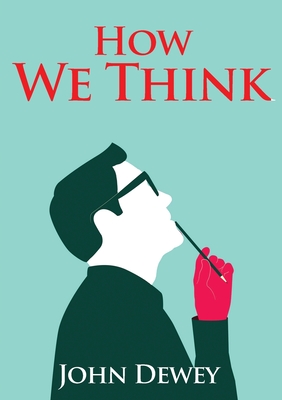
How We Think: An essay by the American educational philosopher John Dewey written in 1910 in witch Dewey shares his views on the edu
How We Think
John Dewey
No words are oftener on our lips than thinking and thought. So profuse and varied, indeed, is our use of these words that it is not easy to define just what we mean by them. The aim of this chapter is to find a single consistent meaning. Assistance may be had by considering some typical ways in which the terms are employed. In the first place thought is used broadly, not to say loosely. Everything that comes to mind, that "goes through our heads," is called a thought. To think of a thing is just to be conscious of it in any way whatsoever. Second, the term is restricted by excluding whatever is directly presented we think (or think of) only such things as we do not directly see, hear, smell, or taste. Then, third, the meaning is further limited to beliefs that rest upon some kind of evidence or testimony. Of this third type, two kinds-or, rather, two degrees-must be discriminated. In some cases, a belief is accepted with slight or almost no attempt to state the grounds that support it. In other cases, the ground or basis for a belief is deliberately sought and its adequacy to support the belief examined. This process is called reflective thought it alone is truly educative in value, and it forms, accordingly, the principal subject of this volume. We shall now briefly describe each of the four senses. I. In its loosest sense, thinking signifies everything that, as we say, is "in our heads" or that "goes through our minds." He who offers "a penny for your thoughts" does not expect to drive any great bargain. In calling the objects of his demand thoughts, he does not intend to ascribe to them dignity, consecutiveness, or truth. Any idle fancy, trivial recollection, or flitting impression will satisfy his demand. Daydreaming, building of castles in the air, that loose flux of casual and disconnected material that floats through our minds in relaxed moments are, in this random sense, thinking. More of our waking life than we should care to admit, even to ourselves, is likely to be whiled away in this inconsequential trifling with idle fancy and unsubstantial hope. In this sense, silly folk and dullards think. The story is told of a man in slight repute for intelligence, who, desiring to be chosen selectman in his New England town, addressed a knot of neighbors in this wise: "I hear you don't believe I know enough to hold office. I wish you to understand that I am thinking about something or other most of the time." Now reflect
PRP: 131.94 Lei

Acesta este Prețul Recomandat de Producător. Prețul de vânzare al produsului este afișat mai jos.
105.55Lei
105.55Lei
131.94 LeiPrimești 105 puncte
Livrare in 2-4 saptamani
Descrierea produsului
How We Think
John Dewey
No words are oftener on our lips than thinking and thought. So profuse and varied, indeed, is our use of these words that it is not easy to define just what we mean by them. The aim of this chapter is to find a single consistent meaning. Assistance may be had by considering some typical ways in which the terms are employed. In the first place thought is used broadly, not to say loosely. Everything that comes to mind, that "goes through our heads," is called a thought. To think of a thing is just to be conscious of it in any way whatsoever. Second, the term is restricted by excluding whatever is directly presented we think (or think of) only such things as we do not directly see, hear, smell, or taste. Then, third, the meaning is further limited to beliefs that rest upon some kind of evidence or testimony. Of this third type, two kinds-or, rather, two degrees-must be discriminated. In some cases, a belief is accepted with slight or almost no attempt to state the grounds that support it. In other cases, the ground or basis for a belief is deliberately sought and its adequacy to support the belief examined. This process is called reflective thought it alone is truly educative in value, and it forms, accordingly, the principal subject of this volume. We shall now briefly describe each of the four senses. I. In its loosest sense, thinking signifies everything that, as we say, is "in our heads" or that "goes through our minds." He who offers "a penny for your thoughts" does not expect to drive any great bargain. In calling the objects of his demand thoughts, he does not intend to ascribe to them dignity, consecutiveness, or truth. Any idle fancy, trivial recollection, or flitting impression will satisfy his demand. Daydreaming, building of castles in the air, that loose flux of casual and disconnected material that floats through our minds in relaxed moments are, in this random sense, thinking. More of our waking life than we should care to admit, even to ourselves, is likely to be whiled away in this inconsequential trifling with idle fancy and unsubstantial hope. In this sense, silly folk and dullards think. The story is told of a man in slight repute for intelligence, who, desiring to be chosen selectman in his New England town, addressed a knot of neighbors in this wise: "I hear you don't believe I know enough to hold office. I wish you to understand that I am thinking about something or other most of the time." Now reflect
Detaliile produsului



