







The Persian Gulf: Muscat: City, Society and Trade
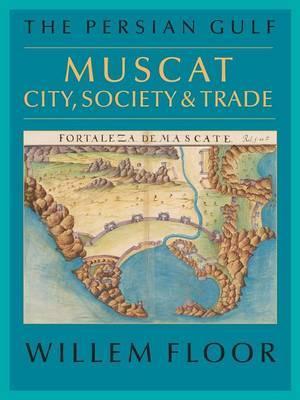
The Persian Gulf: Muscat: City, Society and Trade
Muscat, the capital city of present day Oman, has had a long, and colorful history as a typical Indian Ocean port at the mouth of the Persian Gulf. International trade brought about a rich mix of various ethnic and religious groups including, besides Arabs, Africans, Baluchis, Mekranis, Sindis, Gujaratis, Persians and many others. At the turn of the twentieth century fourteen languages could be heard spoken in the city. As a result the people of Muscat tended to be more outward-looking, and tolerant of various cultures, than those of the hinterland. Nonetheless, the city remained a secondary port for most of its history. By 1750, due to anarchy in Iran and problems in Basra, Muscat became the most important Persian Gulf port, and very wealthy. This position was further enhanced by a strong Omani fleet built by the early Al Bu Sa id rulers. By 1820, however, the Persian Gulf ports reasserted themselves and the Pax Britannica put an end to the use of Omani sea power, and Muscat started to decline. Sultan Sa id II focused his energies on the development of Zanzibar on the African coast, but by 1868 revenues from Zanzibar and Bandar Abbas had all been lost. Furthermore, conflict between Muscat and the interior and the arrival of steam ships, which supplanted the smaller, local vessels, further sapped the city's strength, and its prosperity. By 1900, Muscat had become a sleepy steamer port with a considerably reduced population. In Muscat: City, Society, & Trade, Willem Floor marshals a wealth of historical documents and challenges some of the heretofore accepted wisdom about the city. Those interested in the socio-economic and medical history of the Indian Ocean and the Persian Gulf will find here a rich banquet of information.
PRP: 413.33 Lei

Acesta este Prețul Recomandat de Producător. Prețul de vânzare al produsului este afișat mai jos.
372.00Lei
372.00Lei
413.33 LeiPrimești 371 puncte
Indisponibil
Descrierea produsului
Muscat, the capital city of present day Oman, has had a long, and colorful history as a typical Indian Ocean port at the mouth of the Persian Gulf. International trade brought about a rich mix of various ethnic and religious groups including, besides Arabs, Africans, Baluchis, Mekranis, Sindis, Gujaratis, Persians and many others. At the turn of the twentieth century fourteen languages could be heard spoken in the city. As a result the people of Muscat tended to be more outward-looking, and tolerant of various cultures, than those of the hinterland. Nonetheless, the city remained a secondary port for most of its history. By 1750, due to anarchy in Iran and problems in Basra, Muscat became the most important Persian Gulf port, and very wealthy. This position was further enhanced by a strong Omani fleet built by the early Al Bu Sa id rulers. By 1820, however, the Persian Gulf ports reasserted themselves and the Pax Britannica put an end to the use of Omani sea power, and Muscat started to decline. Sultan Sa id II focused his energies on the development of Zanzibar on the African coast, but by 1868 revenues from Zanzibar and Bandar Abbas had all been lost. Furthermore, conflict between Muscat and the interior and the arrival of steam ships, which supplanted the smaller, local vessels, further sapped the city's strength, and its prosperity. By 1900, Muscat had become a sleepy steamer port with a considerably reduced population. In Muscat: City, Society, & Trade, Willem Floor marshals a wealth of historical documents and challenges some of the heretofore accepted wisdom about the city. Those interested in the socio-economic and medical history of the Indian Ocean and the Persian Gulf will find here a rich banquet of information.
Detaliile produsului



