





Paradox in Christian Theology
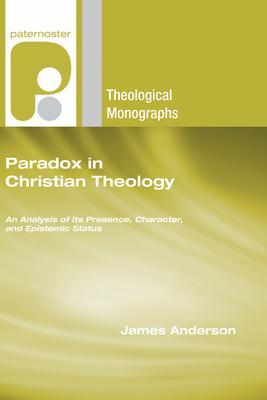
Paradox in Christian Theology
Does traditional Christianity involve paradoxical doctrines, that is, doctrines that present the appearance (at least) of logical inconsistency? If so, what is the nature of these paradoxes and why do they arise? What is the relationship between ""paradox"" and ""mystery"" in theological theorizing? And what are the implications for the rationality, or otherwise, of orthodox Christian beliefs? In Paradox in Christian Theology, James Anderson argues that the doctrines of the Trinity and the incarnation, as derived from Scripture and formulated in the ecumenical creeds, are indeed paradoxical. But this conclusion, he contends, need not imply that Christians who believe these doctrines are irrational in doing so. In support of this claim, Anderson develops and defends a model of understanding paradoxical Christian doctrines according to which the presence of such doctrines is unsurprising and adherence to paradoxical doctrines cannot be considered as a serious intellectual obstacle to belief in Christianity. The case presented in this book has significant implications for the practice of systematic theology, biblical exegesis, and Christian apologetics. ""In defending the ineluctable presence of paradox in theology, James Anderson argues that attempts to avoid this will result in formulations that are inadequate to the articulation of core Christian doctrines. What is particularly striking about this study is its accomplished engagement of important research work in analytic philosophy of religion."" --David Fergusson, Professor of Divinity, University of Edinburgh ""This book is a very well-informed, carefully argued, and cogent discussion of theological paradox, drawing on studies in the history of doctrine and philosophy. The book is clearly written and faithful to Christian orthodoxy. I hope that it is widely read and taken to heart."" --John M. Frame, Professor of Systematic Theology and Philosophy, Reformed Theological Seminary, Orlando, FL ""A convincing amount of paradox explains its necessity in Christianity. Then recent theories of belief-entitlement are constructively advocated, showing how theological paradoxes can be rationally believable. A clear, strong case."" --Joseph Houston, Emeritus Professor of Philosophical Theology, University of Glasgow ""Christian apologetics has historically sought to give a reasoned account of paradox, for Christian faith itself entails living in the midst of doctrinal paradoxes."" --Michael Purcell, Senior Lect
PRP: 297.60 Lei

Acesta este Prețul Recomandat de Producător. Prețul de vânzare al produsului este afișat mai jos.
238.08Lei
238.08Lei
297.60 LeiPrimești 238 puncte
Indisponibil
Descrierea produsului
Does traditional Christianity involve paradoxical doctrines, that is, doctrines that present the appearance (at least) of logical inconsistency? If so, what is the nature of these paradoxes and why do they arise? What is the relationship between ""paradox"" and ""mystery"" in theological theorizing? And what are the implications for the rationality, or otherwise, of orthodox Christian beliefs? In Paradox in Christian Theology, James Anderson argues that the doctrines of the Trinity and the incarnation, as derived from Scripture and formulated in the ecumenical creeds, are indeed paradoxical. But this conclusion, he contends, need not imply that Christians who believe these doctrines are irrational in doing so. In support of this claim, Anderson develops and defends a model of understanding paradoxical Christian doctrines according to which the presence of such doctrines is unsurprising and adherence to paradoxical doctrines cannot be considered as a serious intellectual obstacle to belief in Christianity. The case presented in this book has significant implications for the practice of systematic theology, biblical exegesis, and Christian apologetics. ""In defending the ineluctable presence of paradox in theology, James Anderson argues that attempts to avoid this will result in formulations that are inadequate to the articulation of core Christian doctrines. What is particularly striking about this study is its accomplished engagement of important research work in analytic philosophy of religion."" --David Fergusson, Professor of Divinity, University of Edinburgh ""This book is a very well-informed, carefully argued, and cogent discussion of theological paradox, drawing on studies in the history of doctrine and philosophy. The book is clearly written and faithful to Christian orthodoxy. I hope that it is widely read and taken to heart."" --John M. Frame, Professor of Systematic Theology and Philosophy, Reformed Theological Seminary, Orlando, FL ""A convincing amount of paradox explains its necessity in Christianity. Then recent theories of belief-entitlement are constructively advocated, showing how theological paradoxes can be rationally believable. A clear, strong case."" --Joseph Houston, Emeritus Professor of Philosophical Theology, University of Glasgow ""Christian apologetics has historically sought to give a reasoned account of paradox, for Christian faith itself entails living in the midst of doctrinal paradoxes."" --Michael Purcell, Senior Lect
Detaliile produsului



