





Mussolini's Intellectuals: Fascist Social and Political Thought
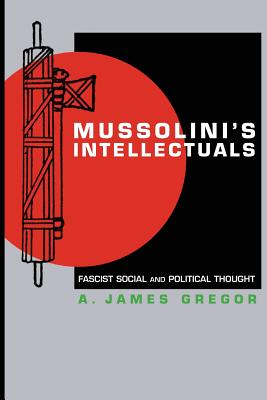
Mussolini's Intellectuals: Fascist Social and Political Thought
Fascism has traditionally been characterized as irrational and anti-intellectual, finding expression exclusively as a cluster of myths, emotions, instincts, and hatreds. This intellectual history of Italian Fascism--the product of four decades of work by one of the leading experts on the subject in the English-speaking world--provides an alternative account. A. James Gregor argues that Italian Fascism may have been a flawed system of belief, but it was neither more nor less irrational than other revolutionary ideologies of the twentieth century. Gregor makes this case by presenting for the first time a chronological account of the major intellectual figures of Italian Fascism, tracing how the movement's ideas evolved in response to social and political developments inside and outside of Italy.
Gregor follows Fascist thought from its beginnings in socialist ideology about the time of the First World War--when Mussolini himself was a leader of revolutionary socialism--through its evolution into a separate body of thought and to its destruction in the Second World War. Along the way, Gregor offers extended accounts of some of Italian Fascism's major thinkers, including Sergio Panunzio and Ugo Spirito, Alfredo Rocco (Mussolini's Minister of Justice), and Julius Evola, a bizarre and sinister figure who has inspired much contemporary "neofascism." Gregor's account reveals the flaws and tensions that dogged Fascist thought from the beginning, but shows that if we want to come to grips with one of the most important political movements of the twentieth century, we nevertheless need to understand that Fascism had serious intellectual as well as visceral roots.PRP: 326.40 Lei

Acesta este Prețul Recomandat de Producător. Prețul de vânzare al produsului este afișat mai jos.
293.76Lei
293.76Lei
326.40 LeiPrimești 293 puncte
Indisponibil
Descrierea produsului
Fascism has traditionally been characterized as irrational and anti-intellectual, finding expression exclusively as a cluster of myths, emotions, instincts, and hatreds. This intellectual history of Italian Fascism--the product of four decades of work by one of the leading experts on the subject in the English-speaking world--provides an alternative account. A. James Gregor argues that Italian Fascism may have been a flawed system of belief, but it was neither more nor less irrational than other revolutionary ideologies of the twentieth century. Gregor makes this case by presenting for the first time a chronological account of the major intellectual figures of Italian Fascism, tracing how the movement's ideas evolved in response to social and political developments inside and outside of Italy.
Gregor follows Fascist thought from its beginnings in socialist ideology about the time of the First World War--when Mussolini himself was a leader of revolutionary socialism--through its evolution into a separate body of thought and to its destruction in the Second World War. Along the way, Gregor offers extended accounts of some of Italian Fascism's major thinkers, including Sergio Panunzio and Ugo Spirito, Alfredo Rocco (Mussolini's Minister of Justice), and Julius Evola, a bizarre and sinister figure who has inspired much contemporary "neofascism." Gregor's account reveals the flaws and tensions that dogged Fascist thought from the beginning, but shows that if we want to come to grips with one of the most important political movements of the twentieth century, we nevertheless need to understand that Fascism had serious intellectual as well as visceral roots.Detaliile produsului



