





The Gospel of Church: How Mainline Protestants Vilified Christian Socialism and Fractured the Labor Movement
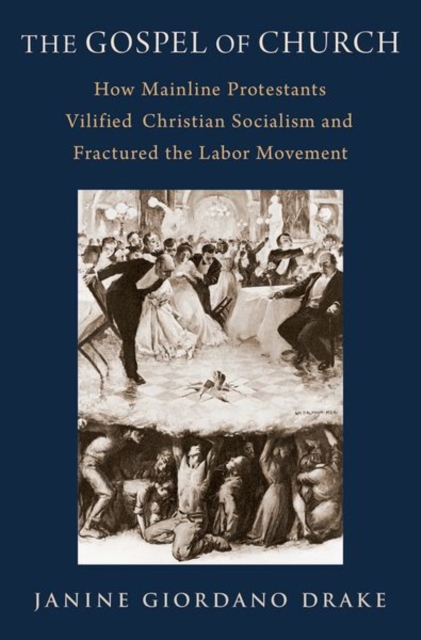
The Gospel of Church: How Mainline Protestants Vilified Christian Socialism and Fractured the Labor Movement
In 1908, Unitarian pastor Bertrand Thompson observed the momentous growth of the labor movement with alarm. "Socialism," he wrote, "has become a distinct substitute" for the church. He was not wrong. In the generation after the Civil War, few of the migrants who moved North and West to take jobs in factories and mines had any association with traditional Protestant denominations. In the place of church, workers built a labor movement around a shared commitment to a Christian commonwealth. They demanded an expanded local, state and federal infrastructure which supported collective bargaining for better pay, shorter work-days, and an array of municipal services. Protestant clergy worried that if the labor movement kept growing in momentum and cultural influence, socialist policies would displace the need for churches and their many ministries to the poor. Even worse, they feared that the labor movement would render the largest Protestant denominations a relic of the nineteenth century. In The Gospel of Church, Janine Giordano Drake carefully traces the relationships which Protestant ministers built with labor unions and working class communities. She finds that Protestant ministers worked hard to assert their cultural authority over Catholic, Jewish, and religiously-unaffiliated working-class communities. Moreover, they rarely supported the most important demands of labor, including freedom of speech and the right to collective bargaining. Despite their heroic narratives of Christian social reform, Protestant reformers' efforts to assert their authority over industrial affairs directly undermined workers' efforts to bring about social democracy in the United States.
PRP: 353.30 Lei

Acesta este Prețul Recomandat de Producător. Prețul de vânzare al produsului este afișat mai jos.
317.97Lei
317.97Lei
353.30 LeiPrimești 317 puncte
Livrare in 2-4 saptamani
Descrierea produsului
In 1908, Unitarian pastor Bertrand Thompson observed the momentous growth of the labor movement with alarm. "Socialism," he wrote, "has become a distinct substitute" for the church. He was not wrong. In the generation after the Civil War, few of the migrants who moved North and West to take jobs in factories and mines had any association with traditional Protestant denominations. In the place of church, workers built a labor movement around a shared commitment to a Christian commonwealth. They demanded an expanded local, state and federal infrastructure which supported collective bargaining for better pay, shorter work-days, and an array of municipal services. Protestant clergy worried that if the labor movement kept growing in momentum and cultural influence, socialist policies would displace the need for churches and their many ministries to the poor. Even worse, they feared that the labor movement would render the largest Protestant denominations a relic of the nineteenth century. In The Gospel of Church, Janine Giordano Drake carefully traces the relationships which Protestant ministers built with labor unions and working class communities. She finds that Protestant ministers worked hard to assert their cultural authority over Catholic, Jewish, and religiously-unaffiliated working-class communities. Moreover, they rarely supported the most important demands of labor, including freedom of speech and the right to collective bargaining. Despite their heroic narratives of Christian social reform, Protestant reformers' efforts to assert their authority over industrial affairs directly undermined workers' efforts to bring about social democracy in the United States.
Detaliile produsului



