





Under Blue Cup
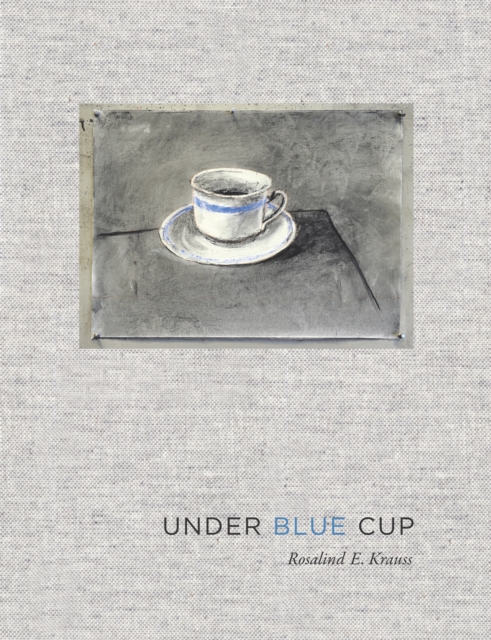
Under Blue Cup
A personal journey leads a celebrated critic to discover "knights of the medium," contemporary artists who battle the aesthetic meaninglessness of the post-medium condition. In Under Blue Cup, Rosalind Krauss explores the relation of aesthetic mediums to memory--her own memory having been severely tested by a ruptured aneurysm that temporarily washed away much of her short-term memory. (The title, Under Blue Cup, comes from the legend on a flash card she used as a mnemonic tool during cognitive therapy.) Krauss emphasizes the medium as a form of remembering; contemporary artists in what she terms the "post-medium" condition reject that scaffolding. Krauss explains the historical emergence of the post-medium condition and describes alternatives to its aesthetic meaninglessness, examining works by "knights of the medium"--contemporary artists who extend the life of the specific medium. These artists--including Ed Ruscha, William Kentridge, Sophie Calle, Harun Farocki, Christian Marclay, and James Coleman--reinstate the recursive rules of a modernist medium by inventing what Krauss terms new technical supports, battling the aesthetic meaninglessness of the post-medium condition. The "technical support" is an underlying ground for aesthetic practice that supports the work of art as canvas supported oil paint. The technical support for Ruscha's fascination with gas stations and parking lots is the automobile; for Kentridge, the animated film; for Calle, photojournalism; for Coleman, a modification of PowerPoint; for Marclay, synchronous sound. Their work, Krauss argues, recuperates more than a century of modernist practice. The work of the post-medium condition--conceptual art, installation, and relational aesthetics--advances the idea that the "white cube" of the museum or gallery wall is over. Krauss argues that the technical support extends the life of the white cube, restoring autonomy and specificity to the work of art.
PRP: 186.00 Lei

Acesta este Prețul Recomandat de Producător. Prețul de vânzare al produsului este afișat mai jos.
148.80Lei
148.80Lei
186.00 LeiPrimești 148 puncte
Indisponibil
Descrierea produsului
A personal journey leads a celebrated critic to discover "knights of the medium," contemporary artists who battle the aesthetic meaninglessness of the post-medium condition. In Under Blue Cup, Rosalind Krauss explores the relation of aesthetic mediums to memory--her own memory having been severely tested by a ruptured aneurysm that temporarily washed away much of her short-term memory. (The title, Under Blue Cup, comes from the legend on a flash card she used as a mnemonic tool during cognitive therapy.) Krauss emphasizes the medium as a form of remembering; contemporary artists in what she terms the "post-medium" condition reject that scaffolding. Krauss explains the historical emergence of the post-medium condition and describes alternatives to its aesthetic meaninglessness, examining works by "knights of the medium"--contemporary artists who extend the life of the specific medium. These artists--including Ed Ruscha, William Kentridge, Sophie Calle, Harun Farocki, Christian Marclay, and James Coleman--reinstate the recursive rules of a modernist medium by inventing what Krauss terms new technical supports, battling the aesthetic meaninglessness of the post-medium condition. The "technical support" is an underlying ground for aesthetic practice that supports the work of art as canvas supported oil paint. The technical support for Ruscha's fascination with gas stations and parking lots is the automobile; for Kentridge, the animated film; for Calle, photojournalism; for Coleman, a modification of PowerPoint; for Marclay, synchronous sound. Their work, Krauss argues, recuperates more than a century of modernist practice. The work of the post-medium condition--conceptual art, installation, and relational aesthetics--advances the idea that the "white cube" of the museum or gallery wall is over. Krauss argues that the technical support extends the life of the white cube, restoring autonomy and specificity to the work of art.
Detaliile produsului



