








Aparoksanubhuti: Self-Realization
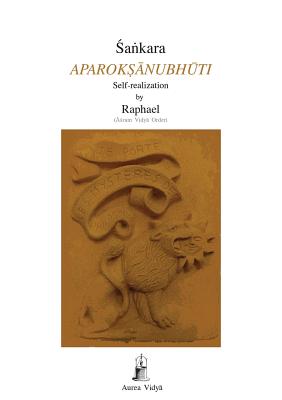
Aparoksanubhuti belongs to the series of works by Sankara known as prakaraṇagrantha, i.e., "specific treaties" in verse and prose concerning basic points of Vedanta teaching that examine the "great sentences" (mahavakyas) contained in the Upanisads. In this series of treaties by Sankara, other works fundamental for the understanding of the Advaitavada or "path of Non-duality" include Vivekacudamani, Ātmabodha, Upadesasahasri and Laghuvakyavrtti.
Aparoksanubhuti means "direct perception or knowledge of the Self" and by extension the action or practice actualized to realize oneself as ātman-Self, and therefore "Self-realization."
To achieve this Comprehension-realization, Aparoksanubhuti presents fifteen steps or means (some of which are also found in the Yogadarsana or Rajayoga of Patañjali) focusing especially on vicara-discrimination or discernment. Vicara is a method of philosophical inquiry, a process of pure searching for the universals, but, unlike what one may think, it is an "experimental" method. It is not a mental process for constructing a theory of knowledge or of reality; rather, it leads to the direct experience of Reality.
Because Aparoksanubhuti is based on jnana Realization (Knowledge), a text that appears as Sankara's Preface to the Svetasvatara Upanisad has been included in the Appendix because it promotes the right consciential position for one who wants to walk the "Path of Knowledge."
The translation and commentary by Raphael adhere to the Advaita Tradition and offer a conceptual methodology appropriate to the Western mind; moreover, they adequately and properly stimulate the reader's consciousness to living a real metaphysical life.
As for Sankara (788-820), it can be said that his philosophical and spiritual greatness is recognized by all scholars of Eastern and Western philosophy. According to some, he is "the architect of one of the highest realizations of the human Spirit."
The book includes a transliterated Sanskrit text and a Glossary.
PRP: 136.34 Lei

Acesta este Prețul Recomandat de Producător. Prețul de vânzare al produsului este afișat mai jos.
109.07Lei
109.07Lei
136.34 LeiPrimești 109 puncte

Indisponibil
Descrierea produsului
Aparoksanubhuti belongs to the series of works by Sankara known as prakaraṇagrantha, i.e., "specific treaties" in verse and prose concerning basic points of Vedanta teaching that examine the "great sentences" (mahavakyas) contained in the Upanisads. In this series of treaties by Sankara, other works fundamental for the understanding of the Advaitavada or "path of Non-duality" include Vivekacudamani, Ātmabodha, Upadesasahasri and Laghuvakyavrtti.
Aparoksanubhuti means "direct perception or knowledge of the Self" and by extension the action or practice actualized to realize oneself as ātman-Self, and therefore "Self-realization."
To achieve this Comprehension-realization, Aparoksanubhuti presents fifteen steps or means (some of which are also found in the Yogadarsana or Rajayoga of Patañjali) focusing especially on vicara-discrimination or discernment. Vicara is a method of philosophical inquiry, a process of pure searching for the universals, but, unlike what one may think, it is an "experimental" method. It is not a mental process for constructing a theory of knowledge or of reality; rather, it leads to the direct experience of Reality.
Because Aparoksanubhuti is based on jnana Realization (Knowledge), a text that appears as Sankara's Preface to the Svetasvatara Upanisad has been included in the Appendix because it promotes the right consciential position for one who wants to walk the "Path of Knowledge."
The translation and commentary by Raphael adhere to the Advaita Tradition and offer a conceptual methodology appropriate to the Western mind; moreover, they adequately and properly stimulate the reader's consciousness to living a real metaphysical life.
As for Sankara (788-820), it can be said that his philosophical and spiritual greatness is recognized by all scholars of Eastern and Western philosophy. According to some, he is "the architect of one of the highest realizations of the human Spirit."
The book includes a transliterated Sanskrit text and a Glossary.
Detaliile produsului