







Architecture and Leadership: The Nature and Role of Space and Place in Organizational Culture
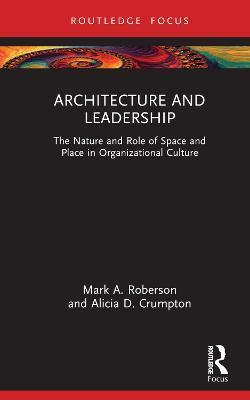
Architecture and Leadership: The Nature and Role of Space and Place in Organizational Culture
From cathedrals to cubicles, people go to great lengths and expense to design their living and working environments. They want their spaces to be places where they enjoy being, reflecting who they are and what they care about. The resultant environments in turn become loud, albeit unvocal, leaders for people occupying those corresponding spaces. The design and use of work and living spaces typifies and thematizes expectations for the group. Essentially, the architecture of rooms, buildings and cities creates cultures by conveying explicit and implicit messages. This is evident when people approach and walk into St. Basil's Cathedral in Moscow, the Forbidden City in Beijing, the Sydney Opera House in Sydney, Australia, the Jewish Museum in Berlin, or the Rothko Chapel in Houston, to name some examples.
While leaders oftentimes lack the resources to have their spaces mirror the greatest architectural achievements of the world, they are in a position to use the art and science of architecture, at whatever scale is available, to their advantage. The creative and intentional use of space and place advances and promotes cherished values and enhances organizational effectiveness. This book explores the essence of good architecture and establishes relevant connections for leaders and managers to strategically design and use the organizational workplace and space to support their mission and purpose, and create aesthetically meaningful work environments. It equips leaders to be culturally astute on what defines good architecture and to incorporate principles of beauty in their leadership practices accordingly and will be of interest to researchers, academics, professionals, and students in the fields of leadership, organizational studies, and architecture theory and practice.
PRP: 435.11 Lei

Acesta este Prețul Recomandat de Producător. Prețul de vânzare al produsului este afișat mai jos.
391.60Lei
391.60Lei
435.11 LeiPrimești 391 puncte
Indisponibil
Descrierea produsului
From cathedrals to cubicles, people go to great lengths and expense to design their living and working environments. They want their spaces to be places where they enjoy being, reflecting who they are and what they care about. The resultant environments in turn become loud, albeit unvocal, leaders for people occupying those corresponding spaces. The design and use of work and living spaces typifies and thematizes expectations for the group. Essentially, the architecture of rooms, buildings and cities creates cultures by conveying explicit and implicit messages. This is evident when people approach and walk into St. Basil's Cathedral in Moscow, the Forbidden City in Beijing, the Sydney Opera House in Sydney, Australia, the Jewish Museum in Berlin, or the Rothko Chapel in Houston, to name some examples.
While leaders oftentimes lack the resources to have their spaces mirror the greatest architectural achievements of the world, they are in a position to use the art and science of architecture, at whatever scale is available, to their advantage. The creative and intentional use of space and place advances and promotes cherished values and enhances organizational effectiveness. This book explores the essence of good architecture and establishes relevant connections for leaders and managers to strategically design and use the organizational workplace and space to support their mission and purpose, and create aesthetically meaningful work environments. It equips leaders to be culturally astute on what defines good architecture and to incorporate principles of beauty in their leadership practices accordingly and will be of interest to researchers, academics, professionals, and students in the fields of leadership, organizational studies, and architecture theory and practice.
Detaliile produsului



