








Becoming Muslim in Imperial Russia: Conversion, Apostasy, and Literacy
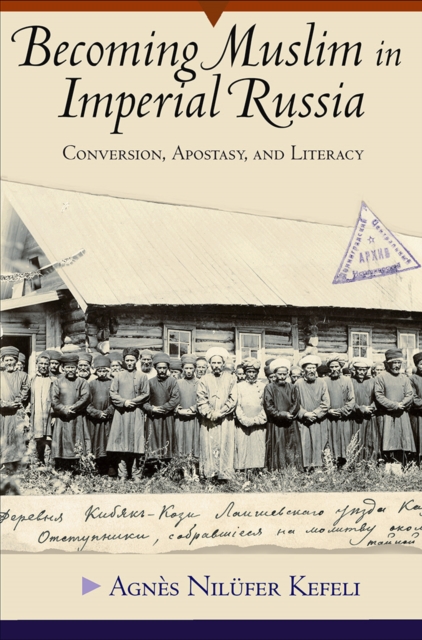
Becoming Muslim in Imperial Russia: Conversion, Apostasy, and Literacy
In the nineteenth century, the Russian Empire's Middle Volga region (today's Tatarstan) was the site of a prolonged struggle between Russian Orthodoxy and Islam, each of which sought to solidify its influence among the frontier's mix of Turkic, Finno-Ugric, and Slavic peoples. The immediate catalyst of the events that Agnes Nilufer Kefeli chronicles in Becoming Muslim in Imperial Russia was the collective turn to Islam by many of the region's Krashens, the Muslim and animist Tatars who converted to Russian Orthodoxy between the sixteenth and eighteenth centuries.The traditional view holds that the apostates had really been Muslim all along or that their conversions had been forced by the state or undertaken voluntarily as a matter of convenience. In Kefeli's view, this argument vastly oversimplifies the complexity of a region where many participated in the religious cultures of both Islam and Orthodox Christianity and where a vibrant Krashen community has survived to the present. By analyzing Russian, Eurasian, and Central Asian ethnographic, administrative, literary, and missionary sources, Kefeli shows how traditional education, with Sufi mystical components, helped to Islamize Finno-Ugric and Turkic peoples in the Kama-Volga countryside and set the stage for the development of modernist Islam in Russia.Of particular interest is Kefeli's emphasis on the role that Tatar women (both Krashen and Muslim) played as holders and transmitters of Sufi knowledge. Today, she notes, intellectuals and mullahs in Tatarstan seek to revive both Sufi and modernist traditions to counteract new expressions of Islam and promote a purely Tatar Islam aware of its specificity in a post-Christian and secular environment.
PRP: 365.49 Lei

Acesta este Prețul Recomandat de Producător. Prețul de vânzare al produsului este afișat mai jos.
328.94Lei
328.94Lei
365.49 LeiPrimești 328 puncte

Indisponibil
Descrierea produsului
In the nineteenth century, the Russian Empire's Middle Volga region (today's Tatarstan) was the site of a prolonged struggle between Russian Orthodoxy and Islam, each of which sought to solidify its influence among the frontier's mix of Turkic, Finno-Ugric, and Slavic peoples. The immediate catalyst of the events that Agnes Nilufer Kefeli chronicles in Becoming Muslim in Imperial Russia was the collective turn to Islam by many of the region's Krashens, the Muslim and animist Tatars who converted to Russian Orthodoxy between the sixteenth and eighteenth centuries.The traditional view holds that the apostates had really been Muslim all along or that their conversions had been forced by the state or undertaken voluntarily as a matter of convenience. In Kefeli's view, this argument vastly oversimplifies the complexity of a region where many participated in the religious cultures of both Islam and Orthodox Christianity and where a vibrant Krashen community has survived to the present. By analyzing Russian, Eurasian, and Central Asian ethnographic, administrative, literary, and missionary sources, Kefeli shows how traditional education, with Sufi mystical components, helped to Islamize Finno-Ugric and Turkic peoples in the Kama-Volga countryside and set the stage for the development of modernist Islam in Russia.Of particular interest is Kefeli's emphasis on the role that Tatar women (both Krashen and Muslim) played as holders and transmitters of Sufi knowledge. Today, she notes, intellectuals and mullahs in Tatarstan seek to revive both Sufi and modernist traditions to counteract new expressions of Islam and promote a purely Tatar Islam aware of its specificity in a post-Christian and secular environment.
Detaliile produsului