





Behind the Screen: Tap Dance, Race, and Invisibility During Hollywood's Golden Age
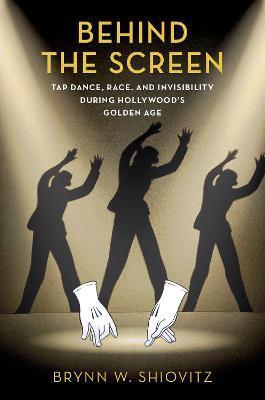
Behind the Screen: Tap Dance, Race, and Invisibility During Hollywood's Golden Age
How and why was outdated racial content - and specifically blackface minstrelsy - not only permitted, but in fact allowed to thrive during the 1930s and 1940s despite the rigid motion picture censorship laws which were enforced during this time? Introducing a new theory of covert minstrelsy, this book illuminates Hollywood's practice of capitalizing on the Africanist aesthetic at the expense of Black lived experience. Through close examination of the musicals made during this period, this book shows how Hollywood utilized a series of covert "guises" or subterfuges-complicated and further masked by a film's narrative framing and novel technology to distract both censors and audiences from seeing the ways in which they were being fed a nineteenth-century White narrative of Blackness. Drawing on the annals of Hollywood's most popular and its extremely rare films, Behind the Screen uncovers a half century of blackface application by delicately removing the individual layers of disguise through close analyses of films which paint tap dance, swing, and other predominantly Africanist forms in a negative light. This book goes beneath the image of recognizable White performers including Al Jolson, Eddie Cantor, Fred Astaire, and Eleanor Powell, exploring the high cost of their onscreen representational politics. The book also recuperates the stories of several of the Black artists whose labor was abused during the choreographic and filming process. Some of the many newly documented stories include those of The Three Chocolateers, The Three Eddies, The Three Gobs, The Peters Sisters, Jeni Le Gon, and Cora La Redd. In stripping away the various disguises involved during Hollywood's Golden Age, Behind the Screen recovers the visibility of Black artists whose names Hollywood
omitted from the credits and whose identities America has written out of the national narrative.
PRP: 422.02 Lei

Acesta este Prețul Recomandat de Producător. Prețul de vânzare al produsului este afișat mai jos.
379.82Lei
379.82Lei
422.02 LeiPrimești 379 puncte
Livrare in 2-4 saptamani
Descrierea produsului
How and why was outdated racial content - and specifically blackface minstrelsy - not only permitted, but in fact allowed to thrive during the 1930s and 1940s despite the rigid motion picture censorship laws which were enforced during this time? Introducing a new theory of covert minstrelsy, this book illuminates Hollywood's practice of capitalizing on the Africanist aesthetic at the expense of Black lived experience. Through close examination of the musicals made during this period, this book shows how Hollywood utilized a series of covert "guises" or subterfuges-complicated and further masked by a film's narrative framing and novel technology to distract both censors and audiences from seeing the ways in which they were being fed a nineteenth-century White narrative of Blackness. Drawing on the annals of Hollywood's most popular and its extremely rare films, Behind the Screen uncovers a half century of blackface application by delicately removing the individual layers of disguise through close analyses of films which paint tap dance, swing, and other predominantly Africanist forms in a negative light. This book goes beneath the image of recognizable White performers including Al Jolson, Eddie Cantor, Fred Astaire, and Eleanor Powell, exploring the high cost of their onscreen representational politics. The book also recuperates the stories of several of the Black artists whose labor was abused during the choreographic and filming process. Some of the many newly documented stories include those of The Three Chocolateers, The Three Eddies, The Three Gobs, The Peters Sisters, Jeni Le Gon, and Cora La Redd. In stripping away the various disguises involved during Hollywood's Golden Age, Behind the Screen recovers the visibility of Black artists whose names Hollywood
omitted from the credits and whose identities America has written out of the national narrative.
Detaliile produsului



