





Bending Adversity: Japan and the Art of Survival
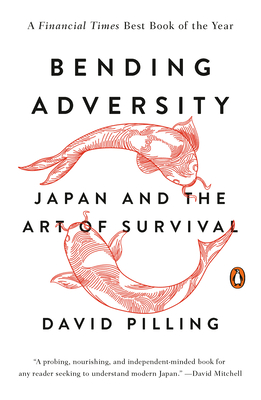
Bending Adversity: Japan and the Art of Survival
"[A]n excellent book..." --The Economist Financial Times Asia editor David Pilling presents a fresh vision of Japan, drawing on his own deep experience, as well as observations from a cross section of Japanese citizenry, including novelist Haruki Murakami, former prime minister Junichiro Koizumi, industrialists and bankers, activists and artists, teenagers and octogenarians. Through their voices, Pilling's Bending Adversity captures the dynamism and diversity of contemporary Japan. Pilling's exploration begins with the 2011 triple disaster of earthquake, tsunami, and nuclear meltdown. His deep reporting reveals both Japan's vulnerabilities and its resilience and pushes him to understand the country's past through cycles of crisis and reconstruction. Japan's survivalist mentality has carried it through tremendous hardship, but is also the source of great destruction: It was the nineteenth-century struggle to ward off colonial intent that resulted in Japan's own imperial endeavor, culminating in the devastation of World War II. Even the postwar economic miracle--the manufacturing and commerce explosion that brought unprecedented economic growth and earned Japan international clout might have been a less pure victory than it seemed. In Bending Adversity Pilling questions what was lost in the country's blind, aborted climb to #1. With the same rigor, he revisits 1990--the year the economic bubble burst, and the beginning of Japan's "lost decades"--to ask if the turning point might be viewed differently. While financial struggle and national debt are a reality, post-growth Japan has also successfully maintained a stable standard of living and social cohesion. And while life has become less certain, opportunities--in particular for the young and for women--have diversified.
Still, Japan is in many ways a country in recovery, working to find a way forward after the events of 2011 and decades of slow growth. Bending Adversity closes with a reflection on what the 2012 reelection of Prime Minister Shinzo Abe, and his radical antideflation policy, might mean for Japan and its future. Informed throughout by the insights shared by Pilling's many interview subjects, Bending Adversity rigorously engages with the social, spiritual, financial, and political life of Japan to create a more nuanced representation of the oft-misunderstood island nation and its people. The Financial Times
"David Pilling quotes a visiting MP from northern England, dazzled by Tokyo's l
 GRATUIT CARGUS
PRP: 124.00 Lei

Acesta este Prețul Recomandat de Producător. Prețul de vânzare al produsului este afișat mai jos.
111.60Lei
111.60Lei
124.00 LeiPrimești 111 puncte
Livrare in 2-4 saptamani
Descrierea produsului
"[A]n excellent book..." --The Economist Financial Times Asia editor David Pilling presents a fresh vision of Japan, drawing on his own deep experience, as well as observations from a cross section of Japanese citizenry, including novelist Haruki Murakami, former prime minister Junichiro Koizumi, industrialists and bankers, activists and artists, teenagers and octogenarians. Through their voices, Pilling's Bending Adversity captures the dynamism and diversity of contemporary Japan. Pilling's exploration begins with the 2011 triple disaster of earthquake, tsunami, and nuclear meltdown. His deep reporting reveals both Japan's vulnerabilities and its resilience and pushes him to understand the country's past through cycles of crisis and reconstruction. Japan's survivalist mentality has carried it through tremendous hardship, but is also the source of great destruction: It was the nineteenth-century struggle to ward off colonial intent that resulted in Japan's own imperial endeavor, culminating in the devastation of World War II. Even the postwar economic miracle--the manufacturing and commerce explosion that brought unprecedented economic growth and earned Japan international clout might have been a less pure victory than it seemed. In Bending Adversity Pilling questions what was lost in the country's blind, aborted climb to #1. With the same rigor, he revisits 1990--the year the economic bubble burst, and the beginning of Japan's "lost decades"--to ask if the turning point might be viewed differently. While financial struggle and national debt are a reality, post-growth Japan has also successfully maintained a stable standard of living and social cohesion. And while life has become less certain, opportunities--in particular for the young and for women--have diversified.
Still, Japan is in many ways a country in recovery, working to find a way forward after the events of 2011 and decades of slow growth. Bending Adversity closes with a reflection on what the 2012 reelection of Prime Minister Shinzo Abe, and his radical antideflation policy, might mean for Japan and its future. Informed throughout by the insights shared by Pilling's many interview subjects, Bending Adversity rigorously engages with the social, spiritual, financial, and political life of Japan to create a more nuanced representation of the oft-misunderstood island nation and its people. The Financial Times
"David Pilling quotes a visiting MP from northern England, dazzled by Tokyo's l
Detaliile produsului



