





Biafra: The History and Legacy of the Secessionist Republic of Biafra during the Nigerian Civil War
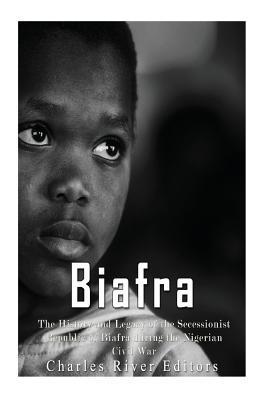
Biafra: The History and Legacy of the Secessionist Republic of Biafra during the Nigerian Civil War
*Includes pictures
*Includes contemporary accounts of the Nigerian civil war
*Includes online resources and a bibliography for further reading
"[A] cardinal principle of British colonial policy [is] that the interests of a large native population shall not be subject to the will... of a small minority of educated and Europeanized natives." - Lord Frederick Lugard
Nigeria was the creation of a British businessman by the name of Sir George Taubman Goldie. The gifted son of a substantial Manx military officer and politician, Goldie was educated at the prestigious Royal Military Academy at Woolwich, after which he served briefly in the army before embarking on a journey of adventure to West Africa. The year was 1877, and the West African coast was sub-divided into the spheres of influence of various European trading concerns, and while some exploration of the interior had taken place, the European rush to claim the region had yet to begin in earnest.
Nigeria was an unpopular destination for European settlement, thanks to its punishing climate and proliferation of tropical disease, so it saw very little direct European influence. Europeans were posted to Nigeria or sought employment purely to satisfy the needs of administration, and, of course, the various Christian missionary organizations were led largely by whites. Christian missions, incidentally, succeeded spectacularly in the spreading of Christianity across the animist south, but they made absolutely no inroads in the Muslim north.
Nigeria was among the first African colonies to be groomed for independence, and upon its success as a free nation, Britain staked a great deal. The process was lengthy, bearing in mind both the intricate ethnic tapestry of the region and the relatively complex systems of government, involving a number of different permutations in the 15 years between the end of World War II and 1960, when independence was finally granted.
During this period, the realization began to dawn that the original 1914 amalgamation of the northern and southern protectorates of Nigeria might have been a strategic blunder, inasmuch as an attempt had been made to forge a single territory out of two radically different and mutually antagonistic blocs. It was, of course, too late by then to try and alter the political map of Nigeria, but perhaps the creation of two territories, rather than one, would have ultimately served the region better.
On October 1, 1960, the n
*Includes contemporary accounts of the Nigerian civil war
*Includes online resources and a bibliography for further reading
"[A] cardinal principle of British colonial policy [is] that the interests of a large native population shall not be subject to the will... of a small minority of educated and Europeanized natives." - Lord Frederick Lugard
Nigeria was the creation of a British businessman by the name of Sir George Taubman Goldie. The gifted son of a substantial Manx military officer and politician, Goldie was educated at the prestigious Royal Military Academy at Woolwich, after which he served briefly in the army before embarking on a journey of adventure to West Africa. The year was 1877, and the West African coast was sub-divided into the spheres of influence of various European trading concerns, and while some exploration of the interior had taken place, the European rush to claim the region had yet to begin in earnest.
Nigeria was an unpopular destination for European settlement, thanks to its punishing climate and proliferation of tropical disease, so it saw very little direct European influence. Europeans were posted to Nigeria or sought employment purely to satisfy the needs of administration, and, of course, the various Christian missionary organizations were led largely by whites. Christian missions, incidentally, succeeded spectacularly in the spreading of Christianity across the animist south, but they made absolutely no inroads in the Muslim north.
Nigeria was among the first African colonies to be groomed for independence, and upon its success as a free nation, Britain staked a great deal. The process was lengthy, bearing in mind both the intricate ethnic tapestry of the region and the relatively complex systems of government, involving a number of different permutations in the 15 years between the end of World War II and 1960, when independence was finally granted.
During this period, the realization began to dawn that the original 1914 amalgamation of the northern and southern protectorates of Nigeria might have been a strategic blunder, inasmuch as an attempt had been made to forge a single territory out of two radically different and mutually antagonistic blocs. It was, of course, too late by then to try and alter the political map of Nigeria, but perhaps the creation of two territories, rather than one, would have ultimately served the region better.
On October 1, 1960, the n
PRP: 56.11 Lei

Acesta este Prețul Recomandat de Producător. Prețul de vânzare al produsului este afișat mai jos.
50.50Lei
50.50Lei
56.11 LeiPrimești 50 puncte
Livrare in 2-4 saptamani
Descrierea produsului
*Includes pictures
*Includes contemporary accounts of the Nigerian civil war
*Includes online resources and a bibliography for further reading
"[A] cardinal principle of British colonial policy [is] that the interests of a large native population shall not be subject to the will... of a small minority of educated and Europeanized natives." - Lord Frederick Lugard
Nigeria was the creation of a British businessman by the name of Sir George Taubman Goldie. The gifted son of a substantial Manx military officer and politician, Goldie was educated at the prestigious Royal Military Academy at Woolwich, after which he served briefly in the army before embarking on a journey of adventure to West Africa. The year was 1877, and the West African coast was sub-divided into the spheres of influence of various European trading concerns, and while some exploration of the interior had taken place, the European rush to claim the region had yet to begin in earnest.
Nigeria was an unpopular destination for European settlement, thanks to its punishing climate and proliferation of tropical disease, so it saw very little direct European influence. Europeans were posted to Nigeria or sought employment purely to satisfy the needs of administration, and, of course, the various Christian missionary organizations were led largely by whites. Christian missions, incidentally, succeeded spectacularly in the spreading of Christianity across the animist south, but they made absolutely no inroads in the Muslim north.
Nigeria was among the first African colonies to be groomed for independence, and upon its success as a free nation, Britain staked a great deal. The process was lengthy, bearing in mind both the intricate ethnic tapestry of the region and the relatively complex systems of government, involving a number of different permutations in the 15 years between the end of World War II and 1960, when independence was finally granted.
During this period, the realization began to dawn that the original 1914 amalgamation of the northern and southern protectorates of Nigeria might have been a strategic blunder, inasmuch as an attempt had been made to forge a single territory out of two radically different and mutually antagonistic blocs. It was, of course, too late by then to try and alter the political map of Nigeria, but perhaps the creation of two territories, rather than one, would have ultimately served the region better.
On October 1, 1960, the n
*Includes contemporary accounts of the Nigerian civil war
*Includes online resources and a bibliography for further reading
"[A] cardinal principle of British colonial policy [is] that the interests of a large native population shall not be subject to the will... of a small minority of educated and Europeanized natives." - Lord Frederick Lugard
Nigeria was the creation of a British businessman by the name of Sir George Taubman Goldie. The gifted son of a substantial Manx military officer and politician, Goldie was educated at the prestigious Royal Military Academy at Woolwich, after which he served briefly in the army before embarking on a journey of adventure to West Africa. The year was 1877, and the West African coast was sub-divided into the spheres of influence of various European trading concerns, and while some exploration of the interior had taken place, the European rush to claim the region had yet to begin in earnest.
Nigeria was an unpopular destination for European settlement, thanks to its punishing climate and proliferation of tropical disease, so it saw very little direct European influence. Europeans were posted to Nigeria or sought employment purely to satisfy the needs of administration, and, of course, the various Christian missionary organizations were led largely by whites. Christian missions, incidentally, succeeded spectacularly in the spreading of Christianity across the animist south, but they made absolutely no inroads in the Muslim north.
Nigeria was among the first African colonies to be groomed for independence, and upon its success as a free nation, Britain staked a great deal. The process was lengthy, bearing in mind both the intricate ethnic tapestry of the region and the relatively complex systems of government, involving a number of different permutations in the 15 years between the end of World War II and 1960, when independence was finally granted.
During this period, the realization began to dawn that the original 1914 amalgamation of the northern and southern protectorates of Nigeria might have been a strategic blunder, inasmuch as an attempt had been made to forge a single territory out of two radically different and mutually antagonistic blocs. It was, of course, too late by then to try and alter the political map of Nigeria, but perhaps the creation of two territories, rather than one, would have ultimately served the region better.
On October 1, 1960, the n
Detaliile produsului



