








Black Masters: A Side-light on Slavery
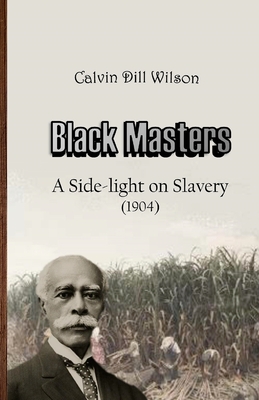
Black Masters: A Side-light on Slavery
"Wilson finds that there were about 6,200 colored slave-holders in the days of yore, and that these 'Black Masters' owned some 18,000 slaves." - The African Abroad (1913)
"An extremely interesting article." -Albany Law Journal (1905)
"While doing research on black slaveholders early in this century, Calvin Dill Wilson discovered further evidence of William Ellison's reputation for harshness." Black Masters: A Free Family of Color in the Old South (1984)
"In rural Virginia and Maryland also there were free colored slaveholders in considerable numbers." -American Negro Slavery (2013)
"Calvin Dill Wilson is a writer of prominence for magazines." -Harry Probasco, U.S. House of Representatives Hearing, 1918
It is a fact that African-Americans owned slaves in the South before the Civil War, but few people seem to know it.
From Calvin Dill Wilson's short 19-page book "Black Masters" we learn that wealthy free African-Americans bought and sold members of their own race just as did the Southern white planter; African-Americans, once slaves and freed by their white masters, became slave-owners, themselves.
"To judge from all that is known on the subject, we may assume that the only thing that prevented the great majority of colored people from buying and trading in one another, was, in addition to the law in some States, their lack of means," according to Watson's Magazine (1913).
In introducing his short work, Wilson writes:
"The most singular and dramatic aspect of slavery in the United States was the occasional ownership of bondsmen by free blacks. Historically, the facts are obscure, little known and difficult to trace; this phase is overlooked by historians, so far as I am aware, and is lost from the memories of most people of this generation..."
"An extremely interesting article." -Albany Law Journal (1905)
"While doing research on black slaveholders early in this century, Calvin Dill Wilson discovered further evidence of William Ellison's reputation for harshness." Black Masters: A Free Family of Color in the Old South (1984)
"In rural Virginia and Maryland also there were free colored slaveholders in considerable numbers." -American Negro Slavery (2013)
"Calvin Dill Wilson is a writer of prominence for magazines." -Harry Probasco, U.S. House of Representatives Hearing, 1918
It is a fact that African-Americans owned slaves in the South before the Civil War, but few people seem to know it.
From Calvin Dill Wilson's short 19-page book "Black Masters" we learn that wealthy free African-Americans bought and sold members of their own race just as did the Southern white planter; African-Americans, once slaves and freed by their white masters, became slave-owners, themselves.
"To judge from all that is known on the subject, we may assume that the only thing that prevented the great majority of colored people from buying and trading in one another, was, in addition to the law in some States, their lack of means," according to Watson's Magazine (1913).
In introducing his short work, Wilson writes:
"The most singular and dramatic aspect of slavery in the United States was the occasional ownership of bondsmen by free blacks. Historically, the facts are obscure, little known and difficult to trace; this phase is overlooked by historians, so far as I am aware, and is lost from the memories of most people of this generation..."
PRP: 61.17 Lei

Acesta este Prețul Recomandat de Producător. Prețul de vânzare al produsului este afișat mai jos.
48.94Lei
48.94Lei
61.17 LeiPrimești 48 puncte

Indisponibil
Descrierea produsului
"Wilson finds that there were about 6,200 colored slave-holders in the days of yore, and that these 'Black Masters' owned some 18,000 slaves." - The African Abroad (1913)
"An extremely interesting article." -Albany Law Journal (1905)
"While doing research on black slaveholders early in this century, Calvin Dill Wilson discovered further evidence of William Ellison's reputation for harshness." Black Masters: A Free Family of Color in the Old South (1984)
"In rural Virginia and Maryland also there were free colored slaveholders in considerable numbers." -American Negro Slavery (2013)
"Calvin Dill Wilson is a writer of prominence for magazines." -Harry Probasco, U.S. House of Representatives Hearing, 1918
It is a fact that African-Americans owned slaves in the South before the Civil War, but few people seem to know it.
From Calvin Dill Wilson's short 19-page book "Black Masters" we learn that wealthy free African-Americans bought and sold members of their own race just as did the Southern white planter; African-Americans, once slaves and freed by their white masters, became slave-owners, themselves.
"To judge from all that is known on the subject, we may assume that the only thing that prevented the great majority of colored people from buying and trading in one another, was, in addition to the law in some States, their lack of means," according to Watson's Magazine (1913).
In introducing his short work, Wilson writes:
"The most singular and dramatic aspect of slavery in the United States was the occasional ownership of bondsmen by free blacks. Historically, the facts are obscure, little known and difficult to trace; this phase is overlooked by historians, so far as I am aware, and is lost from the memories of most people of this generation..."
"An extremely interesting article." -Albany Law Journal (1905)
"While doing research on black slaveholders early in this century, Calvin Dill Wilson discovered further evidence of William Ellison's reputation for harshness." Black Masters: A Free Family of Color in the Old South (1984)
"In rural Virginia and Maryland also there were free colored slaveholders in considerable numbers." -American Negro Slavery (2013)
"Calvin Dill Wilson is a writer of prominence for magazines." -Harry Probasco, U.S. House of Representatives Hearing, 1918
It is a fact that African-Americans owned slaves in the South before the Civil War, but few people seem to know it.
From Calvin Dill Wilson's short 19-page book "Black Masters" we learn that wealthy free African-Americans bought and sold members of their own race just as did the Southern white planter; African-Americans, once slaves and freed by their white masters, became slave-owners, themselves.
"To judge from all that is known on the subject, we may assume that the only thing that prevented the great majority of colored people from buying and trading in one another, was, in addition to the law in some States, their lack of means," according to Watson's Magazine (1913).
In introducing his short work, Wilson writes:
"The most singular and dramatic aspect of slavery in the United States was the occasional ownership of bondsmen by free blacks. Historically, the facts are obscure, little known and difficult to trace; this phase is overlooked by historians, so far as I am aware, and is lost from the memories of most people of this generation..."
Detaliile produsului