- /
- Librarie online
- /
- Carti in engleza
- /
- Science
- /
- History
- /
- A Centaur in London: Reading and Observation in Early Modern Science - Fabian Kraemer
A Centaur in London: Reading and Observation in Early Modern Science
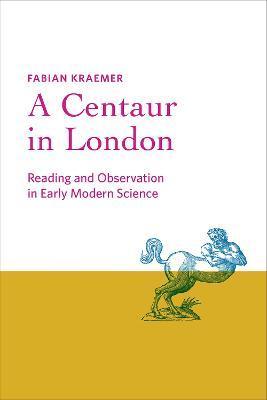
A nuanced reframing of the dual importance of reading and observation for early modern naturalists.
Historians traditionally argue that the sciences were born in early modern Europe during the so-called Scientific Revolution. At the heart of this narrative lies a supposed shift from the knowledge of books to the knowledge of things. The attitude of the new-style intellectual broke with the text-based practices of erudition and instead cultivated an emerging empiricism of observation and experiment. Rather than blindly trusting the authority of ancient sources such as Pliny and Aristotle, practitioners of this experimental philosophy insisted upon experiential proof.
In A Centaur in London, Fabian Kraemer calls a key tenet of this master narrative into question--that the rise of empiricism entailed a decrease in the importance of reading practices. Kraemer shows instead that the early practices of textual erudition and observational empiricism were by no means so remote from one another as the traditional narrative would suggest. He argues that reading books and reading the book of nature had a great deal in common--indeed, that reading texts was its own kind of observation. Especially in the case of rare and unusual phenomena like monsters, naturalists were dependent on the written reports of others who had experienced the good luck to be at the right place at the right time. The connections between compiling examples from texts and from observation were especially close in such cases.
A Centaur in London combines the history of scholarly reading with the history of scientific observation to argue for the sustained importance of both throughout the Renaissance and provides a nuanced, textured portrait of early modern naturalists at work.
423.00Lei
423.00Lei
Primești 423 puncte

Livrare in 2-4 saptamani
Descrierea produsului
A nuanced reframing of the dual importance of reading and observation for early modern naturalists.
Historians traditionally argue that the sciences were born in early modern Europe during the so-called Scientific Revolution. At the heart of this narrative lies a supposed shift from the knowledge of books to the knowledge of things. The attitude of the new-style intellectual broke with the text-based practices of erudition and instead cultivated an emerging empiricism of observation and experiment. Rather than blindly trusting the authority of ancient sources such as Pliny and Aristotle, practitioners of this experimental philosophy insisted upon experiential proof.
In A Centaur in London, Fabian Kraemer calls a key tenet of this master narrative into question--that the rise of empiricism entailed a decrease in the importance of reading practices. Kraemer shows instead that the early practices of textual erudition and observational empiricism were by no means so remote from one another as the traditional narrative would suggest. He argues that reading books and reading the book of nature had a great deal in common--indeed, that reading texts was its own kind of observation. Especially in the case of rare and unusual phenomena like monsters, naturalists were dependent on the written reports of others who had experienced the good luck to be at the right place at the right time. The connections between compiling examples from texts and from observation were especially close in such cases.
A Centaur in London combines the history of scholarly reading with the history of scientific observation to argue for the sustained importance of both throughout the Renaissance and provides a nuanced, textured portrait of early modern naturalists at work.
Detaliile produsului