



- /
- Librarie online
- /
- Carti in engleza
- /
- History
- /
- Military
- /
- United States
- /
- A Concise History of the U.S. Air Force - Stephen L. Mcfarland
A Concise History of the U.S. Air Force
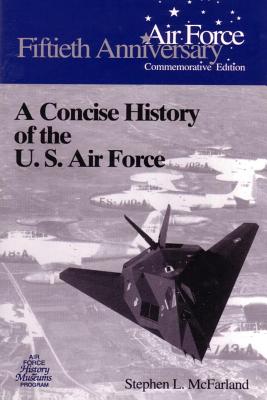
A Concise History of the U.S. Air Force
Except in a few instances, since World War II no American soldier or sailor has been attacked by enemy air power. Conversely, no enemy soldier or sailor has acted in combat without being attacked or at least threatened by American air power. Aviators have brought the air weapon to bear against enemies while denying them the same prerogative. This is the legacy of the U.S. Air Force, purchased at great cost in both human and material resources. More often than not, aerial pioneers had to fight technological ignorance, bureaucratic opposition, public apathy, and disagreement over purpose. Every step in the evolution of air power led into new and untrodden territory, driven by humanitarian impulses; by the search for higher, faster, and farther flight; or by the conviction that the air way was the best way. Warriors have always coveted the high ground. If technology permitted them to reach it, men, women and an air force held and exploited it-from Thomas Selfridge, first among so many who gave that "last full measure of devotion"; to Women's Airforce Service Pilot Ann Baumgartner, who broke social barriers to become the first American woman to pilot a jet; to Benjamin Davis, who broke racial barriers to become the first African American to command a flying group; to Chuck Yeager, a one-time non-commissioned flight officer who was the first to exceed the speed of sound; to John Levitow, who earned the Medal of Honor by throwing himself over a live flare to save his gunship crew; to John Warden, who began a revolution in air power thought and strategy that was put to spectacular use in the Gulf War. Industrialization has brought total war and air power has brought the means to overfly an enemy's defenses and attack its sources of power directly. Americans have perceived air power from the start as a more efficient means of waging war and as a symbol of the nation's commitment to technology to master challenges, minimize casualties, and defeat adversaries.
PRP: 139.42 Lei

Acesta este Prețul Recomandat de Producător. Prețul de vânzare al produsului este afișat mai jos.
125.48Lei
125.48Lei
139.42 LeiPrimești 125 puncte

Livrare in 2-4 saptamani
Descrierea produsului
Except in a few instances, since World War II no American soldier or sailor has been attacked by enemy air power. Conversely, no enemy soldier or sailor has acted in combat without being attacked or at least threatened by American air power. Aviators have brought the air weapon to bear against enemies while denying them the same prerogative. This is the legacy of the U.S. Air Force, purchased at great cost in both human and material resources. More often than not, aerial pioneers had to fight technological ignorance, bureaucratic opposition, public apathy, and disagreement over purpose. Every step in the evolution of air power led into new and untrodden territory, driven by humanitarian impulses; by the search for higher, faster, and farther flight; or by the conviction that the air way was the best way. Warriors have always coveted the high ground. If technology permitted them to reach it, men, women and an air force held and exploited it-from Thomas Selfridge, first among so many who gave that "last full measure of devotion"; to Women's Airforce Service Pilot Ann Baumgartner, who broke social barriers to become the first American woman to pilot a jet; to Benjamin Davis, who broke racial barriers to become the first African American to command a flying group; to Chuck Yeager, a one-time non-commissioned flight officer who was the first to exceed the speed of sound; to John Levitow, who earned the Medal of Honor by throwing himself over a live flare to save his gunship crew; to John Warden, who began a revolution in air power thought and strategy that was put to spectacular use in the Gulf War. Industrialization has brought total war and air power has brought the means to overfly an enemy's defenses and attack its sources of power directly. Americans have perceived air power from the start as a more efficient means of waging war and as a symbol of the nation's commitment to technology to master challenges, minimize casualties, and defeat adversaries.
Detaliile produsului