



- /
- Librarie online
- /
- Carti in engleza
- /
- Fiction
- /
- General
- /
- Against All Odds: A fact-based story of a Dutch family in Japanese concentration camps in World War II Java - Daan Fousert
Against All Odds: A fact-based story of a Dutch family in Japanese concentration camps in World War II Java
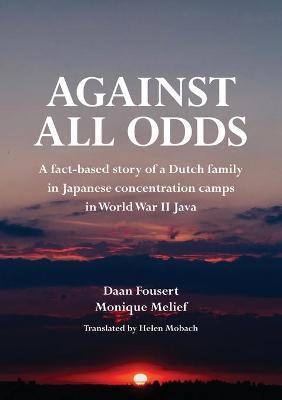
When Jaan Willem Mobach (1894), his wife Johanna (1896), and their three sons, Piet, Gerard, and Jan, depart for Djokdjakarta in 1930 on the ship Indrapoera, they have no idea what awaits them. The years leading up to 1942-during which time three daughters are born-pass by in relative peace. That changes on March 8, 1942, when the Dutch East Indies fall to the Japanese. All Dutch, Indonesian Dutch, and Europeans end up in Japanese internment camps, as do many Moluccans and Chinese. In these camps, an estimated 30,000 people die of hunger, exhaustion, and torture. "We were lucky." These are the words of Jan Mobach when he describes what happened to his family in the Dutch East Indies during and immediately after the war years. He has recorded his memories in a document in which he recalls his adolescence during the Japanese occupation of Java. Father Jaan Willem, also, has recorded his memories in Prisoners of Nippon. These two documents form the basis of this book, fulfilling Jan's great wish. Because this book involves a whole family that was separated in the war and-pure luck-of which all members are reunited after the war, the experiences of mother Johanna make the picture more complete. Author Monique Melief tells the story of mother Johanna from her perspective, based on the facts. With the capitulation of Japan on August 15, 1945, WWII ends in the Dutch East Indies. But two days later, Java (Indonesia) declares independence. The Netherlands did not see this coming. The period that follows-the "Bersiap"-during which time many become victims of torture, rape, and murder by Indonesian nationalists, is, if possible, even more violent. During these extremely unsafe and uncertain circumstances, the family members trickle back to the Netherlands, father Jaan Willem the last one in June 1946.
PRP: 98.89 Lei

Acesta este Prețul Recomandat de Producător. Prețul de vânzare al produsului este afișat mai jos.
89.00Lei
89.00Lei
98.89 LeiPrimești 89 puncte

Livrare in 2-4 saptamani
Descrierea produsului
When Jaan Willem Mobach (1894), his wife Johanna (1896), and their three sons, Piet, Gerard, and Jan, depart for Djokdjakarta in 1930 on the ship Indrapoera, they have no idea what awaits them. The years leading up to 1942-during which time three daughters are born-pass by in relative peace. That changes on March 8, 1942, when the Dutch East Indies fall to the Japanese. All Dutch, Indonesian Dutch, and Europeans end up in Japanese internment camps, as do many Moluccans and Chinese. In these camps, an estimated 30,000 people die of hunger, exhaustion, and torture. "We were lucky." These are the words of Jan Mobach when he describes what happened to his family in the Dutch East Indies during and immediately after the war years. He has recorded his memories in a document in which he recalls his adolescence during the Japanese occupation of Java. Father Jaan Willem, also, has recorded his memories in Prisoners of Nippon. These two documents form the basis of this book, fulfilling Jan's great wish. Because this book involves a whole family that was separated in the war and-pure luck-of which all members are reunited after the war, the experiences of mother Johanna make the picture more complete. Author Monique Melief tells the story of mother Johanna from her perspective, based on the facts. With the capitulation of Japan on August 15, 1945, WWII ends in the Dutch East Indies. But two days later, Java (Indonesia) declares independence. The Netherlands did not see this coming. The period that follows-the "Bersiap"-during which time many become victims of torture, rape, and murder by Indonesian nationalists, is, if possible, even more violent. During these extremely unsafe and uncertain circumstances, the family members trickle back to the Netherlands, father Jaan Willem the last one in June 1946.
Detaliile produsului