








- /
- Librarie online
- /
- Carti in engleza
- /
- History
- /
- United States
- /
- General
- /
- American Dreams and Nazi Nightmares: Early Holocaust Consciousness and Liberal America, 1957-1965 - Kirsten Fermaglich
American Dreams and Nazi Nightmares: Early Holocaust Consciousness and Liberal America, 1957-1965
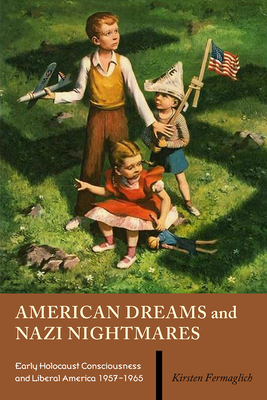
American Dreams and Nazi Nightmares: Early Holocaust Consciousness and Liberal America, 1957-1965
To a great extent, Holocaust consciousness in the contemporary United States has become intertwined with American Jewish identity and with support for right-wing Israeli politics -- but this was not always the case. In this illuminating study, Kirsten Fermaglich demonstrates that in the late 1950s and early 1960s, many American Jewish writers and academics viewed the Nazi extermination of European Jewry as a subject of universal interest, with important lessons to be learned for the liberal reform of American politics. Fermaglich analyzes the lives and writings of Stanley M. Elkins, Betty Friedan, Stanley Milgram, and Robert Jay Lifton, four social scientific thinkers whose work was shaped by a liberal perspective. For them, the Holocaust served as a critical frame of reference for a particular issue: Elkins on slavery's legacy, Friedan on the oppressions of domesticity, Milgram on the willingness to obey, and Lifton on war's survivors. In each case, these thinkers were deeply influenced by their Jewish backgrounds, whether by early encounters with antisemitism or by the profound sense that only fate and an ocean had spared them death in Hitler's Europe. Thus, each chose imagery from the concentration camps, albeit utterly devoid of a particular Jewish association, to illuminate themes that advanced liberal politics, including civil rights, the nuclear test ban, feminism, and Vietnam veterans' rights. Rather than being offended by these authors' comparisons between American institutions and Nazi concentration camps, American audiences of all ethnic and religious backgrounds during the late 1950s and early 1960s generally cheered these authors' Nazi imagery and adopted it as part of their own political ideology. Fermaglich demonstrates that liberalism in the United States in the 1960s was more substantially shaped by the Holocaust than we have previously recognized.
PRP: 274.38 Lei

Acesta este Prețul Recomandat de Producător. Prețul de vânzare al produsului este afișat mai jos.
246.94Lei
246.94Lei
274.38 LeiPrimești 246 puncte

Livrare in 2-4 saptamani
Descrierea produsului
To a great extent, Holocaust consciousness in the contemporary United States has become intertwined with American Jewish identity and with support for right-wing Israeli politics -- but this was not always the case. In this illuminating study, Kirsten Fermaglich demonstrates that in the late 1950s and early 1960s, many American Jewish writers and academics viewed the Nazi extermination of European Jewry as a subject of universal interest, with important lessons to be learned for the liberal reform of American politics. Fermaglich analyzes the lives and writings of Stanley M. Elkins, Betty Friedan, Stanley Milgram, and Robert Jay Lifton, four social scientific thinkers whose work was shaped by a liberal perspective. For them, the Holocaust served as a critical frame of reference for a particular issue: Elkins on slavery's legacy, Friedan on the oppressions of domesticity, Milgram on the willingness to obey, and Lifton on war's survivors. In each case, these thinkers were deeply influenced by their Jewish backgrounds, whether by early encounters with antisemitism or by the profound sense that only fate and an ocean had spared them death in Hitler's Europe. Thus, each chose imagery from the concentration camps, albeit utterly devoid of a particular Jewish association, to illuminate themes that advanced liberal politics, including civil rights, the nuclear test ban, feminism, and Vietnam veterans' rights. Rather than being offended by these authors' comparisons between American institutions and Nazi concentration camps, American audiences of all ethnic and religious backgrounds during the late 1950s and early 1960s generally cheered these authors' Nazi imagery and adopted it as part of their own political ideology. Fermaglich demonstrates that liberalism in the United States in the 1960s was more substantially shaped by the Holocaust than we have previously recognized.
Detaliile produsului




