



- /
- Librarie online
- /
- Carti in engleza
- /
- Architecture
- /
- History
- /
- Modern (late 19th Century To 1945)
- /
- Building a Social Contract: Modern Workers' Houses in Early-Twentieth Century Detroit - Michael Mcculloch
Building a Social Contract: Modern Workers' Houses in Early-Twentieth Century Detroit
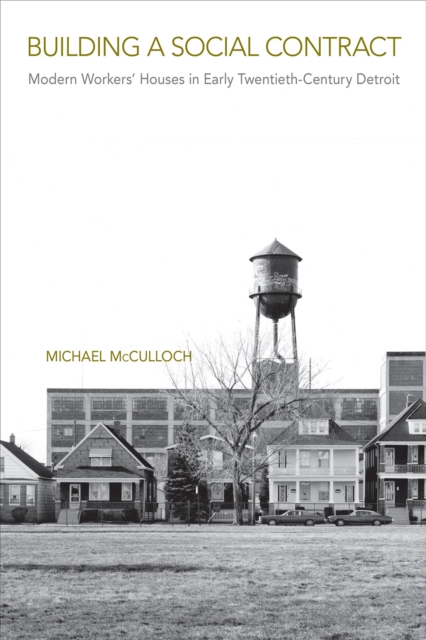
Building a Social Contract: Modern Workers' Houses in Early-Twentieth Century Detroit
The dream of the modern worker's house emerged in early twentieth-century America as wage earners gained access to new, larger, and better-equipped dwellings. Building a Social Contract is a cogent history of the houses those workers dreamed of and labored for. Michael McCulloch chronicles the efforts of employers, government agencies, and the building industry who, along with workers themselves, produced an unprecedented boom in housing construction that peaked in the mid-1920s. Through oral histories, letters, photographs, and period fiction, McCulloch traces wage earners' agency in negotiating a new implicit social contract, one that rewarded hard work with upward mobility in modern houses. This promise reflected workers' increased bargaining power but, at the same time, left them increasingly vulnerable to layoffs. Building a Social Contract focuses on Detroit, the quintessential city of the era, where migrant workers came and were Americanized, and real estate agents and the speculative housebuilding industry thrived. The Motor City epitomized the struggle of Black workers in this period, who sought better lives through industrial labor but struggled to translate their wages into housing security amid racist segregation and violence. When Depression-era unemployment created an eviction crisis, the social contract unraveled, and workers rose up--at the polls and in the streets--to create a labor movement that reshaped American capitalism for decades. Today, the lessons McCulloch provides from early twentieth-century Detroit are a necessary reminder that wages are not enough, and only working-class political power can secure affordable housing.
The dream of the modern worker's house emerged in early twentieth-century America as wage earners gained access to new, larger, and better-equipped dwellings. Building a Social Contract is a cogent history of the houses those workers dreamed of and labored for. Michael McCulloch chronicles the efforts of employers, government agencies, and the building industry who, along with workers themselves, produced an unprecedented boom in housing construction that peaked in the mid-1920s. Through oral histories, letters, photographs, and period fiction, McCulloch traces wage earners' agency in negotiating a new implicit social contract, one that rewarded hard work with upward mobility in modern houses. This promise reflected workers' increased bargaining power but, at the same time, left them increasingly vulnerable to
The dream of the modern worker's house emerged in early twentieth-century America as wage earners gained access to new, larger, and better-equipped dwellings. Building a Social Contract is a cogent history of the houses those workers dreamed of and labored for. Michael McCulloch chronicles the efforts of employers, government agencies, and the building industry who, along with workers themselves, produced an unprecedented boom in housing construction that peaked in the mid-1920s. Through oral histories, letters, photographs, and period fiction, McCulloch traces wage earners' agency in negotiating a new implicit social contract, one that rewarded hard work with upward mobility in modern houses. This promise reflected workers' increased bargaining power but, at the same time, left them increasingly vulnerable to
PRP: 288.92 Lei

Acesta este Prețul Recomandat de Producător. Prețul de vânzare al produsului este afișat mai jos.
231.14Lei
231.14Lei
288.92 LeiPrimești 231 puncte

Livrare in 2-4 saptamani
Descrierea produsului
The dream of the modern worker's house emerged in early twentieth-century America as wage earners gained access to new, larger, and better-equipped dwellings. Building a Social Contract is a cogent history of the houses those workers dreamed of and labored for. Michael McCulloch chronicles the efforts of employers, government agencies, and the building industry who, along with workers themselves, produced an unprecedented boom in housing construction that peaked in the mid-1920s. Through oral histories, letters, photographs, and period fiction, McCulloch traces wage earners' agency in negotiating a new implicit social contract, one that rewarded hard work with upward mobility in modern houses. This promise reflected workers' increased bargaining power but, at the same time, left them increasingly vulnerable to layoffs. Building a Social Contract focuses on Detroit, the quintessential city of the era, where migrant workers came and were Americanized, and real estate agents and the speculative housebuilding industry thrived. The Motor City epitomized the struggle of Black workers in this period, who sought better lives through industrial labor but struggled to translate their wages into housing security amid racist segregation and violence. When Depression-era unemployment created an eviction crisis, the social contract unraveled, and workers rose up--at the polls and in the streets--to create a labor movement that reshaped American capitalism for decades. Today, the lessons McCulloch provides from early twentieth-century Detroit are a necessary reminder that wages are not enough, and only working-class political power can secure affordable housing.
The dream of the modern worker's house emerged in early twentieth-century America as wage earners gained access to new, larger, and better-equipped dwellings. Building a Social Contract is a cogent history of the houses those workers dreamed of and labored for. Michael McCulloch chronicles the efforts of employers, government agencies, and the building industry who, along with workers themselves, produced an unprecedented boom in housing construction that peaked in the mid-1920s. Through oral histories, letters, photographs, and period fiction, McCulloch traces wage earners' agency in negotiating a new implicit social contract, one that rewarded hard work with upward mobility in modern houses. This promise reflected workers' increased bargaining power but, at the same time, left them increasingly vulnerable to
The dream of the modern worker's house emerged in early twentieth-century America as wage earners gained access to new, larger, and better-equipped dwellings. Building a Social Contract is a cogent history of the houses those workers dreamed of and labored for. Michael McCulloch chronicles the efforts of employers, government agencies, and the building industry who, along with workers themselves, produced an unprecedented boom in housing construction that peaked in the mid-1920s. Through oral histories, letters, photographs, and period fiction, McCulloch traces wage earners' agency in negotiating a new implicit social contract, one that rewarded hard work with upward mobility in modern houses. This promise reflected workers' increased bargaining power but, at the same time, left them increasingly vulnerable to
Detaliile produsului