



- /
- Librarie online
- /
- Carti in engleza
- /
- Religion
- /
- Biblical Studies
- /
- New Testament
- /
- Can We Recover the Original Text of the New Testament? - Abidan Paul Shah
Can We Recover the Original Text of the New Testament?
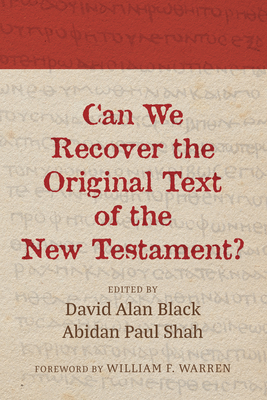
Can We Recover the Original Text of the New Testament?
In recent decades, the traditional definition of the original text of the New Testament (NT) has shifted from seeking one singular text to seeking a number of texts. Instead of one "authorial" text, now it is claimed that it could be one of several different texts based on their locations in the history of transmission: preauthorial, authorial, canonical, and postcanonical. These distinctions were first listed by Eldon Epp in his article "The Multivalence of the Term 'Original Text' in New Testament Textual Criticism" as "predecessor," "autographic," "canonical," and "interpretive" text-forms. It is apparent that with such changing definitions of the original text of the NT, text-critics are ambivalent regarding reaching the traditional goal of NT textual criticism. Instead, attention is now given towards hypothesizing regarding the emergence of the variant readings. Furthermore, any attempt towards utilizing text-critical principles to reach the original text is looked upon as being out of date and pointless. All such shifting definitions of the original text and the ensuing claims have far-reaching consequences for biblical faith and praxis. In this work, three different scholars will present their methodologies for retrieving the original text of the NT. No matter how each of the presenters evaluates the text-critical evidence, it is obvious that they all believe in the inerrancy and retrievability of the NT text.
In recent decades, the traditional definition of the original text of the New Testament (NT) has shifted from seeking one singular text to seeking a number of texts. Instead of one ""authorial"" text, now it is claimed that it could be one of several different texts based on their locations in the history of transmission: preauthorial, authorial, canonical, and postcanonical. These distinctions were first listed by Eldon Epp in his article ""The Multivalence of the Term 'Original Text' in New Testament Textual Criticism"" as ""predecessor,"" ""autographic,"" ""canonical,"" and ""interpretive"" text-forms. It is apparent that with such changing definitions of the original text of the NT, text-critics are ambivalent regarding reaching the traditional goal of NT textual criticism. Instead, attention is now given towards hypothesizing regarding the emergence of the variant readings. Furthermore, any attempt towards utilizing text-critical principles to reach the original text is looked upon as being out of date and pointless. All such shifting<
In recent decades, the traditional definition of the original text of the New Testament (NT) has shifted from seeking one singular text to seeking a number of texts. Instead of one ""authorial"" text, now it is claimed that it could be one of several different texts based on their locations in the history of transmission: preauthorial, authorial, canonical, and postcanonical. These distinctions were first listed by Eldon Epp in his article ""The Multivalence of the Term 'Original Text' in New Testament Textual Criticism"" as ""predecessor,"" ""autographic,"" ""canonical,"" and ""interpretive"" text-forms. It is apparent that with such changing definitions of the original text of the NT, text-critics are ambivalent regarding reaching the traditional goal of NT textual criticism. Instead, attention is now given towards hypothesizing regarding the emergence of the variant readings. Furthermore, any attempt towards utilizing text-critical principles to reach the original text is looked upon as being out of date and pointless. All such shifting<
PRP: 117.80 Lei

Acesta este Prețul Recomandat de Producător. Prețul de vânzare al produsului este afișat mai jos.
106.02Lei
106.02Lei
117.80 LeiPrimești 106 puncte

Livrare in 2-4 saptamani
Descrierea produsului
In recent decades, the traditional definition of the original text of the New Testament (NT) has shifted from seeking one singular text to seeking a number of texts. Instead of one "authorial" text, now it is claimed that it could be one of several different texts based on their locations in the history of transmission: preauthorial, authorial, canonical, and postcanonical. These distinctions were first listed by Eldon Epp in his article "The Multivalence of the Term 'Original Text' in New Testament Textual Criticism" as "predecessor," "autographic," "canonical," and "interpretive" text-forms. It is apparent that with such changing definitions of the original text of the NT, text-critics are ambivalent regarding reaching the traditional goal of NT textual criticism. Instead, attention is now given towards hypothesizing regarding the emergence of the variant readings. Furthermore, any attempt towards utilizing text-critical principles to reach the original text is looked upon as being out of date and pointless. All such shifting definitions of the original text and the ensuing claims have far-reaching consequences for biblical faith and praxis. In this work, three different scholars will present their methodologies for retrieving the original text of the NT. No matter how each of the presenters evaluates the text-critical evidence, it is obvious that they all believe in the inerrancy and retrievability of the NT text.
In recent decades, the traditional definition of the original text of the New Testament (NT) has shifted from seeking one singular text to seeking a number of texts. Instead of one ""authorial"" text, now it is claimed that it could be one of several different texts based on their locations in the history of transmission: preauthorial, authorial, canonical, and postcanonical. These distinctions were first listed by Eldon Epp in his article ""The Multivalence of the Term 'Original Text' in New Testament Textual Criticism"" as ""predecessor,"" ""autographic,"" ""canonical,"" and ""interpretive"" text-forms. It is apparent that with such changing definitions of the original text of the NT, text-critics are ambivalent regarding reaching the traditional goal of NT textual criticism. Instead, attention is now given towards hypothesizing regarding the emergence of the variant readings. Furthermore, any attempt towards utilizing text-critical principles to reach the original text is looked upon as being out of date and pointless. All such shifting<
In recent decades, the traditional definition of the original text of the New Testament (NT) has shifted from seeking one singular text to seeking a number of texts. Instead of one ""authorial"" text, now it is claimed that it could be one of several different texts based on their locations in the history of transmission: preauthorial, authorial, canonical, and postcanonical. These distinctions were first listed by Eldon Epp in his article ""The Multivalence of the Term 'Original Text' in New Testament Textual Criticism"" as ""predecessor,"" ""autographic,"" ""canonical,"" and ""interpretive"" text-forms. It is apparent that with such changing definitions of the original text of the NT, text-critics are ambivalent regarding reaching the traditional goal of NT textual criticism. Instead, attention is now given towards hypothesizing regarding the emergence of the variant readings. Furthermore, any attempt towards utilizing text-critical principles to reach the original text is looked upon as being out of date and pointless. All such shifting<
Detaliile produsului