








- /
- Librarie online
- /
- Carti in engleza
- /
- Technology & Engineering
- /
- History
- /
- Chariots for Apollo: A History of Manned Lunar Spacecraft - Courtney G. Brooks
Chariots for Apollo: A History of Manned Lunar Spacecraft
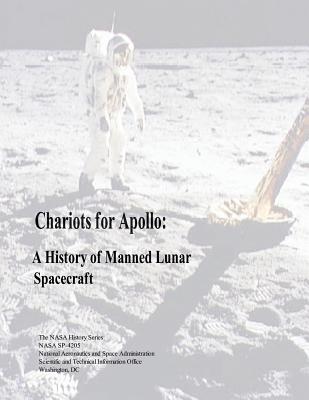
Chariots for Apollo: A History of Manned Lunar Spacecraft
Apollo was America's program to land men on the moon and get them safely back to the earth. In May 1961 President Kennedy gave the signal for planning and developing the machines to take men to that body. This decision, although bold and startling at the time, was not made at random nor did it lack a sound engineering base. Subcommittees of the National Advisory Committee for Aeronautics (NACA), predecessor of the National Aeronautics and Space Administration (NASA), had regularly surveyed aeronautical needs and pointed out problems for immediate resolution and specific areas for advanced research. After NASA's creation in October 1958, its leaders (many of them former NACA officials) continued to operate in this fashion and, less than a year later, set up a group to study what the agency should do in near-earth and deep-space exploration. Among the items listed by that group was a lunar landing, a proposal also discussed in circles outside NASA as a means for achieving and demonstrating technological supremacy in space. From the time Russia launched its first Sputnik in October 1957, many Americans had viewed the moon as a logical goal. A two-nation space race subsequently made that destination America's national objective for the 1960s. America had a program, Project Mercury, to put man in low-earth orbit and recover him safely. In July 1960 NASA announced plans to follow Mercury with a program, later named Apollo, to fly men around the moon. Soon thereafter, several industrial firms were awarded contracts to study the feasibility of such an enterprise. The companies had scarcely finished this task when the Russians scored again, orbiting the first space traveler, Cosmonaut Yuri Gagarin, on 12 April 1961. Three weeks later the Americans succeeded in launching Astronaut Alan Shepard into a suborbital arc. These events and other pressures to get America moving provided the popular, political, and technological foundations upon which President Kennedy could base his appeal for support from the Congress and the American people for the Apollo program. The Apollo story has many pieces: How and why did it start? What made it work? What did it accomplish? What did it mean? Some of its visible (and some not so visible) parts the launch vehicles, special facilities, administration, Skylab program, Apollo-Soyuz Test Project, as examples, have been recorded by the NASA History Office and some have not. A single volume treating all aspects of Apollo, whatever the
PRP: 185.92 Lei

Acesta este Prețul Recomandat de Producător. Prețul de vânzare al produsului este afișat mai jos.
148.74Lei
148.74Lei
185.92 LeiPrimești 148 puncte

Indisponibil
Descrierea produsului
Apollo was America's program to land men on the moon and get them safely back to the earth. In May 1961 President Kennedy gave the signal for planning and developing the machines to take men to that body. This decision, although bold and startling at the time, was not made at random nor did it lack a sound engineering base. Subcommittees of the National Advisory Committee for Aeronautics (NACA), predecessor of the National Aeronautics and Space Administration (NASA), had regularly surveyed aeronautical needs and pointed out problems for immediate resolution and specific areas for advanced research. After NASA's creation in October 1958, its leaders (many of them former NACA officials) continued to operate in this fashion and, less than a year later, set up a group to study what the agency should do in near-earth and deep-space exploration. Among the items listed by that group was a lunar landing, a proposal also discussed in circles outside NASA as a means for achieving and demonstrating technological supremacy in space. From the time Russia launched its first Sputnik in October 1957, many Americans had viewed the moon as a logical goal. A two-nation space race subsequently made that destination America's national objective for the 1960s. America had a program, Project Mercury, to put man in low-earth orbit and recover him safely. In July 1960 NASA announced plans to follow Mercury with a program, later named Apollo, to fly men around the moon. Soon thereafter, several industrial firms were awarded contracts to study the feasibility of such an enterprise. The companies had scarcely finished this task when the Russians scored again, orbiting the first space traveler, Cosmonaut Yuri Gagarin, on 12 April 1961. Three weeks later the Americans succeeded in launching Astronaut Alan Shepard into a suborbital arc. These events and other pressures to get America moving provided the popular, political, and technological foundations upon which President Kennedy could base his appeal for support from the Congress and the American people for the Apollo program. The Apollo story has many pieces: How and why did it start? What made it work? What did it accomplish? What did it mean? Some of its visible (and some not so visible) parts the launch vehicles, special facilities, administration, Skylab program, Apollo-Soyuz Test Project, as examples, have been recorded by the NASA History Office and some have not. A single volume treating all aspects of Apollo, whatever the
Detaliile produsului




