



- /
- Librarie online
- /
- Carti in engleza
- /
- Education
- /
- General
- /
- Citizen Knowledge: Markets, Experts, and the Infrastructure of Democracy - Lisa Herzog
Citizen Knowledge: Markets, Experts, and the Infrastructure of Democracy
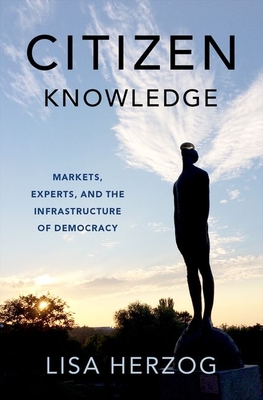
Citizen Knowledge: Markets, Experts, and the Infrastructure of Democracy
Many democratic societies currently struggle with issues around knowledge: fake news, distrust of experts, a fear of technocratic tendencies. In Citizen Knowledge, Lisa Herzog discusses how knowledge, understood in a broad sense, should be dealt with in societies that combine a democratic political system with a capitalist economic system. How do citizens learn about politics? How do new scientific insights make their way into politics? What role can markets play in processing decentralized knowledge? Herzog takes on the perspective of "democratic institutionalism," which focuses on the institutions that enable an inclusive and stable democratic life. She argues that the fraught relation between democracy and capitalism gets out of balance if too much knowledge is treated according to the logic of markets rather than democracy. Complex societies need different mechanisms for dealing with knowledge, among which markets, democratic deliberation, and expert communities are central. Citizen Knowledge emphasizes the responsibility of bearers of knowledge and the need to support institutions that promote active and informed citizenship. Through this lens, Herzog develops the vision of an egalitarian society that considers the use of knowledge in society not a matter of markets, but of shared democratic responsibility, supported by epistemic infrastructures. As such, Herzog's argument contributes to political epistemology, a new subdiscipline of philosophy, with a specific focus on the interrelation between economic and political processes. Citizen Knowledge draws from both the history of ideas and systematic arguments about the nature of knowledge to propose reforms for a more unified and flourishing democratic system. This is an open access title available under the terms of a CC BY-NC-ND 4.0 International license. It is free to read at Oxford Scholarship Online and offered as a free PDF download from OUP and selected open access locations.
PRP: 633.60 Lei

Acesta este Prețul Recomandat de Producător. Prețul de vânzare al produsului este afișat mai jos.
506.88Lei
506.88Lei
633.60 LeiPrimești 506 puncte

Indisponibil
Descrierea produsului
Many democratic societies currently struggle with issues around knowledge: fake news, distrust of experts, a fear of technocratic tendencies. In Citizen Knowledge, Lisa Herzog discusses how knowledge, understood in a broad sense, should be dealt with in societies that combine a democratic political system with a capitalist economic system. How do citizens learn about politics? How do new scientific insights make their way into politics? What role can markets play in processing decentralized knowledge? Herzog takes on the perspective of "democratic institutionalism," which focuses on the institutions that enable an inclusive and stable democratic life. She argues that the fraught relation between democracy and capitalism gets out of balance if too much knowledge is treated according to the logic of markets rather than democracy. Complex societies need different mechanisms for dealing with knowledge, among which markets, democratic deliberation, and expert communities are central. Citizen Knowledge emphasizes the responsibility of bearers of knowledge and the need to support institutions that promote active and informed citizenship. Through this lens, Herzog develops the vision of an egalitarian society that considers the use of knowledge in society not a matter of markets, but of shared democratic responsibility, supported by epistemic infrastructures. As such, Herzog's argument contributes to political epistemology, a new subdiscipline of philosophy, with a specific focus on the interrelation between economic and political processes. Citizen Knowledge draws from both the history of ideas and systematic arguments about the nature of knowledge to propose reforms for a more unified and flourishing democratic system. This is an open access title available under the terms of a CC BY-NC-ND 4.0 International license. It is free to read at Oxford Scholarship Online and offered as a free PDF download from OUP and selected open access locations.
Detaliile produsului