- /
- Librarie online
- /
- Carti in engleza
- /
- Philosophy
- /
- Epistemology
- /
- Commentary on the Book of Causes - Thomas Aquinas
Commentary on the Book of Causes
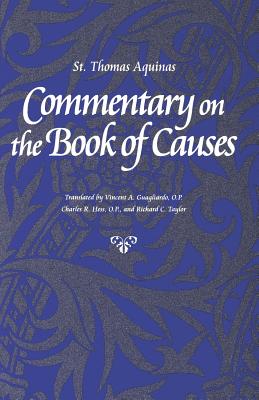
The Book of Causes, highly influential in the medieval university, was commonly but incorrectly understood to be the completion of Aristotle's metaphysics. It was Thomas Aquinas who first judged it to have been abstracted from Proclus's Elements of Theology, presumably by an unknown Arabic author, who added to it ideas of his own.
The Book of Causes is of particular interest because themes that appear in it are echoed in the metaphysics of Aquinas: its treatment of being (esse) as proceeding from the First Creating Cause; the triadic scheme of being, living, and knowing; and the general scheme of participation in which "all is in all." Thus, the Book of Causes provides a historical backdrop for understanding and appreciating Aquinas's development of these themes in his metaphysics.
Thomas's Commentary on the Book of Causes, composed during the first half of 1272, is a distinct philosophical work in its own right. It provides an extended view of his approach to Neoplatonic thought and functions as a guide to his metaphysics. Though long neglected and, until now, never translated into English, it deserves an equal place alongside his commentaries on Aristotle and Boethius.
In addition to the extensive annotation, bibliography, and thorough introduction, this translation is accompanied by two valuable appendices. The first provides a translation of another version of proposition 29 of the Book of Causes, which was not known to St. Thomas. The second lists citations of the Book of Causes found in the works of St. Thomas and cross-references these to a list showing the works, and the exact location within them, where the citations can be found.
ABOUT THE TRANSLATORS:
The late Vincent A. Guagliardo, O.P., was professor of philosophy at the Dominican School of Philosophy and Theology in Berkeley, California. Charles R. Hess, O.P., is an adjunct lecturer in ecclesiastical Latin at the Dominican School. Richard C. Taylor is associate professor of philosophy at Marquette University. His area of specialty is ancient and medieval philosophy.
PRP: 225.29 Lei

Acesta este Prețul Recomandat de Producător. Prețul de vânzare al produsului este afișat mai jos.
202.76Lei
202.76Lei
225.29 LeiPrimești 202 puncte

Livrare in 2-4 saptamani
Descrierea produsului
The Book of Causes, highly influential in the medieval university, was commonly but incorrectly understood to be the completion of Aristotle's metaphysics. It was Thomas Aquinas who first judged it to have been abstracted from Proclus's Elements of Theology, presumably by an unknown Arabic author, who added to it ideas of his own.
The Book of Causes is of particular interest because themes that appear in it are echoed in the metaphysics of Aquinas: its treatment of being (esse) as proceeding from the First Creating Cause; the triadic scheme of being, living, and knowing; and the general scheme of participation in which "all is in all." Thus, the Book of Causes provides a historical backdrop for understanding and appreciating Aquinas's development of these themes in his metaphysics.
Thomas's Commentary on the Book of Causes, composed during the first half of 1272, is a distinct philosophical work in its own right. It provides an extended view of his approach to Neoplatonic thought and functions as a guide to his metaphysics. Though long neglected and, until now, never translated into English, it deserves an equal place alongside his commentaries on Aristotle and Boethius.
In addition to the extensive annotation, bibliography, and thorough introduction, this translation is accompanied by two valuable appendices. The first provides a translation of another version of proposition 29 of the Book of Causes, which was not known to St. Thomas. The second lists citations of the Book of Causes found in the works of St. Thomas and cross-references these to a list showing the works, and the exact location within them, where the citations can be found.
ABOUT THE TRANSLATORS:
The late Vincent A. Guagliardo, O.P., was professor of philosophy at the Dominican School of Philosophy and Theology in Berkeley, California. Charles R. Hess, O.P., is an adjunct lecturer in ecclesiastical Latin at the Dominican School. Richard C. Taylor is associate professor of philosophy at Marquette University. His area of specialty is ancient and medieval philosophy.
Detaliile produsului