



- /
- Librarie online
- /
- Carti in engleza
- /
- Fiction
- /
- General
- /
- Constab Ballads: Including the Poem 'If We Must Die' - Claude Mckay
Constab Ballads: Including the Poem 'If We Must Die'
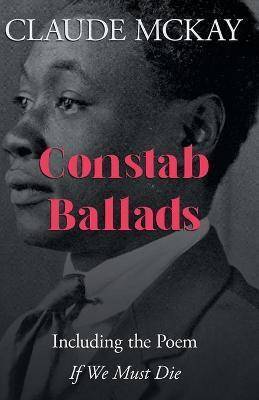
Constab Ballads: Including the Poem 'If We Must Die'
First published in 1912, "Constab Ballads" is a classic poetry collection with the main focus based on the police force of McKay's time, including his famous poem "If We Must Die". Festus Claudius "Claude" McKay OJ (1890-1948) was a Jamaican-born American poet and writer famous for his central role in the Harlem Renaissance. After travelling to America to attend college, he came across W. E. B. Du Bois's "The Souls of Black Folk", which inspired in him an interest in politics. In 1914 he moved to New York City and five years later wrote his most famous work, "If We Must Die", a sonnet dealing with the spate of white-on-black race riots and lynchings that succeeded the First World War. McKay's political and literary endeavours eventually took him to Russia, where he collaborated on "The Negroes of America" (1923) and "Trial by Lynching" (1925), which explored American black-white racism from a Marxist class-conflict perspective. After coming to terms with the Authoritarianism of the Soviet Union, McKay left for Western Europe in 1923. Highly recommended for those interested in American history and global politics during the twentieth century. Contents include: "De Route March", "Flat-Foot Drill", "Bennie's Departure", "Consolation", "Fire Practice", "Second-Class Constable Alston", "Last Words of the Dying Recruit", "Bound Fe Duty", etc. Ragged Hand is proudly republishing this collection of classic poetry, complete with an introductory excerpt by the author.
PRP: 132.18 Lei

Acesta este Prețul Recomandat de Producător. Prețul de vânzare al produsului este afișat mai jos.
118.96Lei
118.96Lei
132.18 LeiPrimești 118 puncte

Livrare in 2-4 saptamani
Descrierea produsului
First published in 1912, "Constab Ballads" is a classic poetry collection with the main focus based on the police force of McKay's time, including his famous poem "If We Must Die". Festus Claudius "Claude" McKay OJ (1890-1948) was a Jamaican-born American poet and writer famous for his central role in the Harlem Renaissance. After travelling to America to attend college, he came across W. E. B. Du Bois's "The Souls of Black Folk", which inspired in him an interest in politics. In 1914 he moved to New York City and five years later wrote his most famous work, "If We Must Die", a sonnet dealing with the spate of white-on-black race riots and lynchings that succeeded the First World War. McKay's political and literary endeavours eventually took him to Russia, where he collaborated on "The Negroes of America" (1923) and "Trial by Lynching" (1925), which explored American black-white racism from a Marxist class-conflict perspective. After coming to terms with the Authoritarianism of the Soviet Union, McKay left for Western Europe in 1923. Highly recommended for those interested in American history and global politics during the twentieth century. Contents include: "De Route March", "Flat-Foot Drill", "Bennie's Departure", "Consolation", "Fire Practice", "Second-Class Constable Alston", "Last Words of the Dying Recruit", "Bound Fe Duty", etc. Ragged Hand is proudly republishing this collection of classic poetry, complete with an introductory excerpt by the author.
Detaliile produsului