- /
- Librarie online
- /
- Carti in engleza
- /
- Science
- /
- Life Sciences
- /
- Genetics & Genomics
- /
- Cooperative Gene - Mark Ridley
Cooperative Gene
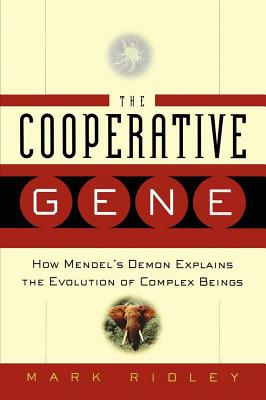
Cooperative Gene
Why isn't all life pond-scum? Why are there multimillion-celled, long-lived monsters like us, built from tens of thousands of cooperating genes? Mark Ridley presents a new explanation of how complex large life forms like ourselves came to exist, showing that the answer to the greatest mystery of evolution for modern science is not the selfish gene; it is the cooperative gene.
In this thought-provoking book, Ridley breaks down how two major biological hurdles had to be overcome in order to allow living complexity to evolve: the proliferation of genes and gene-selfishness. Because complex life has more genes than simple life, the increase in gene numbers poses a particular problem for complex beings. The more genes, the more chance for copying error; it is far easier to make a mistake copying the Bible than it is copying an advertising slogan. To add to the difficulty, Darwin's concept of natural selection encourages genes that look out for themselves, selfish genes that could easily evolve to sabotage the development of complex life forms. By retracing the history of life on our planet -- from the initial wobbly, replicating molecules, through microbes, worms, and flies, and on to humans -- Ridley reveals how life evolved as a series of steps to manage error and to coerce genes to cooperate within each body. Like a benign and unseen hand -- what Ridley calls "Mendel's Demon" -- the combination of these strategies enacts Austrian monk Gregor Mendel's fundamental laws of inheritance. This demon offers startling new perspectives on issues from curing AIDS, the origins of sex and gender, and cloning, to the genetics of angels. Indeed, if we are ever to understand the biology of other planets, we will need more than Darwin; we will need to understand how Mendel's Demon made the cooperative gene into the fundamental element of life.
What does the cooperative gene tell us about our future? With genetic technology burgeoning around the world, we must ask whether life will evolve to be even more complex than we already are. Human beings, Ridley concludes, may be near the limit of the possible, at least for earthly genetic mechanisms. But in the future, new genetic and reproductive biosystems could allow our descendants to increase their gene numbers and therefore their complexity. This process, he speculates, could lead to the evolution of life forms far stranger and more interesting than anything humanly discovered or imagined so far.
Written with un
In this thought-provoking book, Ridley breaks down how two major biological hurdles had to be overcome in order to allow living complexity to evolve: the proliferation of genes and gene-selfishness. Because complex life has more genes than simple life, the increase in gene numbers poses a particular problem for complex beings. The more genes, the more chance for copying error; it is far easier to make a mistake copying the Bible than it is copying an advertising slogan. To add to the difficulty, Darwin's concept of natural selection encourages genes that look out for themselves, selfish genes that could easily evolve to sabotage the development of complex life forms. By retracing the history of life on our planet -- from the initial wobbly, replicating molecules, through microbes, worms, and flies, and on to humans -- Ridley reveals how life evolved as a series of steps to manage error and to coerce genes to cooperate within each body. Like a benign and unseen hand -- what Ridley calls "Mendel's Demon" -- the combination of these strategies enacts Austrian monk Gregor Mendel's fundamental laws of inheritance. This demon offers startling new perspectives on issues from curing AIDS, the origins of sex and gender, and cloning, to the genetics of angels. Indeed, if we are ever to understand the biology of other planets, we will need more than Darwin; we will need to understand how Mendel's Demon made the cooperative gene into the fundamental element of life.
What does the cooperative gene tell us about our future? With genetic technology burgeoning around the world, we must ask whether life will evolve to be even more complex than we already are. Human beings, Ridley concludes, may be near the limit of the possible, at least for earthly genetic mechanisms. But in the future, new genetic and reproductive biosystems could allow our descendants to increase their gene numbers and therefore their complexity. This process, he speculates, could lead to the evolution of life forms far stranger and more interesting than anything humanly discovered or imagined so far.
Written with un
PRP: 151.78 Lei

Acesta este Prețul Recomandat de Producător. Prețul de vânzare al produsului este afișat mai jos.
136.60Lei
136.60Lei
151.78 LeiPrimești 136 puncte

Livrare in 2-4 saptamani
Descrierea produsului
Why isn't all life pond-scum? Why are there multimillion-celled, long-lived monsters like us, built from tens of thousands of cooperating genes? Mark Ridley presents a new explanation of how complex large life forms like ourselves came to exist, showing that the answer to the greatest mystery of evolution for modern science is not the selfish gene; it is the cooperative gene.
In this thought-provoking book, Ridley breaks down how two major biological hurdles had to be overcome in order to allow living complexity to evolve: the proliferation of genes and gene-selfishness. Because complex life has more genes than simple life, the increase in gene numbers poses a particular problem for complex beings. The more genes, the more chance for copying error; it is far easier to make a mistake copying the Bible than it is copying an advertising slogan. To add to the difficulty, Darwin's concept of natural selection encourages genes that look out for themselves, selfish genes that could easily evolve to sabotage the development of complex life forms. By retracing the history of life on our planet -- from the initial wobbly, replicating molecules, through microbes, worms, and flies, and on to humans -- Ridley reveals how life evolved as a series of steps to manage error and to coerce genes to cooperate within each body. Like a benign and unseen hand -- what Ridley calls "Mendel's Demon" -- the combination of these strategies enacts Austrian monk Gregor Mendel's fundamental laws of inheritance. This demon offers startling new perspectives on issues from curing AIDS, the origins of sex and gender, and cloning, to the genetics of angels. Indeed, if we are ever to understand the biology of other planets, we will need more than Darwin; we will need to understand how Mendel's Demon made the cooperative gene into the fundamental element of life.
What does the cooperative gene tell us about our future? With genetic technology burgeoning around the world, we must ask whether life will evolve to be even more complex than we already are. Human beings, Ridley concludes, may be near the limit of the possible, at least for earthly genetic mechanisms. But in the future, new genetic and reproductive biosystems could allow our descendants to increase their gene numbers and therefore their complexity. This process, he speculates, could lead to the evolution of life forms far stranger and more interesting than anything humanly discovered or imagined so far.
Written with un
In this thought-provoking book, Ridley breaks down how two major biological hurdles had to be overcome in order to allow living complexity to evolve: the proliferation of genes and gene-selfishness. Because complex life has more genes than simple life, the increase in gene numbers poses a particular problem for complex beings. The more genes, the more chance for copying error; it is far easier to make a mistake copying the Bible than it is copying an advertising slogan. To add to the difficulty, Darwin's concept of natural selection encourages genes that look out for themselves, selfish genes that could easily evolve to sabotage the development of complex life forms. By retracing the history of life on our planet -- from the initial wobbly, replicating molecules, through microbes, worms, and flies, and on to humans -- Ridley reveals how life evolved as a series of steps to manage error and to coerce genes to cooperate within each body. Like a benign and unseen hand -- what Ridley calls "Mendel's Demon" -- the combination of these strategies enacts Austrian monk Gregor Mendel's fundamental laws of inheritance. This demon offers startling new perspectives on issues from curing AIDS, the origins of sex and gender, and cloning, to the genetics of angels. Indeed, if we are ever to understand the biology of other planets, we will need more than Darwin; we will need to understand how Mendel's Demon made the cooperative gene into the fundamental element of life.
What does the cooperative gene tell us about our future? With genetic technology burgeoning around the world, we must ask whether life will evolve to be even more complex than we already are. Human beings, Ridley concludes, may be near the limit of the possible, at least for earthly genetic mechanisms. But in the future, new genetic and reproductive biosystems could allow our descendants to increase their gene numbers and therefore their complexity. This process, he speculates, could lead to the evolution of life forms far stranger and more interesting than anything humanly discovered or imagined so far.
Written with un
Detaliile produsului