



- /
- Librarie online
- /
- Carti in engleza
- /
- Social Science
- /
- Anthropology
- /
- Cultural
- /
- Darwinism, Dogma, and Cultural Evolution - C. R. Hallpike
Darwinism, Dogma, and Cultural Evolution
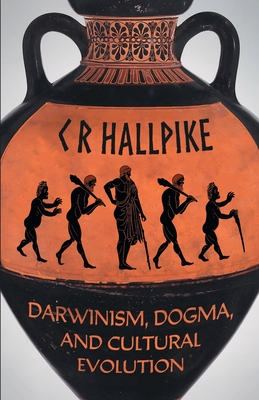
Neo-Darwinian philosophy claims that random variation plus natural selection are sufficient to explain the emergence of order everywhere in the world, including the evolution of human culture. Like a Greek vase, Universal Darwinism, as it has come to be called, is held up as a model of beauty and elegance that needs no improvement, but beauty and elegance are no substitute for facts and rational argument. So we are not really dealing with science here but with dogma based on faith and the craving for simplicity that tries to persuade by a systematic distortion of the facts.
Societies are not just populations of traits or memes but are organized systems, and the basic problem is to understand how these systems can evolve higher levels of complexity. But the notion of random variation can tell us nothing about the sources of cultural change, and since human beings, unlike cells or genes, have consciousness and free will, it is not natural but human selection that explains the adaptive features of human beliefs and institutions. There are limits, however, to the powers of human selection because societies have their own forms of self-organization that may not only lead to greater complexity but to breakdown and disorder, to the survival of the mediocre rather than the fittest.
Dr. C. R. Hallpike is an anthropologist who began his career working in the field with the Konso of Ethiopia and Tauade tribes of Papua New Guinea. He has written extensively on diverse topics, including cultural relativism, social evolution, primitive thought, the nature of religion, warfare, moral development, and the origins of modern science.
PRP: 165.25 Lei

Acesta este Prețul Recomandat de Producător. Prețul de vânzare al produsului este afișat mai jos.
148.72Lei
148.72Lei
165.25 LeiPrimești 148 puncte

Livrare in 2-4 saptamani
Descrierea produsului
Neo-Darwinian philosophy claims that random variation plus natural selection are sufficient to explain the emergence of order everywhere in the world, including the evolution of human culture. Like a Greek vase, Universal Darwinism, as it has come to be called, is held up as a model of beauty and elegance that needs no improvement, but beauty and elegance are no substitute for facts and rational argument. So we are not really dealing with science here but with dogma based on faith and the craving for simplicity that tries to persuade by a systematic distortion of the facts.
Societies are not just populations of traits or memes but are organized systems, and the basic problem is to understand how these systems can evolve higher levels of complexity. But the notion of random variation can tell us nothing about the sources of cultural change, and since human beings, unlike cells or genes, have consciousness and free will, it is not natural but human selection that explains the adaptive features of human beliefs and institutions. There are limits, however, to the powers of human selection because societies have their own forms of self-organization that may not only lead to greater complexity but to breakdown and disorder, to the survival of the mediocre rather than the fittest.
Dr. C. R. Hallpike is an anthropologist who began his career working in the field with the Konso of Ethiopia and Tauade tribes of Papua New Guinea. He has written extensively on diverse topics, including cultural relativism, social evolution, primitive thought, the nature of religion, warfare, moral development, and the origins of modern science.
Detaliile produsului