



- /
- Librarie online
- /
- Carti in engleza
- /
- Religion
- /
- Hinduism
- /
- History
- /
- Decoding a Hindu Temple: Royalty and Religion in the Iconographic Program of the Virupaksha Temple, Pattadakal - Cathleen A. Cummings
Decoding a Hindu Temple: Royalty and Religion in the Iconographic Program of the Virupaksha Temple, Pattadakal
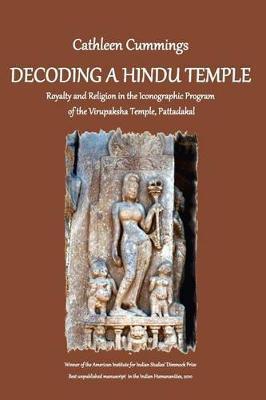
Decoding a Hindu Temple: Royalty and Religion in the Iconographic Program of the Virupaksha Temple, Pattadakal
Queen Lokamahadevi, the chief wife of the Early Chalukya king Vikramaditya II, began construction of the Virupaksha Temple in approximately 733 at the dynasty's royal consecration site of Pattakadal, in Karnataka, India. As one of the most powerful rulers of the Early Chalukya dynasty, Vikramaditya II controlled territories spread over a vast region of central and southern India. The Virupaksha Temple commemorated his crucial victory over the rival Pallava dynasty to the southeast. Dedicated to the Hindu god Shiva and richly adorned with carved images of Shiva, Vishnu, and other deities, the Virupaksha Temple is widely considered one of the most important of the freestanding structures erected during the Chalukya era, and it represents the zenith of temple construction of its period. Although this temple has been studied for more than a century and appears in virtually every textbook on Indian art, its iconographic program has never been fully explored. Decoding a Hindu Temple: Royalty and Religion in the Iconographic Program of the Virupaksha Temple, Pattadakal interprets the iconographic program of Virupaksha Temple. The work demonstrates that the iconography of the temple is expressive of royal aspirations-both material and spiritual-as well of past successes. Specific imagery that legitimizes the king through references to his genealogy and lineage, his royal marriage, and his conquests and defeats of other rival monarchs are identified, as well as his role in upholding the social order. The temple is understood as the formal "stage" for the king's ceremonial life, a testament to his wealth and authority, and the vehicle through which his reign was sacralized and reified. Overall, the book suggests that through its figurative imagery, the temple's iconography reiterates the world orders of both the physical realm and the cosmos at large. At the same time, the book looks at the issue of female patronage to show that the temple reflected the importance of the role of the queen to the functioning of the kingdom. The book suggests a function of the Hindu temple not previously identified, but likely applicable more generally to monuments throughout ancient India.
PRP: 375.88 Lei

Acesta este Prețul Recomandat de Producător. Prețul de vânzare al produsului este afișat mai jos.
300.70Lei
300.70Lei
375.88 LeiPrimești 300 puncte

Livrare in 2-4 saptamani
Descrierea produsului
Queen Lokamahadevi, the chief wife of the Early Chalukya king Vikramaditya II, began construction of the Virupaksha Temple in approximately 733 at the dynasty's royal consecration site of Pattakadal, in Karnataka, India. As one of the most powerful rulers of the Early Chalukya dynasty, Vikramaditya II controlled territories spread over a vast region of central and southern India. The Virupaksha Temple commemorated his crucial victory over the rival Pallava dynasty to the southeast. Dedicated to the Hindu god Shiva and richly adorned with carved images of Shiva, Vishnu, and other deities, the Virupaksha Temple is widely considered one of the most important of the freestanding structures erected during the Chalukya era, and it represents the zenith of temple construction of its period. Although this temple has been studied for more than a century and appears in virtually every textbook on Indian art, its iconographic program has never been fully explored. Decoding a Hindu Temple: Royalty and Religion in the Iconographic Program of the Virupaksha Temple, Pattadakal interprets the iconographic program of Virupaksha Temple. The work demonstrates that the iconography of the temple is expressive of royal aspirations-both material and spiritual-as well of past successes. Specific imagery that legitimizes the king through references to his genealogy and lineage, his royal marriage, and his conquests and defeats of other rival monarchs are identified, as well as his role in upholding the social order. The temple is understood as the formal "stage" for the king's ceremonial life, a testament to his wealth and authority, and the vehicle through which his reign was sacralized and reified. Overall, the book suggests that through its figurative imagery, the temple's iconography reiterates the world orders of both the physical realm and the cosmos at large. At the same time, the book looks at the issue of female patronage to show that the temple reflected the importance of the role of the queen to the functioning of the kingdom. The book suggests a function of the Hindu temple not previously identified, but likely applicable more generally to monuments throughout ancient India.
Detaliile produsului