- /
- Librarie online
- /
- Carti in engleza
- /
- Philosophy
- /
- History & Surveys
- /
- Modern
- /
- Eclipse of Reason - Max Horkheimer
Eclipse of Reason
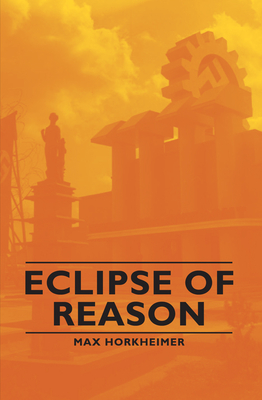
Eclipse of Reason
In Eclipse of Reason, Horkheimer discusses how the Nazis were able to project their agenda as "reasonable", but also identifies the Pragmatism of John Dewey as problematic, due to his emphasis on the instrumental dimension of reasoning. It is broken into five sections: Means and Ends, Conflicting Panaceas, The Revolt of Nature, The Rise and Decline of the Individual and On the Concept of Philosophy and deals with the concept of reason within the history of western philosophy. Horkheimer defines true reason as rationality, which can only be fostered in an environment of free, critical thinking. He details the difference between objective, subjective and instrumental reason, and states that we have moved from the former through the centre and into the latter (though subjective and instrumental reason are closely connected). Objective reason deals with universal truths that dictate that an action is either right or wrong. It is a concrete concept, and a force in the world that requires specific modes of behaviour.
PRP: 272.72 Lei

Acesta este Prețul Recomandat de Producător. Prețul de vânzare al produsului este afișat mai jos.
245.45Lei
245.45Lei
272.72 LeiPrimești 245 puncte

Livrare in 2-4 saptamani
Descrierea produsului
In Eclipse of Reason, Horkheimer discusses how the Nazis were able to project their agenda as "reasonable", but also identifies the Pragmatism of John Dewey as problematic, due to his emphasis on the instrumental dimension of reasoning. It is broken into five sections: Means and Ends, Conflicting Panaceas, The Revolt of Nature, The Rise and Decline of the Individual and On the Concept of Philosophy and deals with the concept of reason within the history of western philosophy. Horkheimer defines true reason as rationality, which can only be fostered in an environment of free, critical thinking. He details the difference between objective, subjective and instrumental reason, and states that we have moved from the former through the centre and into the latter (though subjective and instrumental reason are closely connected). Objective reason deals with universal truths that dictate that an action is either right or wrong. It is a concrete concept, and a force in the world that requires specific modes of behaviour.
Detaliile produsului