








Ecologies of Empire in South Asia, 1400-1900
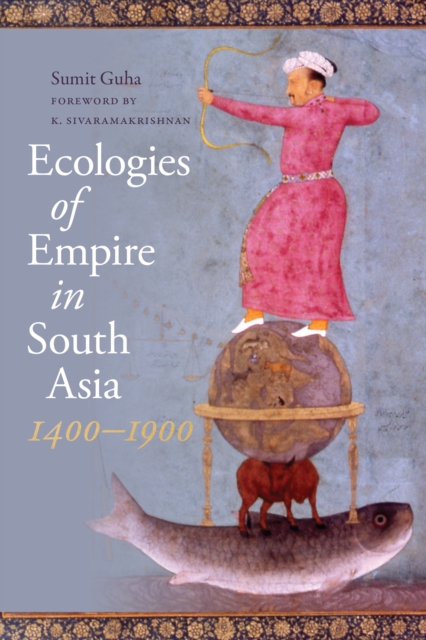
Ecologies of Empire in South Asia, 1400-1900
The perception, valuation, and manipulation of human environments all have their own layered histories. So Sumit Guha argues in this sweeping examination of a pivotal five hundred years when successive empires struggled to harness lands and peoples to their agendas across Asia. Ecologies of Empire in South Asia, 1400-1900 compares the practices of the Mughal and British Empires to demonstrate how their fluctuating capacity for domination was imbricated in the formation of environmental knowledge itself.
The establishment of imperial control transforms local knowledge of the world into the aggregated information that reproduces centralized power over it. That is the political ecology that reshapes entire biomes. Animals and plants are translocated; human communities are displaced or destroyed. Some species proliferate; others disappear. But these state projects are overlaid upon the many local and regional geographies made by sacred cosmologies and local sites, pilgrimage routes and river fords, hot springs and fluctuating aquifers, hunting ranges and nesting grounds, notable trees and striking rocks.
Guha uncovers these ecological histories by scrutinizing little-used archival sources. His historically based political ecology demonstrates how the biomes of a vast subcontinent were changed by struggles to make and to resist empire.
Reveals how imperial power and local resistance have shaped landscapes
The perception, valuation, and manipulation of human environments all have their own layered histories. So Sumit Guha argues in this sweeping examination of a pivotal five hundred years when successive empires struggled to harness lands and peoples to their agendas across Asia. Ecologies of Empire in South Asia, 1400-1900 compares the practices of the Mughal and British Empires to demonstrate how their fluctuating capacity for domination was imbricated in the formation of environmental knowledge itself.
The establishment of imperial control transforms local knowledge of the world into the aggregated information that reproduces centralized power over it. That is the political ecology that reshapes entire biomes. Animals and plants are translocated; human communities are displaced or destroyed. Some species proliferate; others disappear. But these state projects are overlaid upon the many local and regional geographies made by sacred cosmologies and local sites, pilgrimage routes and river fords, hot springs and fluctuating aquif
The establishment of imperial control transforms local knowledge of the world into the aggregated information that reproduces centralized power over it. That is the political ecology that reshapes entire biomes. Animals and plants are translocated; human communities are displaced or destroyed. Some species proliferate; others disappear. But these state projects are overlaid upon the many local and regional geographies made by sacred cosmologies and local sites, pilgrimage routes and river fords, hot springs and fluctuating aquifers, hunting ranges and nesting grounds, notable trees and striking rocks.
Guha uncovers these ecological histories by scrutinizing little-used archival sources. His historically based political ecology demonstrates how the biomes of a vast subcontinent were changed by struggles to make and to resist empire.
Reveals how imperial power and local resistance have shaped landscapes
The perception, valuation, and manipulation of human environments all have their own layered histories. So Sumit Guha argues in this sweeping examination of a pivotal five hundred years when successive empires struggled to harness lands and peoples to their agendas across Asia. Ecologies of Empire in South Asia, 1400-1900 compares the practices of the Mughal and British Empires to demonstrate how their fluctuating capacity for domination was imbricated in the formation of environmental knowledge itself.
The establishment of imperial control transforms local knowledge of the world into the aggregated information that reproduces centralized power over it. That is the political ecology that reshapes entire biomes. Animals and plants are translocated; human communities are displaced or destroyed. Some species proliferate; others disappear. But these state projects are overlaid upon the many local and regional geographies made by sacred cosmologies and local sites, pilgrimage routes and river fords, hot springs and fluctuating aquif
PRP: 343.58 Lei

Acesta este Prețul Recomandat de Producător. Prețul de vânzare al produsului este afișat mai jos.
309.22Lei
309.22Lei
343.58 LeiPrimești 309 puncte

Indisponibil
Descrierea produsului
The perception, valuation, and manipulation of human environments all have their own layered histories. So Sumit Guha argues in this sweeping examination of a pivotal five hundred years when successive empires struggled to harness lands and peoples to their agendas across Asia. Ecologies of Empire in South Asia, 1400-1900 compares the practices of the Mughal and British Empires to demonstrate how their fluctuating capacity for domination was imbricated in the formation of environmental knowledge itself.
The establishment of imperial control transforms local knowledge of the world into the aggregated information that reproduces centralized power over it. That is the political ecology that reshapes entire biomes. Animals and plants are translocated; human communities are displaced or destroyed. Some species proliferate; others disappear. But these state projects are overlaid upon the many local and regional geographies made by sacred cosmologies and local sites, pilgrimage routes and river fords, hot springs and fluctuating aquifers, hunting ranges and nesting grounds, notable trees and striking rocks.
Guha uncovers these ecological histories by scrutinizing little-used archival sources. His historically based political ecology demonstrates how the biomes of a vast subcontinent were changed by struggles to make and to resist empire.
Reveals how imperial power and local resistance have shaped landscapes
The perception, valuation, and manipulation of human environments all have their own layered histories. So Sumit Guha argues in this sweeping examination of a pivotal five hundred years when successive empires struggled to harness lands and peoples to their agendas across Asia. Ecologies of Empire in South Asia, 1400-1900 compares the practices of the Mughal and British Empires to demonstrate how their fluctuating capacity for domination was imbricated in the formation of environmental knowledge itself.
The establishment of imperial control transforms local knowledge of the world into the aggregated information that reproduces centralized power over it. That is the political ecology that reshapes entire biomes. Animals and plants are translocated; human communities are displaced or destroyed. Some species proliferate; others disappear. But these state projects are overlaid upon the many local and regional geographies made by sacred cosmologies and local sites, pilgrimage routes and river fords, hot springs and fluctuating aquif
The establishment of imperial control transforms local knowledge of the world into the aggregated information that reproduces centralized power over it. That is the political ecology that reshapes entire biomes. Animals and plants are translocated; human communities are displaced or destroyed. Some species proliferate; others disappear. But these state projects are overlaid upon the many local and regional geographies made by sacred cosmologies and local sites, pilgrimage routes and river fords, hot springs and fluctuating aquifers, hunting ranges and nesting grounds, notable trees and striking rocks.
Guha uncovers these ecological histories by scrutinizing little-used archival sources. His historically based political ecology demonstrates how the biomes of a vast subcontinent were changed by struggles to make and to resist empire.
Reveals how imperial power and local resistance have shaped landscapes
The perception, valuation, and manipulation of human environments all have their own layered histories. So Sumit Guha argues in this sweeping examination of a pivotal five hundred years when successive empires struggled to harness lands and peoples to their agendas across Asia. Ecologies of Empire in South Asia, 1400-1900 compares the practices of the Mughal and British Empires to demonstrate how their fluctuating capacity for domination was imbricated in the formation of environmental knowledge itself.
The establishment of imperial control transforms local knowledge of the world into the aggregated information that reproduces centralized power over it. That is the political ecology that reshapes entire biomes. Animals and plants are translocated; human communities are displaced or destroyed. Some species proliferate; others disappear. But these state projects are overlaid upon the many local and regional geographies made by sacred cosmologies and local sites, pilgrimage routes and river fords, hot springs and fluctuating aquif
Detaliile produsului




