








Exoplanets, The Frontier of Modern Astronomy
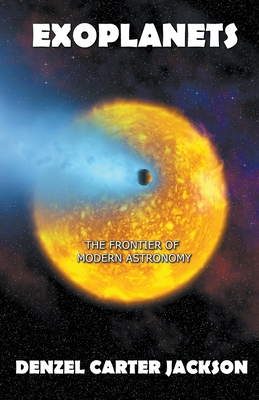
Exoplanets have been found in a relatively small region of our galaxy, the Milky Way. According to NASA's Kepler Space Telescope, there are more planets in the universe than stars.
Our solar system's exoplanets comprise similar elements to our planets, but their mixtures may differ. By measuring the sizes (diameters) and masses (weights) of exoplanets, we can determine their compositions, which range from very rocky (like Earth and Venus) to very gaseous (like Jupiter and Saturn). Some planets may be dominated by water, ice, or iron, while others are dominated by iron or carbon. A stellar world with lava seas, a puffy planet, and a planet whose core is as dense as Styrofoam have been identified.
Since then, we've discovered thousands of exoplanets using various detection methods. From Earth, it is infrequent to see an exoplanet through a telescope the way you might see Saturn. Direct imaging has only been used to find a handful of exoplanets (and these are usually young gas giants orbiting very far from their stars).
Exoplanets are now part of our universe. There are thousands of confirmed planets. This is only a tiny part of the entire galaxy. As we increase the number and observing power of robotic telescopes deployed in space, the number could rise into the tens of thousands within a decade.
Since then, we've discovered thousands of exoplanets using various detection methods. From Earth, it is infrequent to see an exoplanet through a telescope the way you might see Saturn. That's called direct imaging, and only a handful of exoplanets have been found this way (and these are young gas giant planets orbiting very far from their stars).
Exoplanets are now part of our universe. Thousands of planets have been confirmed. This is only a tiny sampling of the galaxy. By deploying more robotic telescopes into space, we will see tens of thousands of stars within a decade.
PRP: 156.98 Lei

Acesta este Prețul Recomandat de Producător. Prețul de vânzare al produsului este afișat mai jos.
141.28Lei
141.28Lei
156.98 LeiPrimești 141 puncte

Livrare in 2-4 saptamani
Descrierea produsului
Exoplanets have been found in a relatively small region of our galaxy, the Milky Way. According to NASA's Kepler Space Telescope, there are more planets in the universe than stars.
Our solar system's exoplanets comprise similar elements to our planets, but their mixtures may differ. By measuring the sizes (diameters) and masses (weights) of exoplanets, we can determine their compositions, which range from very rocky (like Earth and Venus) to very gaseous (like Jupiter and Saturn). Some planets may be dominated by water, ice, or iron, while others are dominated by iron or carbon. A stellar world with lava seas, a puffy planet, and a planet whose core is as dense as Styrofoam have been identified.
Since then, we've discovered thousands of exoplanets using various detection methods. From Earth, it is infrequent to see an exoplanet through a telescope the way you might see Saturn. Direct imaging has only been used to find a handful of exoplanets (and these are usually young gas giants orbiting very far from their stars).
Exoplanets are now part of our universe. There are thousands of confirmed planets. This is only a tiny part of the entire galaxy. As we increase the number and observing power of robotic telescopes deployed in space, the number could rise into the tens of thousands within a decade.
Since then, we've discovered thousands of exoplanets using various detection methods. From Earth, it is infrequent to see an exoplanet through a telescope the way you might see Saturn. That's called direct imaging, and only a handful of exoplanets have been found this way (and these are young gas giant planets orbiting very far from their stars).
Exoplanets are now part of our universe. Thousands of planets have been confirmed. This is only a tiny sampling of the galaxy. By deploying more robotic telescopes into space, we will see tens of thousands of stars within a decade.
Detaliile produsului