


- /
- Librarie online
- /
- Carti in engleza
- /
- Art
- /
- Techniques
- /
- Printmaking
- /
- Experiments in Relief Print Making - Charles W. Smith
Experiments in Relief Print Making
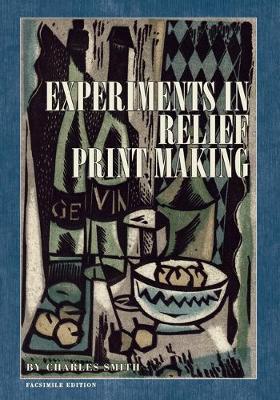
This is a facsimile edition of the first book to document and explore nontraditional "pressure printing" techniques for creating multicolor shading in relief printing of wood engravings and linoleum blocks. The author shows the process for applying shaped backing layers behind the paper to be printed, in order to create a unique artistic effect. "Several of the methods described require but one engraved block for producing prints in any number of colors, while the traditional method requires a separate engraved block for each color used, and in another method the engraved block is not necessary at all for making prints in many colors," the author writes.
Experiments in Relief Print Making, by Charles Smith, was originally published in 1954 by the University of Virginia Press in a limited edition of 300 copies. It features six images printed by letterpress in multiple colors from hand-cut plates and the artist's original make-ready layers. Each color print is accompanied by reproductions showing separations of the individual color layers in isolation. For the facsimile edition all of the finished images and layers are displayed at their full original size, using high resolution scans from the limited edition 1954 book.
"The term 'direct impression' as used here means that the block has been engraved and color transferred directly from the engraved block to the printing paper. The make-ready or indirect impression is different in that pressure is applied to the reverse side of the paper causing the image to offset from a block to the printing paper. This impression is never as sharp and clear as the direct impressions. Usually a combination of the two will produce softness and sharpness, although either may be used separately for certain desirable effects."
PRP: 244.93 Lei

Acesta este Prețul Recomandat de Producător. Prețul de vânzare al produsului este afișat mai jos.
220.44Lei
220.44Lei
244.93 LeiPrimești 220 puncte

Livrare in 2-4 saptamani
Descrierea produsului
This is a facsimile edition of the first book to document and explore nontraditional "pressure printing" techniques for creating multicolor shading in relief printing of wood engravings and linoleum blocks. The author shows the process for applying shaped backing layers behind the paper to be printed, in order to create a unique artistic effect. "Several of the methods described require but one engraved block for producing prints in any number of colors, while the traditional method requires a separate engraved block for each color used, and in another method the engraved block is not necessary at all for making prints in many colors," the author writes.
Experiments in Relief Print Making, by Charles Smith, was originally published in 1954 by the University of Virginia Press in a limited edition of 300 copies. It features six images printed by letterpress in multiple colors from hand-cut plates and the artist's original make-ready layers. Each color print is accompanied by reproductions showing separations of the individual color layers in isolation. For the facsimile edition all of the finished images and layers are displayed at their full original size, using high resolution scans from the limited edition 1954 book.
"The term 'direct impression' as used here means that the block has been engraved and color transferred directly from the engraved block to the printing paper. The make-ready or indirect impression is different in that pressure is applied to the reverse side of the paper causing the image to offset from a block to the printing paper. This impression is never as sharp and clear as the direct impressions. Usually a combination of the two will produce softness and sharpness, although either may be used separately for certain desirable effects."
Detaliile produsului