



- /
- Librarie online
- /
- Carti in engleza
- /
- History
- /
- Historical Geography
- /
- Exploration: A Very Short Introduction - Stewart A. Weaver
Exploration: A Very Short Introduction
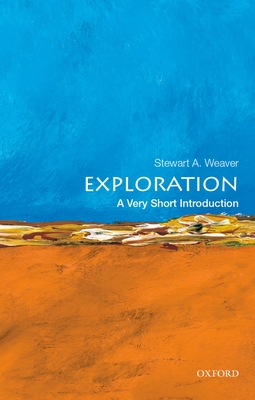
Exploration: A Very Short Introduction
We live in an age of globalization on every conceivable level, but globalization has a deeper history than politicians and pundits often allow, and nothing is more significant to its history than exploration. Wherever trade or faith or empire followed, explorers usually led. Their motives were as many-sided and various as their actions; their legacies are contested and mixed. But none can doubt the significance of explorers to the making of the modern world. For as long as human societies have existed, people have felt the urge to venture outside of them, either in search of other societies or in search of new land or adventure. Exploration: A Very Short Introduction surveys this quintessential human impulse, tracing it from pre-history to the present, from east to west around the globe, and from the depths of volcanoes to the expanses of space. Focusing on the theme of exploration as encounter, Stewart Weaver discusses the Polynesians in the Pacific, the Norse in the Atlantic, and other early explorers. He reflects on the Columbian "discovery" of the Americas, James Cook and the place of exploration in the Enlightenment, and Alexander von Humboldt's epochal encounter with tropical South America. The book's final chapters relate exploration to imperial expansion in Africa and Central Asia, assess the meaning of the race to the North and South Poles, and consider the significance of today's efforts in space and deep sea exploration. But what accounts for this urge? Through this brief study of the history of exploration, Weaver clearly shows how the impulse to explore is also the foundation of the globalized world we inhabit today. Exploration combines a narration of explorers' daring feats with a wide-lens examination of what it fundamentally means to explore. ABOUT THE SERIES: The Very Short Introductions series from Oxford University Press contains hundreds of titles in almost every subject area. These pocket-sized books are the perfect way to get ahead in a new subject quickly. Our expert authors combine facts, analysis, perspective, new ideas, and enthusiasm to make interesting and challenging topics highly readable.
PRP: 80.54 Lei

Acesta este Prețul Recomandat de Producător. Prețul de vânzare al produsului este afișat mai jos.
72.49Lei
72.49Lei
80.54 LeiPrimești 72 puncte

Livrare in 2-4 saptamani
Descrierea produsului
We live in an age of globalization on every conceivable level, but globalization has a deeper history than politicians and pundits often allow, and nothing is more significant to its history than exploration. Wherever trade or faith or empire followed, explorers usually led. Their motives were as many-sided and various as their actions; their legacies are contested and mixed. But none can doubt the significance of explorers to the making of the modern world. For as long as human societies have existed, people have felt the urge to venture outside of them, either in search of other societies or in search of new land or adventure. Exploration: A Very Short Introduction surveys this quintessential human impulse, tracing it from pre-history to the present, from east to west around the globe, and from the depths of volcanoes to the expanses of space. Focusing on the theme of exploration as encounter, Stewart Weaver discusses the Polynesians in the Pacific, the Norse in the Atlantic, and other early explorers. He reflects on the Columbian "discovery" of the Americas, James Cook and the place of exploration in the Enlightenment, and Alexander von Humboldt's epochal encounter with tropical South America. The book's final chapters relate exploration to imperial expansion in Africa and Central Asia, assess the meaning of the race to the North and South Poles, and consider the significance of today's efforts in space and deep sea exploration. But what accounts for this urge? Through this brief study of the history of exploration, Weaver clearly shows how the impulse to explore is also the foundation of the globalized world we inhabit today. Exploration combines a narration of explorers' daring feats with a wide-lens examination of what it fundamentally means to explore. ABOUT THE SERIES: The Very Short Introductions series from Oxford University Press contains hundreds of titles in almost every subject area. These pocket-sized books are the perfect way to get ahead in a new subject quickly. Our expert authors combine facts, analysis, perspective, new ideas, and enthusiasm to make interesting and challenging topics highly readable.
Detaliile produsului