








Facing the Flag: A New Translation
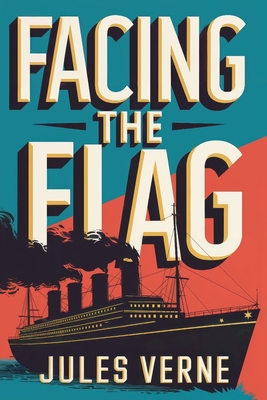
Facing the Flag: A New Translation
The ultimate weapon. The tortured genius who created it. And the race to control what could destroy civilization. Thomas Roch is a brilliant French inventor consumed by bitterness. He has created the Fulgurator-a weapon of unprecedented destructive power capable of annihilating fleets, leveling fortifications, and obliterating cities at great distance. It renders conventional military force obsolete. It gives its possessor the power to threaten nations with annihilation. The French government wanted to buy it. Roch, feeling his genius inadequately appreciated and insufficiently compensated, refused exclusive sale to any nation, demanding a price no government would pay. When the world declined to meet his terms, his mental state deteriorated into paranoid madness. Now he has been kidnapped. Ker Karraje, a pirate operating from a secret base inside a Caribbean volcano, has seized Roch and the Fulgurator. Using a submarine to operate undetected, Karraje plans to force Roch to demonstrate the weapon, then ransom it to the highest bidder-or use it himself to terrorize nations into submission. Simon Hart, a French engineer working undercover as Roch's medical attendant, must navigate a treacherous world of captivity and deception. His mission: ensure the Fulgurator serves French interests rather than falling into criminal or rival hands. But as Karraje forces Roch to demonstrate the weapon's terrible power-destroying a warship and its crew as mere technical proof-Hart confronts questions that have no easy answers. What should be done with a weapon of such destructive capability? Can any nation be trusted with power to annihilate others? Does the inventor bear responsibility for what his creation enables? And if the weapon cannot be controlled, should it exist at all? Jules Verne wrote Facing the Flag in 1896, decades before nuclear weapons would make these questions urgently real. His anticipation of weapons of mass destruction is remarkably prescient-the Fulgurator functions strategically exactly as nuclear weapons would, changing warfare fundamentally, making conventional force obsolete, enabling terror on unprecedented scale. Yet the novel is compromised by nationalism that prevents Verne from following his insights to their logical conclusions. French possession of the Fulgurator is portrayed as responsible stewardship; rival control is presented as dangerous threat. The story assumes the problem is not the weapon's existence but ensuring it serves the righ
PRP: 85.17 Lei

Acesta este Prețul Recomandat de Producător. Prețul de vânzare al produsului este afișat mai jos.
68.14Lei
68.14Lei
85.17 LeiPrimești 68 puncte

Livrare in 2-4 saptamani
Descrierea produsului
The ultimate weapon. The tortured genius who created it. And the race to control what could destroy civilization. Thomas Roch is a brilliant French inventor consumed by bitterness. He has created the Fulgurator-a weapon of unprecedented destructive power capable of annihilating fleets, leveling fortifications, and obliterating cities at great distance. It renders conventional military force obsolete. It gives its possessor the power to threaten nations with annihilation. The French government wanted to buy it. Roch, feeling his genius inadequately appreciated and insufficiently compensated, refused exclusive sale to any nation, demanding a price no government would pay. When the world declined to meet his terms, his mental state deteriorated into paranoid madness. Now he has been kidnapped. Ker Karraje, a pirate operating from a secret base inside a Caribbean volcano, has seized Roch and the Fulgurator. Using a submarine to operate undetected, Karraje plans to force Roch to demonstrate the weapon, then ransom it to the highest bidder-or use it himself to terrorize nations into submission. Simon Hart, a French engineer working undercover as Roch's medical attendant, must navigate a treacherous world of captivity and deception. His mission: ensure the Fulgurator serves French interests rather than falling into criminal or rival hands. But as Karraje forces Roch to demonstrate the weapon's terrible power-destroying a warship and its crew as mere technical proof-Hart confronts questions that have no easy answers. What should be done with a weapon of such destructive capability? Can any nation be trusted with power to annihilate others? Does the inventor bear responsibility for what his creation enables? And if the weapon cannot be controlled, should it exist at all? Jules Verne wrote Facing the Flag in 1896, decades before nuclear weapons would make these questions urgently real. His anticipation of weapons of mass destruction is remarkably prescient-the Fulgurator functions strategically exactly as nuclear weapons would, changing warfare fundamentally, making conventional force obsolete, enabling terror on unprecedented scale. Yet the novel is compromised by nationalism that prevents Verne from following his insights to their logical conclusions. French possession of the Fulgurator is portrayed as responsible stewardship; rival control is presented as dangerous threat. The story assumes the problem is not the weapon's existence but ensuring it serves the righ
Detaliile produsului