


- /
- Librarie online
- /
- Carti in engleza
- /
- Biography & Autobiography
- /
- Cultural Heritage
- /
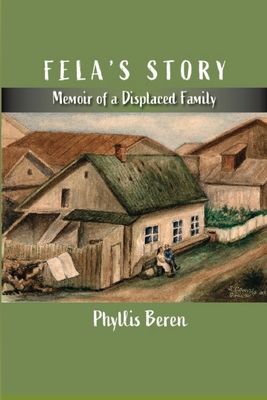
- Fela's Story: Memoir of a Displaced Family - Phyllis Beren
Fela's Story: Memoir of a Displaced Family
In the last years of her life, I noticed two significant alterations in my mother: her increased preoccupation with her Holocaust past and changes in her memory. It took me years to accept the change that took place in her memory because I had always been in awe of her astounding capacity for recall. When I was two-years old she recited endless Russian poetry and nursery rhymes, and when I was an adult she would recite these same poems and ask if I remembered them. She helped me with my algebra when I was in high school, performing complicated mathematical calculations in her head. The decline of her sharp memory, at first barely perceptible, slowly picked up speed and ultimately became the progression of Alzheimer's.
Unlike her stock of retained knowledge, when it came to answering questions about our life during and after the war, she offered a confused narrative. Only when she was much older but prior to her loss of memory did she change her attitude about the past and develop a growing interest in learning more about the Holocaust. She would speak to me about books and articles she read, films she watched and stories she heard. When this kind of remembrance began to occur, I experienced an uneasy feeling, as if my mother were illegitimately identifying herself as a Holocaust survivor. I say illegitimately because as I was growing up she had set herself apart from my father and his extended family. My father's family felt connected to their past and spoke of family and friends lost in the Holocaust. Gradually, I came to understand that she was identifying and recognizing her own story in what others had remembered, experienced and written about the war years, specifically about the Holocaust. As she shared her newly awakened discoveries with me, she frequently followed up by saying, "Phyllis, you know, that's what we went through."
PRP: 185.69 Lei

Acesta este Prețul Recomandat de Producător. Prețul de vânzare al produsului este afișat mai jos.
167.12Lei
167.12Lei
185.69 LeiPrimești 167 puncte

Livrare in 2-4 saptamani
Descrierea produsului
In the last years of her life, I noticed two significant alterations in my mother: her increased preoccupation with her Holocaust past and changes in her memory. It took me years to accept the change that took place in her memory because I had always been in awe of her astounding capacity for recall. When I was two-years old she recited endless Russian poetry and nursery rhymes, and when I was an adult she would recite these same poems and ask if I remembered them. She helped me with my algebra when I was in high school, performing complicated mathematical calculations in her head. The decline of her sharp memory, at first barely perceptible, slowly picked up speed and ultimately became the progression of Alzheimer's.
Unlike her stock of retained knowledge, when it came to answering questions about our life during and after the war, she offered a confused narrative. Only when she was much older but prior to her loss of memory did she change her attitude about the past and develop a growing interest in learning more about the Holocaust. She would speak to me about books and articles she read, films she watched and stories she heard. When this kind of remembrance began to occur, I experienced an uneasy feeling, as if my mother were illegitimately identifying herself as a Holocaust survivor. I say illegitimately because as I was growing up she had set herself apart from my father and his extended family. My father's family felt connected to their past and spoke of family and friends lost in the Holocaust. Gradually, I came to understand that she was identifying and recognizing her own story in what others had remembered, experienced and written about the war years, specifically about the Holocaust. As she shared her newly awakened discoveries with me, she frequently followed up by saying, "Phyllis, you know, that's what we went through."
Detaliile produsului