



- /
- Librarie online
- /
- Carti in engleza
- /
- Social Sciences
- /
- Politics
- /
- First World, First Nations
First World, First Nations
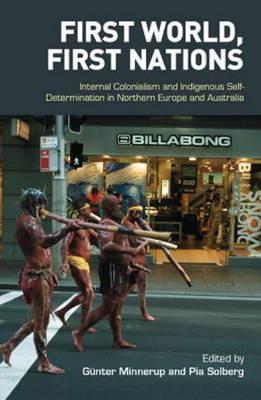
First World, First Nations
The Sami people of Northern Europe and Aboriginal Australians are literally a world apart in geographical terms, yet share a common fate as Indigenous minorities. Emerging from centuries of internal colonisation. Their ancient cultures and languages severely eroded by policies of forced assimilation, their traditional lifestyles and Economies damaged, and their political voices marginalised, recent decades have seen their struggles for collective survival rise to political prominence in national and international agendas, with the promise of Indigenous self-determination held out by national governments and the United Nations Declaration of Rights for Indigenous Peoples. Both the Sami and Indigenous Australians have won important new rights during these decades, yet the outcomes are very different. In this volume -- the only collection of essays specifically on the Indigenous peoples of Australia and Northern Europe -- the similarities and differences between the Indigenous experiences in the Nordic countries and Australia are explored by renowned experts in the field including Indigenous authors.
Some of the contributions are explicitly comparative and based on research experience in both areas, and two essays on New Zealand and Canada provide external points of reference to the volumes focus on Northern Europe (Norway, Sweden, Finland, Russia) and Australia. As always in Indigenous Studies, issues of cultural identity and survival are prominent but there is a special emphasis in many of the chapters on issues of socio-economic development and political representation, and a substantial introduction by the editors sketches out a historical-theoretical framework for understanding Indigenous struggles in First World countries that is critical of some currently fashionable approaches.
Some of the contributions are explicitly comparative and based on research experience in both areas, and two essays on New Zealand and Canada provide external points of reference to the volumes focus on Northern Europe (Norway, Sweden, Finland, Russia) and Australia. As always in Indigenous Studies, issues of cultural identity and survival are prominent but there is a special emphasis in many of the chapters on issues of socio-economic development and political representation, and a substantial introduction by the editors sketches out a historical-theoretical framework for understanding Indigenous struggles in First World countries that is critical of some currently fashionable approaches.
PRP: 575.17 Lei

Acesta este Prețul Recomandat de Producător. Prețul de vânzare al produsului este afișat mai jos.
460.14Lei
460.14Lei
575.17 LeiPrimești 460 puncte

Indisponibil
Descrierea produsului
The Sami people of Northern Europe and Aboriginal Australians are literally a world apart in geographical terms, yet share a common fate as Indigenous minorities. Emerging from centuries of internal colonisation. Their ancient cultures and languages severely eroded by policies of forced assimilation, their traditional lifestyles and Economies damaged, and their political voices marginalised, recent decades have seen their struggles for collective survival rise to political prominence in national and international agendas, with the promise of Indigenous self-determination held out by national governments and the United Nations Declaration of Rights for Indigenous Peoples. Both the Sami and Indigenous Australians have won important new rights during these decades, yet the outcomes are very different. In this volume -- the only collection of essays specifically on the Indigenous peoples of Australia and Northern Europe -- the similarities and differences between the Indigenous experiences in the Nordic countries and Australia are explored by renowned experts in the field including Indigenous authors.
Some of the contributions are explicitly comparative and based on research experience in both areas, and two essays on New Zealand and Canada provide external points of reference to the volumes focus on Northern Europe (Norway, Sweden, Finland, Russia) and Australia. As always in Indigenous Studies, issues of cultural identity and survival are prominent but there is a special emphasis in many of the chapters on issues of socio-economic development and political representation, and a substantial introduction by the editors sketches out a historical-theoretical framework for understanding Indigenous struggles in First World countries that is critical of some currently fashionable approaches.
Some of the contributions are explicitly comparative and based on research experience in both areas, and two essays on New Zealand and Canada provide external points of reference to the volumes focus on Northern Europe (Norway, Sweden, Finland, Russia) and Australia. As always in Indigenous Studies, issues of cultural identity and survival are prominent but there is a special emphasis in many of the chapters on issues of socio-economic development and political representation, and a substantial introduction by the editors sketches out a historical-theoretical framework for understanding Indigenous struggles in First World countries that is critical of some currently fashionable approaches.
Detaliile produsului