



- /
- Librarie online
- /
- Carti in engleza
- /
- Sports & Recreation
- /
- Martial Arts & Self-defense
- /
- Franco-Japanese Military Sabre and Bayonet - Kenneth S. Kitta
Franco-Japanese Military Sabre and Bayonet
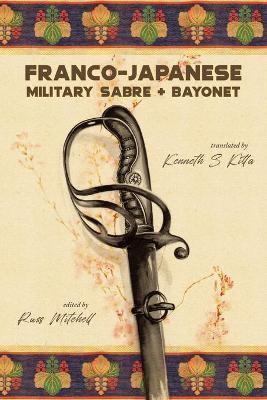
Franco-Japanese Military Sabre and Bayonet
Beginning in the Meiji Restoration, Japan entered a period of intense and dynamic martial arts development, allowing, for the first time in centuries for Japanese citizens other than the Samurai class to receive combat training. This training did not happen in isolation, but involved multiple military embassies from France, which helped to train the Imperial Japanese Army from a fledgling organization scarcely capable of defending its own borders, into a force to be reckoned with on the global stage.
The Japanese did not passively receive French instruction, but adapted it to their own combat theories, creating methods which became less and less "westernized" during the period from the Meiji Restoration until World War I. This book contains translations from three manuals, as well as notes and appendices to help the reader appreciate these dynamic and sophisticated fencing methods and the context in which they emerged.
PRP: 193.75 Lei

Acesta este Prețul Recomandat de Producător. Prețul de vânzare al produsului este afișat mai jos.
174.38Lei
174.38Lei
193.75 LeiPrimești 174 puncte

Livrare in 2-4 saptamani
Descrierea produsului
Beginning in the Meiji Restoration, Japan entered a period of intense and dynamic martial arts development, allowing, for the first time in centuries for Japanese citizens other than the Samurai class to receive combat training. This training did not happen in isolation, but involved multiple military embassies from France, which helped to train the Imperial Japanese Army from a fledgling organization scarcely capable of defending its own borders, into a force to be reckoned with on the global stage.
The Japanese did not passively receive French instruction, but adapted it to their own combat theories, creating methods which became less and less "westernized" during the period from the Meiji Restoration until World War I. This book contains translations from three manuals, as well as notes and appendices to help the reader appreciate these dynamic and sophisticated fencing methods and the context in which they emerged.
Detaliile produsului