- /
- Librarie online
- /
- Carti in engleza
- /
- Poetry
- /
- European
- /
- General
- /
- Glosy / Voices: Bilingual edition - Jan Polkowski
Glosy / Voices: Bilingual edition
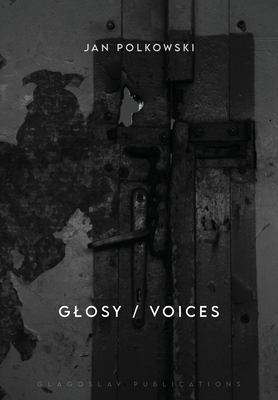
In December 1970, amid a harsh winter and an even harsher economic situation, the ruling communist regime in Poland chose to drastically raise prices on basic foodstuffs. Just before the Christmas holidays, for example, the price of fish, a staple of the traditional Christmas Eve meal, rose nearly 20%. Frustrated citizens took to the streets to protest, demanding the repeal of the price-hikes.
Things took an especially dramatic turn in the northern regions near the Baltic shore - later, the cradle of the Solidarity movement, which would eventually spark the fall of communism in Poland and throughout Central and Eastern Europe - where the government moved against their citizens with the Militia and the Army. Forty-one Poles were murdered by their own government when militiamen and soldiers opened fire with live rounds on the crowds in Gdańsk, Gdynia, Szczecin and Elbląg.
Jan Polkowski's moving poetic cycle Glosy [Voices], presented here in its entirety in the English translation of C.S. Kraszewski, is a poetic monument to the dead, their families, and all who were affected by the 'December Events, ' as they are sometimes euphemistically referred to. In his afterword to the collection, 'Jan Polkowski's Voices - The Antigones of the Baltic Coast, ' Józef Maria Ruszar notes that this work, in which Polkowski, as something of a medium, 'enters the skin' of the dead, the survivors, and their families to 'speak from within his narrators, ' is something which 'has no counterpart in the literature of Poland - or even that of the world.'
In its moving, subtle, yet powerful tribute to those who paid the highest price for the ultimate victory of right over wrong, liberty over oppression, Jan Polkowski's Voices takes its rightful place alongside other immortal artistic threnodies, such as Pablo Picasso's Guernica, John Hersey's Hiroshima, and Henry Górecki's Symphony III.
PRP: 140.32 Lei

Acesta este Prețul Recomandat de Producător. Prețul de vânzare al produsului este afișat mai jos.
112.26Lei
112.26Lei
140.32 LeiPrimești 112 puncte

Livrare in 2-4 saptamani
Descrierea produsului
In December 1970, amid a harsh winter and an even harsher economic situation, the ruling communist regime in Poland chose to drastically raise prices on basic foodstuffs. Just before the Christmas holidays, for example, the price of fish, a staple of the traditional Christmas Eve meal, rose nearly 20%. Frustrated citizens took to the streets to protest, demanding the repeal of the price-hikes.
Things took an especially dramatic turn in the northern regions near the Baltic shore - later, the cradle of the Solidarity movement, which would eventually spark the fall of communism in Poland and throughout Central and Eastern Europe - where the government moved against their citizens with the Militia and the Army. Forty-one Poles were murdered by their own government when militiamen and soldiers opened fire with live rounds on the crowds in Gdańsk, Gdynia, Szczecin and Elbląg.
Jan Polkowski's moving poetic cycle Glosy [Voices], presented here in its entirety in the English translation of C.S. Kraszewski, is a poetic monument to the dead, their families, and all who were affected by the 'December Events, ' as they are sometimes euphemistically referred to. In his afterword to the collection, 'Jan Polkowski's Voices - The Antigones of the Baltic Coast, ' Józef Maria Ruszar notes that this work, in which Polkowski, as something of a medium, 'enters the skin' of the dead, the survivors, and their families to 'speak from within his narrators, ' is something which 'has no counterpart in the literature of Poland - or even that of the world.'
In its moving, subtle, yet powerful tribute to those who paid the highest price for the ultimate victory of right over wrong, liberty over oppression, Jan Polkowski's Voices takes its rightful place alongside other immortal artistic threnodies, such as Pablo Picasso's Guernica, John Hersey's Hiroshima, and Henry Górecki's Symphony III.
Detaliile produsului