








- /
- Librarie online
- /
- Carti in engleza
- /
- History
- /
- Military
- /
- United States
- /
- History of Strategic Air and Ballistic Missile Defense: Volume I 1945-1955 - United States Army
History of Strategic Air and Ballistic Missile Defense: Volume I 1945-1955
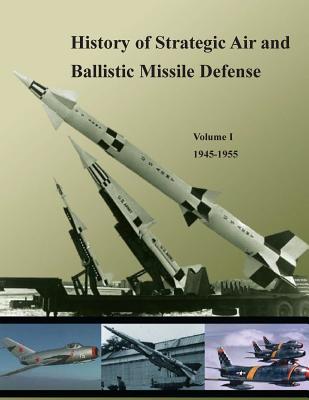
History of Strategic Air and Ballistic Missile Defense: Volume I 1945-1955
In 1975, U.S. Army Center of Military History commissioned a report on the History of Strategic Air and Ballistic Missile Defense, Volume I (1945-1955) and Volume II (1956-1972), which was part of a larger study of the strategic arms competition that developed between the United States and the Soviet Union after World War II. The report addresses each country's approach to civil defense against the threat from the air and each country's emphasis on specific elements of air defense strategy at various periods between 1945 and 1972. Two central questions concerned the U.S. and Soviet defense planners: "How might we be attacked?" and "How shall we defend our country?"Overall, technological changes were the predominant factor affecting air and missile defense strategy during the period primarily as they related to the developing offensive threat. The scope and pace of technological innovations introduced a measure of uncertainty, placed considerable strain on the stability of the U.S.-Soviet relationship, and raised fundamental challenges to previous concepts of how best to defend the United States. U.S. strategy was built on the variety of new weapon system developments; while Soviet defense trends demonstrated Soviet awareness and responded to developments in U.S. strategic offensive forces.The basic patterns of action were set by initial, and early, strategic choices. Thereafter, the strategic problem centered on technological development. Threat perceptions increasingly involved possible application of new technologies by the Soviets in order to define or delimit future threats. Perceptions of future threats were influenced by the view of available technologies, whether or not the Soviets had demonstrated the capacity to apply them. Available or known technologies were extrapolated to assess future threats. However, a direct action-reaction cycle was not seen as a factor in the development of U.S. and Soviet strategic air and missile defense systems.
PRP: 154.61 Lei

Acesta este Prețul Recomandat de Producător. Prețul de vânzare al produsului este afișat mai jos.
123.69Lei
123.69Lei
154.61 LeiPrimești 123 puncte

Livrare in 2-4 saptamani
Descrierea produsului
In 1975, U.S. Army Center of Military History commissioned a report on the History of Strategic Air and Ballistic Missile Defense, Volume I (1945-1955) and Volume II (1956-1972), which was part of a larger study of the strategic arms competition that developed between the United States and the Soviet Union after World War II. The report addresses each country's approach to civil defense against the threat from the air and each country's emphasis on specific elements of air defense strategy at various periods between 1945 and 1972. Two central questions concerned the U.S. and Soviet defense planners: "How might we be attacked?" and "How shall we defend our country?"Overall, technological changes were the predominant factor affecting air and missile defense strategy during the period primarily as they related to the developing offensive threat. The scope and pace of technological innovations introduced a measure of uncertainty, placed considerable strain on the stability of the U.S.-Soviet relationship, and raised fundamental challenges to previous concepts of how best to defend the United States. U.S. strategy was built on the variety of new weapon system developments; while Soviet defense trends demonstrated Soviet awareness and responded to developments in U.S. strategic offensive forces.The basic patterns of action were set by initial, and early, strategic choices. Thereafter, the strategic problem centered on technological development. Threat perceptions increasingly involved possible application of new technologies by the Soviets in order to define or delimit future threats. Perceptions of future threats were influenced by the view of available technologies, whether or not the Soviets had demonstrated the capacity to apply them. Available or known technologies were extrapolated to assess future threats. However, a direct action-reaction cycle was not seen as a factor in the development of U.S. and Soviet strategic air and missile defense systems.
Detaliile produsului