



- /
- Librarie online
- /
- Carti in engleza
- /
- Science
- /
- Life Sciences
- /
- Anatomy & Physiology
- /
- How Flying Bees Pilot, and other arthropod wonders - Adrian Horridge
How Flying Bees Pilot, and other arthropod wonders
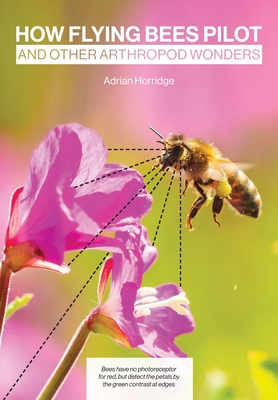
After publishing, with Ted Bullock, the two-volume work on Invertebrate Neurobiology, in 1962 Adrian selected a new topic, and built up a group at St Andrews (and later at the Australian National University), specializing in the optics, neuron anatomy and electrophysiology of the arthropod compound eye, which offered a wide variety of topics.
Neuron anatomy of insect visual systems was a classical study in the early 20th century, but yielded few explanations of how nerve cells, fibres, and their connections could explain anything. The electrophysiology began in mid-century as a novelty and generated a great deal of interesting biophysics of neurons, and their membranes and synapses (useful for medical sciences), but few explanations of the origin of behavioural patterns. The problem was that recordings were of the activity, but the meanings of the messages in the neurons were not revealed except in the peripheral sensory systems.
By 1990, interest had shifted to the perception of colour and recognition of place by the honeybee, which is easily trained to return to a target. This analysis revealed a small number of responsible feature detectors that together revealed the nature of the messages, but not which neurons were active. However, we could explain how honeybees recognize, distinguish, and learn places, including foraging places.
The final step, which is now progressively rolled out in this account of recent discoveries, is the innate detection and analysis of the honeybee's own three-dimensional surroundings, without reward, to detect the positions of surrounding objects from the relative motions caused by parallax as the bees themselves move in flight. This leads to an explanation of the amazing resolution and vast number of axes of the insect eye.
These results further illustrate the advantage of sticking on one natural system or family of research efforts, and become deeply embedded in related topics, because it takes a persistent effort to understand the antiintuitive natural world.
More information is available on my website: www.adrian-horridge.org
PRP: 164.51 Lei

Acesta este Prețul Recomandat de Producător. Prețul de vânzare al produsului este afișat mai jos.
148.06Lei
148.06Lei
164.51 LeiPrimești 148 puncte

Livrare in 2-4 saptamani
Descrierea produsului
After publishing, with Ted Bullock, the two-volume work on Invertebrate Neurobiology, in 1962 Adrian selected a new topic, and built up a group at St Andrews (and later at the Australian National University), specializing in the optics, neuron anatomy and electrophysiology of the arthropod compound eye, which offered a wide variety of topics.
Neuron anatomy of insect visual systems was a classical study in the early 20th century, but yielded few explanations of how nerve cells, fibres, and their connections could explain anything. The electrophysiology began in mid-century as a novelty and generated a great deal of interesting biophysics of neurons, and their membranes and synapses (useful for medical sciences), but few explanations of the origin of behavioural patterns. The problem was that recordings were of the activity, but the meanings of the messages in the neurons were not revealed except in the peripheral sensory systems.
By 1990, interest had shifted to the perception of colour and recognition of place by the honeybee, which is easily trained to return to a target. This analysis revealed a small number of responsible feature detectors that together revealed the nature of the messages, but not which neurons were active. However, we could explain how honeybees recognize, distinguish, and learn places, including foraging places.
The final step, which is now progressively rolled out in this account of recent discoveries, is the innate detection and analysis of the honeybee's own three-dimensional surroundings, without reward, to detect the positions of surrounding objects from the relative motions caused by parallax as the bees themselves move in flight. This leads to an explanation of the amazing resolution and vast number of axes of the insect eye.
These results further illustrate the advantage of sticking on one natural system or family of research efforts, and become deeply embedded in related topics, because it takes a persistent effort to understand the antiintuitive natural world.
More information is available on my website: www.adrian-horridge.org
Detaliile produsului