- /
- Librarie online
- /
- Carti in engleza
- /
- History
- /
- Military
- /
- World War Ii
- /
- Hungary in World War II: Caught in the Cauldron - Deborah S. Cornelius
Hungary in World War II: Caught in the Cauldron
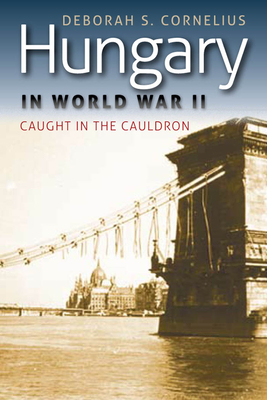
The story of Hungary's participation in World War II is part of a much larger narrative--one that has never before been fully recounted for a non-Hungarian readership. As told by Deborah Cornelius, it is a fascinating tale of rise and fall, of hopes dashed and dreams in tatters. Using previously untapped sources and interviews she conducted for this book, Cornelius provides a clear account of Hungary's attempt to regain the glory of the Hungarian Kingdom by joining forces with Nazi Germany--a decision that today seems doomed to fail from the start. For scholars and history buff s alike, Hungary in World War II is a riveting read.
Cornelius begins her study with the Treaty of Trianon, which in 1920 spelled out the terms of defeat for the former kingdom. The new country of Hungary lost more than 70 percent of the kingdom's territory, saw its population reduced by nearly the same percentage, and was stripped of five of its ten most populous cities. As Cornelius makes vividly clear, nearly all of the actions of Hungarian leaders during the succeedingdecades can be traced back to this incalculable defeat. In the early years of World War II, Hungary enjoyed boom times--and the dream of restoring the Hungarian Kingdom began to rise again. Caught in the middle as the war engulfed Europe, Hungary was drawn into an alliance with Nazi Germany. When the Germans appeared to give Hungary much of its pre-World War I territory, Hungarians began to delude themselves into believing they had won their long-sought objective. Instead, the final year of the world war brought widespread destruction and a genocidal war against Hungarian Jews. Caught between two warring behemoths, the country became a battleground for German and Soviet forces. In the wake of the war, Hungary suffered further devastation under Soviet occupation and forty-five years of communist rule. The author first became interested in Hungary in 1957 and has visited the country numerous times, beginning in the 1970s. Over the years she has talked with many Hungarians, both scholars and everyday people. Hungary in World War II draws skillfully on these personal tales to narrate events before, during, and after World War II. It provides a comprehensive and highly readable history of Hungarian participation in the war, along with an explanation of Hungarian motivation: the attempt of a defeated nation to relive its former triumphs.
PRP: 251.92 Lei

Acesta este Prețul Recomandat de Producător. Prețul de vânzare al produsului este afișat mai jos.
226.73Lei
226.73Lei
251.92 LeiPrimești 226 puncte

Livrare in 2-4 saptamani
Descrierea produsului
The story of Hungary's participation in World War II is part of a much larger narrative--one that has never before been fully recounted for a non-Hungarian readership. As told by Deborah Cornelius, it is a fascinating tale of rise and fall, of hopes dashed and dreams in tatters. Using previously untapped sources and interviews she conducted for this book, Cornelius provides a clear account of Hungary's attempt to regain the glory of the Hungarian Kingdom by joining forces with Nazi Germany--a decision that today seems doomed to fail from the start. For scholars and history buff s alike, Hungary in World War II is a riveting read.
Cornelius begins her study with the Treaty of Trianon, which in 1920 spelled out the terms of defeat for the former kingdom. The new country of Hungary lost more than 70 percent of the kingdom's territory, saw its population reduced by nearly the same percentage, and was stripped of five of its ten most populous cities. As Cornelius makes vividly clear, nearly all of the actions of Hungarian leaders during the succeedingdecades can be traced back to this incalculable defeat. In the early years of World War II, Hungary enjoyed boom times--and the dream of restoring the Hungarian Kingdom began to rise again. Caught in the middle as the war engulfed Europe, Hungary was drawn into an alliance with Nazi Germany. When the Germans appeared to give Hungary much of its pre-World War I territory, Hungarians began to delude themselves into believing they had won their long-sought objective. Instead, the final year of the world war brought widespread destruction and a genocidal war against Hungarian Jews. Caught between two warring behemoths, the country became a battleground for German and Soviet forces. In the wake of the war, Hungary suffered further devastation under Soviet occupation and forty-five years of communist rule. The author first became interested in Hungary in 1957 and has visited the country numerous times, beginning in the 1970s. Over the years she has talked with many Hungarians, both scholars and everyday people. Hungary in World War II draws skillfully on these personal tales to narrate events before, during, and after World War II. It provides a comprehensive and highly readable history of Hungarian participation in the war, along with an explanation of Hungarian motivation: the attempt of a defeated nation to relive its former triumphs.
Detaliile produsului