



- /
- Librarie online
- /
- Carti in engleza
- /
- Poetry
- /
- Asian
- /
- Japanese
- /
- Indigo: Tanka Poetry - Mariko Kitakubo
Indigo: Tanka Poetry
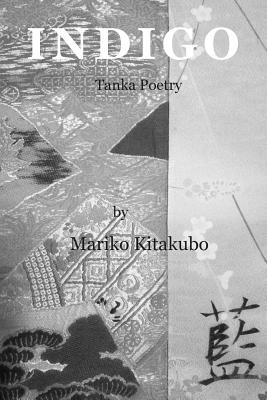
Indigo: Tanka Poetry
"The Japanese, for over a thousand years, have composed the tanka and considered it their most important form of poetry. In the nineteenth century, the spread of European poetry induced many Japanese poets to doubt that a poem in only thirty-one syllables could be anything more than the record of a momentary sensation. Ishikawa Takuboku, though famous as a rebel poet, answered the doubters, "Although a tanka may last only a second, it is a second that will not return again, no matter how long one lives. I believe that such moments are to be cherished, I do not wish to let them escape." He added somewhat cynically, "One of the few blessings that we Japanese enjoy is having the tanka." Takuboku retained the traditional thirty-one syllables of the tanka but divided them into three lines, instead of the traditional single line, giving the form greater dramatic possibilities. The poems of Mariko Kitakubo, both in Japanese and in English, contain a combination of the thousand year old and the most modern. Her Japanese poems have the traditional number of syllables and the English poems are divided into five lines as in tanka: ga no kage no/ fui ni ookiku/ nari yukeri/ aragai gataki/ houyou no nochi suddenly the shadow of a moth growing larger- after an embrace difficult to resist The Japanese poems are in ancient, not modern speech. But the division of the poems into two sections in the Japanese and five in English makes the poems seem strikingly modern. Mention of a moth, an insect appealing to English poets but shunned by Japanese poets, may seem to separate the two worlds, but the embrace brings them together." ---Donald Keene "Mariko KItakubo's sixth book of tanka is a masterpiece of disquiet and profound yearning. It's poetry speaks to the human condition in an era that has just begun to understand, and attempt to divert and remedy, a ruination that evidence shows mankind itself has inflicted on the planet. Indigo leaves us gazing with longing upon our own disappearance into the existential drifts of time and materiality. Kitakubo writes, "my motherland / will be a coffin / of the stormy wind" and points to "the light rain / of radiation" to show us how "history is settling / in the bottom of the river." She sees herself as "an infinitesimal / splash in the dust" and outlines in images of stark finality a vision of sunflower seeds and a people-less planet "after the dream / of civilization." Here is poetry that steps with courage and passion into the forum
PRP: 124.00 Lei

Acesta este Prețul Recomandat de Producător. Prețul de vânzare al produsului este afișat mai jos.
111.60Lei
111.60Lei
124.00 LeiPrimești 111 puncte

Livrare in 2-4 saptamani
Descrierea produsului
"The Japanese, for over a thousand years, have composed the tanka and considered it their most important form of poetry. In the nineteenth century, the spread of European poetry induced many Japanese poets to doubt that a poem in only thirty-one syllables could be anything more than the record of a momentary sensation. Ishikawa Takuboku, though famous as a rebel poet, answered the doubters, "Although a tanka may last only a second, it is a second that will not return again, no matter how long one lives. I believe that such moments are to be cherished, I do not wish to let them escape." He added somewhat cynically, "One of the few blessings that we Japanese enjoy is having the tanka." Takuboku retained the traditional thirty-one syllables of the tanka but divided them into three lines, instead of the traditional single line, giving the form greater dramatic possibilities. The poems of Mariko Kitakubo, both in Japanese and in English, contain a combination of the thousand year old and the most modern. Her Japanese poems have the traditional number of syllables and the English poems are divided into five lines as in tanka: ga no kage no/ fui ni ookiku/ nari yukeri/ aragai gataki/ houyou no nochi suddenly the shadow of a moth growing larger- after an embrace difficult to resist The Japanese poems are in ancient, not modern speech. But the division of the poems into two sections in the Japanese and five in English makes the poems seem strikingly modern. Mention of a moth, an insect appealing to English poets but shunned by Japanese poets, may seem to separate the two worlds, but the embrace brings them together." ---Donald Keene "Mariko KItakubo's sixth book of tanka is a masterpiece of disquiet and profound yearning. It's poetry speaks to the human condition in an era that has just begun to understand, and attempt to divert and remedy, a ruination that evidence shows mankind itself has inflicted on the planet. Indigo leaves us gazing with longing upon our own disappearance into the existential drifts of time and materiality. Kitakubo writes, "my motherland / will be a coffin / of the stormy wind" and points to "the light rain / of radiation" to show us how "history is settling / in the bottom of the river." She sees herself as "an infinitesimal / splash in the dust" and outlines in images of stark finality a vision of sunflower seeds and a people-less planet "after the dream / of civilization." Here is poetry that steps with courage and passion into the forum
Detaliile produsului