
headerdesktop transportgratuittimer22sep26

MAI SUNT 00:00:00:00

MAI SUNT

X

headermobile transportgratuittimer22sep26

MAI SUNT 00:00:00:00

MAI SUNT

X

Transport GRATUIT la orice comandă

Promotii popup img

Transport GRATUIT🚛💨

ORIUNDE în țară!

🔖Hai la răsfoit

Transport GRATUIT la orice comandă

Into the Archive: Writing and Power in Colonial Peru
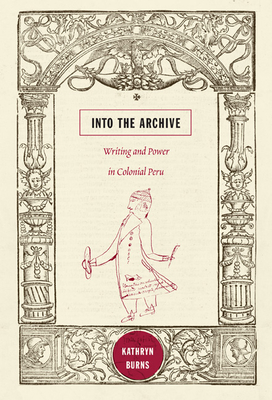
De (autor): Kathryn Burns

Coperta cărții 'Into the Archive: Writing and Power in Colonial Peru - Kathryn Burns'
Into the Archive: Writing and Power in Colonial Peru

De (autor): Kathryn Burns

Writing has long been linked to power. For early modern people on both sides of the Atlantic, writing was also the province of notaries, men trained to cast other people's words in official forms and make them legally true. Thus the first thing Columbus did on American shores in October 1492 was have a notary record his claim of territorial possession. It was the written, notarial word--backed by all the power of Castilian enforcement--that first constituted Spanish American empire. Even so, the Spaniards who invaded America in 1492 were not fond of their notaries, who had a dismal reputation for falsehood and greed. Yet Spaniards could not do without these men. Contemporary scholars also rely on the vast paper trail left by notaries to make sense of the Latin American past. How then to approach the question of notarial truth?

Kathryn Burns argues that the archive itself must be historicized. Using the case of colonial Cuzco, she examines the practices that shaped document-making. Notaries were businessmen, selling clients a product that conformed to local "custom" as well as Spanish templates. Clients, for their part, were knowledgeable consumers, with strategies of their own for getting what they wanted. In this inside story of the early modern archive, Burns offers a wealth of possibilities for seeing sources in fresh perspective.

Citește mai mult

-10%

transport gratuit

PRP: 325.04 Lei

!

Acesta este Prețul Recomandat de Producător. Prețul de vânzare al produsului este afișat mai jos.

292.54Lei

292.54Lei

325.04 Lei

Primești 292 puncte

Important icon msg

Primești puncte de fidelitate după fiecare comandă! 100 puncte de fidelitate reprezintă 1 leu. Folosește-le la viitoarele achiziții!

Livrare in 2-4 saptamani

Descrierea produsului

Writing has long been linked to power. For early modern people on both sides of the Atlantic, writing was also the province of notaries, men trained to cast other people's words in official forms and make them legally true. Thus the first thing Columbus did on American shores in October 1492 was have a notary record his claim of territorial possession. It was the written, notarial word--backed by all the power of Castilian enforcement--that first constituted Spanish American empire. Even so, the Spaniards who invaded America in 1492 were not fond of their notaries, who had a dismal reputation for falsehood and greed. Yet Spaniards could not do without these men. Contemporary scholars also rely on the vast paper trail left by notaries to make sense of the Latin American past. How then to approach the question of notarial truth?

Kathryn Burns argues that the archive itself must be historicized. Using the case of colonial Cuzco, she examines the practices that shaped document-making. Notaries were businessmen, selling clients a product that conformed to local "custom" as well as Spanish templates. Clients, for their part, were knowledgeable consumers, with strategies of their own for getting what they wanted. In this inside story of the early modern archive, Burns offers a wealth of possibilities for seeing sources in fresh perspective.

Citește mai mult

S-ar putea să-ți placă și

De același autor

Părerea ta e inspirație pentru comunitatea Libris!

Acum se comandă

Noi suntem despre cărți, la fel este și

Newsletter-ul nostru.

Abonează-te la veștile literare și primești un cupon de EXTRA -10% reducere pentru viitoarea ta comandă!

Mă abonez image one
Mă abonez image one
Accessibility Logo