



- /
- Librarie online
- /
- Carti in engleza
- /
- Social Science
- /
- Ethnic Studies
- /
- African American Studies
- /
- Invisible War - Y. N. Kly
Invisible War
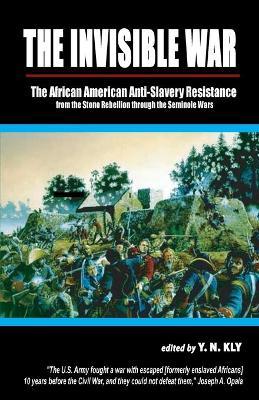
Invisible War
The Invisible War attempts to redress a fundamental misconception lodged in the heart of American historiography: the notion that there was no significant collective resistance to or struggle against slavery by captured Africans who had been forcibly immigrated to the United States from the mother continent. Such a lacuna may stem from the extent to which then-contemporary records sought to disguise the true nature of what are presently called the Seminole Wars--as just another set of Indian wars, rather than a struggle of African resistance to slavery, conducted in alliance with Indian resistance to ongoing colonial encroachment.While academic and public understanding celebrate the heroes of the Underground Railroad for facilitating the movement of Africans towards freedom in the north, there is virtual silence surrounding the more logical, more sizeable, and more politically significant movement of self-liberated Africans southward to free territories in what is now Georgia and Florida. From these southern territories, communities of free Africans were to wage a constant struggle against the slavery-based colonies to the north. Both by force of arms and by example, they represented an ongoing threat to the existence of Anglo-Carolinian-institutionalized slavery. In witness whereof, a scant 40 years after the termination of the Third Seminole War, African fighters would ally with the northern armies during the Civil War in order to finally bring the enslavement system to an end. While any government at war might censor and reinterpret conflicts in order to quell public fears and solicit support, why has subsequent American scholarship failed to challenge the records, emphases and interpretations of the so-called Seminole Wars? Why hasn't it replaced the old "master-slave" lexicon governing ethnic relations--which reflected Anglo-Carolinian efforts during the enslavement period to codify and legalize the institutions of slavery--with more objective contemporary terminology? This book challenges contemporary scholars to free the history of African Americans from the lexicon of enslavement, and to set the record of their struggle straight.
PRP: 117.49 Lei

Acesta este Prețul Recomandat de Producător. Prețul de vânzare al produsului este afișat mai jos.
93.99Lei
93.99Lei
117.49 LeiPrimești 93 puncte

Indisponibil
Descrierea produsului
The Invisible War attempts to redress a fundamental misconception lodged in the heart of American historiography: the notion that there was no significant collective resistance to or struggle against slavery by captured Africans who had been forcibly immigrated to the United States from the mother continent. Such a lacuna may stem from the extent to which then-contemporary records sought to disguise the true nature of what are presently called the Seminole Wars--as just another set of Indian wars, rather than a struggle of African resistance to slavery, conducted in alliance with Indian resistance to ongoing colonial encroachment.While academic and public understanding celebrate the heroes of the Underground Railroad for facilitating the movement of Africans towards freedom in the north, there is virtual silence surrounding the more logical, more sizeable, and more politically significant movement of self-liberated Africans southward to free territories in what is now Georgia and Florida. From these southern territories, communities of free Africans were to wage a constant struggle against the slavery-based colonies to the north. Both by force of arms and by example, they represented an ongoing threat to the existence of Anglo-Carolinian-institutionalized slavery. In witness whereof, a scant 40 years after the termination of the Third Seminole War, African fighters would ally with the northern armies during the Civil War in order to finally bring the enslavement system to an end. While any government at war might censor and reinterpret conflicts in order to quell public fears and solicit support, why has subsequent American scholarship failed to challenge the records, emphases and interpretations of the so-called Seminole Wars? Why hasn't it replaced the old "master-slave" lexicon governing ethnic relations--which reflected Anglo-Carolinian efforts during the enslavement period to codify and legalize the institutions of slavery--with more objective contemporary terminology? This book challenges contemporary scholars to free the history of African Americans from the lexicon of enslavement, and to set the record of their struggle straight.
Detaliile produsului