- /
- Librarie online
- /
- Carti in engleza
- /
- Social Science
- /
- General
- /
- K'Iche': A Study in the Sociology of Language - M. Paul Lewis
K'Iche': A Study in the Sociology of Language
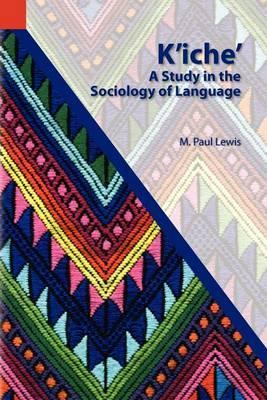
K'Iche': A Study in the Sociology of Language
The author presents a comprehensive look at language use and attitudes among the Kiche people of Guatemala. The book combines qualitative and quantitive analyses to test two hypotheses: (1) that K'iche' and Spanish are in a stable diglossic relationship and (2) that there is a significant relationship between language use and degree of acceptance of modern (i.e., nontraditional) identity factors in K'iche' communities. The study examines seven K'iche' communities, using the field notes and observational data collected over a two-year period. The analysis of the qualitative data follows the framework of Ethnolinguistic Vitality Theory. The quantitive analysis is based on Fishman's notion of domains of use (who speaks what to whom and when). This book will appeal to sociolinguists interested in factors affecting language maintenance and shift, Mayanists who are involved in current efforts to revitalize and maintain the languages of Guatemala, and language planners and policy makers who desire to trace the outworkings of language policy decisions in an actual language-use context. M. Paul Lewis earned a Ph.D. in Linguistics from Georgetown University, Washington D.C. He began fieldwork in Guatemala in 1975 and has worked among the K'iche', Uspanteko, and Ixil peoples in Guatemala. He was the International Sociolinguistics Coordinator, 1996-2002 and is currently an International Sociolinguistics Consultant.
PRP: 241.49 Lei

Acesta este Prețul Recomandat de Producător. Prețul de vânzare al produsului este afișat mai jos.
193.19Lei
193.19Lei
241.49 LeiPrimești 193 puncte

Livrare in 2-4 saptamani
Descrierea produsului
The author presents a comprehensive look at language use and attitudes among the Kiche people of Guatemala. The book combines qualitative and quantitive analyses to test two hypotheses: (1) that K'iche' and Spanish are in a stable diglossic relationship and (2) that there is a significant relationship between language use and degree of acceptance of modern (i.e., nontraditional) identity factors in K'iche' communities. The study examines seven K'iche' communities, using the field notes and observational data collected over a two-year period. The analysis of the qualitative data follows the framework of Ethnolinguistic Vitality Theory. The quantitive analysis is based on Fishman's notion of domains of use (who speaks what to whom and when). This book will appeal to sociolinguists interested in factors affecting language maintenance and shift, Mayanists who are involved in current efforts to revitalize and maintain the languages of Guatemala, and language planners and policy makers who desire to trace the outworkings of language policy decisions in an actual language-use context. M. Paul Lewis earned a Ph.D. in Linguistics from Georgetown University, Washington D.C. He began fieldwork in Guatemala in 1975 and has worked among the K'iche', Uspanteko, and Ixil peoples in Guatemala. He was the International Sociolinguistics Coordinator, 1996-2002 and is currently an International Sociolinguistics Consultant.
Detaliile produsului