








- /
- Librarie online
- /
- Carti in engleza
- /
- Computers
- /
- Programming Languages
- /
- Xml
- /
- Learn XPath Fast: A beginner-friendly, exercise-based course for people who want to use XPath in Selenium, SQL Server, XQuery or anywher - D. Armstrong
Learn XPath Fast: A beginner-friendly, exercise-based course for people who want to use XPath in Selenium, SQL Server, XQuery or anywher
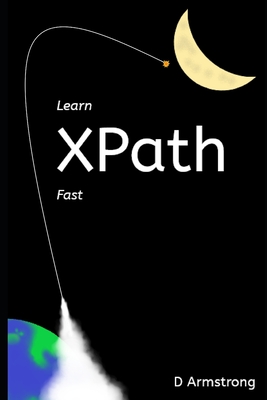
Learn XPath Fast: A beginner-friendly, exercise-based course for people who want to use XPath in Selenium, SQL Server, XQuery or anywher
Let me tell you a story.
A year before this book came out, I had to query some XML in a SQL Server database. So I looked online and found a language called XPath.
XPath was THE way to navigate XML documents. It was what SQL was to databases, what regex was to text. XPath would let me extract the data I needed, using one simple line of code. The only problem was, I couldn't get it to work.
So I started reading about XPath online. I tried out XPath expressions, just to figure out how the language worked. I copied working code posted online, ran it, and got back errors.
In the end, I learned that SQL Server supported XPath 1.0. I'd been trying to use features from version 2.0.
Time passed. I forgot about XPath.
Then I used a tool called Selenium to design automated website tests, and I ran into XPath again. This time, it was my only option for navigating to various parts of a web page. This time, it worked great. It navigated the Html perfectly, using a single-line expression each time.
This was a great tool. I wanted to master it. The problem was, there is a lot more to XPath than there seems. Also, the information I found online was hard to learn from. Often it was incomplete. The more complete sources were written as technical references, not for learners to work through. Some of what I found was misleading, and, sometimes, it was just wrong.
So, I experimented. I ran expressions. I read specifications. I read the specifications they cross-referenced. I took notes. In the end, I did it.
And because I've written a few IT books before, I recorded all of these notes and experiments in an e-book format.
This is the result. It has everything I could think of to help someone master using XPath. It has practice exercises (based on downloadable XML files), so you can learn to use XPath, not just read about it. It has answers to those exercises. It has primers on XML and XML namespaces, so you can brush up on those first.
It's written as a course, so you can go from beginner, all the way to expert, as simply as possible.
I hope you find it useful.
PRP: 185.92 Lei

Acesta este Prețul Recomandat de Producător. Prețul de vânzare al produsului este afișat mai jos.
167.33Lei
167.33Lei
185.92 LeiPrimești 167 puncte

Livrare in 2-4 saptamani
Descrierea produsului
Let me tell you a story.
A year before this book came out, I had to query some XML in a SQL Server database. So I looked online and found a language called XPath.
XPath was THE way to navigate XML documents. It was what SQL was to databases, what regex was to text. XPath would let me extract the data I needed, using one simple line of code. The only problem was, I couldn't get it to work.
So I started reading about XPath online. I tried out XPath expressions, just to figure out how the language worked. I copied working code posted online, ran it, and got back errors.
In the end, I learned that SQL Server supported XPath 1.0. I'd been trying to use features from version 2.0.
Time passed. I forgot about XPath.
Then I used a tool called Selenium to design automated website tests, and I ran into XPath again. This time, it was my only option for navigating to various parts of a web page. This time, it worked great. It navigated the Html perfectly, using a single-line expression each time.
This was a great tool. I wanted to master it. The problem was, there is a lot more to XPath than there seems. Also, the information I found online was hard to learn from. Often it was incomplete. The more complete sources were written as technical references, not for learners to work through. Some of what I found was misleading, and, sometimes, it was just wrong.
So, I experimented. I ran expressions. I read specifications. I read the specifications they cross-referenced. I took notes. In the end, I did it.
And because I've written a few IT books before, I recorded all of these notes and experiments in an e-book format.
This is the result. It has everything I could think of to help someone master using XPath. It has practice exercises (based on downloadable XML files), so you can learn to use XPath, not just read about it. It has answers to those exercises. It has primers on XML and XML namespaces, so you can brush up on those first.
It's written as a course, so you can go from beginner, all the way to expert, as simply as possible.
I hope you find it useful.
Detaliile produsului




