



- /
- Librarie online
- /
- Carti in engleza
- /
- Social Science
- /
- Ethnic Studies
- /
- African American Studies
- /
- Legal Spectatorship: Slavery and the Visual Culture of Domestic Violence - Kelli Moore
Legal Spectatorship: Slavery and the Visual Culture of Domestic Violence
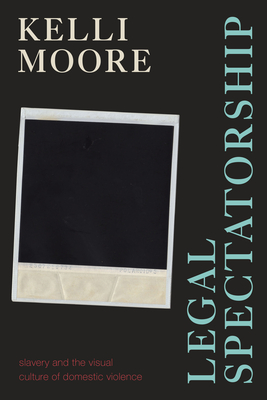
Legal Spectatorship: Slavery and the Visual Culture of Domestic Violence
In Legal Spectatorship Kelli Moore traces the political origins of the concept of domestic violence through visual culture in the United States. Tracing its appearance in Article IV of the Constitution, slave narratives, police notation, cybernetic theories of affect, criminal trials, and the "look" of the battered woman, Moore contends that domestic violence refers to more than violence between intimate partners--it denotes the mechanisms of racial hierarchy and oppression that undergird republican government in the United States. Moore connects the use of photographic evidence of domestic violence in courtrooms, which often stands in for women's testimony, to slaves' silent experience and witnessing of domestic abuse. Drawing on Harriet Jacobs's Incidents in the Life of a Slave Girl, abolitionist print culture, courtroom witness testimony, and the work of Hortense Spillers, Moore shows how the logic of slavery and antiblack racism also dictates the silencing techniques of the contemporary domestic violence courtroom. By positioning testimony on contemporary domestic violence prosecution within the archive of slavery, Moore demonstrates that domestic violence and its image are haunted by black bodies, black flesh, and black freedom. Duke University Press Scholars of Color First Book Award recipient
PRP: 193.12 Lei

Acesta este Prețul Recomandat de Producător. Prețul de vânzare al produsului este afișat mai jos.
173.81Lei
173.81Lei
193.12 LeiPrimești 173 puncte

Livrare in 2-4 saptamani
Descrierea produsului
In Legal Spectatorship Kelli Moore traces the political origins of the concept of domestic violence through visual culture in the United States. Tracing its appearance in Article IV of the Constitution, slave narratives, police notation, cybernetic theories of affect, criminal trials, and the "look" of the battered woman, Moore contends that domestic violence refers to more than violence between intimate partners--it denotes the mechanisms of racial hierarchy and oppression that undergird republican government in the United States. Moore connects the use of photographic evidence of domestic violence in courtrooms, which often stands in for women's testimony, to slaves' silent experience and witnessing of domestic abuse. Drawing on Harriet Jacobs's Incidents in the Life of a Slave Girl, abolitionist print culture, courtroom witness testimony, and the work of Hortense Spillers, Moore shows how the logic of slavery and antiblack racism also dictates the silencing techniques of the contemporary domestic violence courtroom. By positioning testimony on contemporary domestic violence prosecution within the archive of slavery, Moore demonstrates that domestic violence and its image are haunted by black bodies, black flesh, and black freedom. Duke University Press Scholars of Color First Book Award recipient
Detaliile produsului