


- /
- Librarie online
- /
- Carti in engleza
- /
- Science
- /
- Radiation
- /
- Low Dose Radiation: The History of the U.S. Department of Energy Research Program - Antone L. Brooks
Low Dose Radiation: The History of the U.S. Department of Energy Research Program
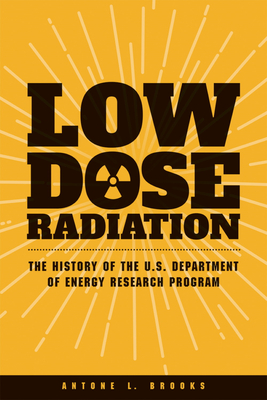
Low Dose Radiation: The History of the U.S. Department of Energy Research Program
Chief Scientist Dr. Antone Brooks and his Low Dose Radiation Research Program team redefined the field, applying advances in instrumentation and molecular biology from the Human Genome Project and developing new technologies to examine cellular responses. Their findings were startling. At low doses, biological reactions are unique and often unrelated to those that occur at high doses. The influential linear-no-threshold model--which predicted that damage from acute exposures can be extrapolated linearly to low dose exposures--was flawed. Small doses of radiation can have an adaptive protective effect. "Hit theory," the idea that radiation only affected cells it directly traversed, yielded to "bystander theory," which hypothesizes that cells communicate with each other and a dose to one affects others surrounding it. Low Dose Radiation describes the program's development, the scientists who made it viable, and the fundamental results, highlighting lessons learned during its lifespan.
PRP: 247.69 Lei

Acesta este Prețul Recomandat de Producător. Prețul de vânzare al produsului este afișat mai jos.
222.92Lei
222.92Lei
247.69 LeiPrimești 222 puncte

Livrare in 2-4 saptamani
Descrierea produsului
Chief Scientist Dr. Antone Brooks and his Low Dose Radiation Research Program team redefined the field, applying advances in instrumentation and molecular biology from the Human Genome Project and developing new technologies to examine cellular responses. Their findings were startling. At low doses, biological reactions are unique and often unrelated to those that occur at high doses. The influential linear-no-threshold model--which predicted that damage from acute exposures can be extrapolated linearly to low dose exposures--was flawed. Small doses of radiation can have an adaptive protective effect. "Hit theory," the idea that radiation only affected cells it directly traversed, yielded to "bystander theory," which hypothesizes that cells communicate with each other and a dose to one affects others surrounding it. Low Dose Radiation describes the program's development, the scientists who made it viable, and the fundamental results, highlighting lessons learned during its lifespan.
Detaliile produsului