- /
- Librarie online
- /
- Carti in engleza
- /
- Art
- /
- European
- /
- Mediterranean Encounters: Artists Between Europe and the Ottoman Empire, 1774-1839 - Elisabeth A. Fraser
Mediterranean Encounters: Artists Between Europe and the Ottoman Empire, 1774-1839
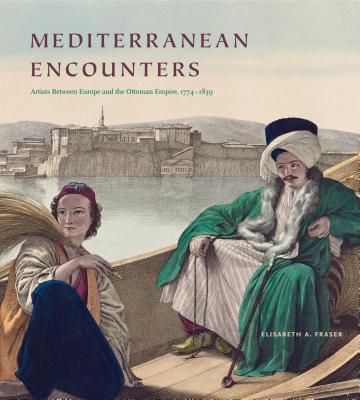
In this volume, Elisabeth Fraser shows that artists and the works they created in the Mediterranean during the late eighteenth and early nineteenth centuries were informed by mutual dependence and reciprocity between European nations and the Ottoman Empire. Her rich exploration of this vibrant cross-cultural exchange challenges the dominant interpretation of European relations with the East during the period, revealing a shared world of fluid and long-sustained interactions.
Voyagers to and from the Ottoman Empire documented their journeys in prints, paintings, and lavishly illustrated travelogues; many of these helped define Europe's self-identified role as heir to Ottoman civilizations and bolstered its presence in the Islamic Mediterranean and beyond. Fraser finds that these works illuminate not only how travelers' experiences abroad were more nuanced than the expansionist ideology with which they became associated, but also how these narratives depicted the vitality of Ottoman culture and served as extensions of Ottoman diplomacy. Ottomans were aware of and responded to European representations, using them to defend Ottoman culture and sovereignty. In embracing the art of both cultures and setting these works in a broader context, Fraser challenges the dominant historiographical tradition that sees Ottoman artists adopting European modes of art in a one-sided process of "Europeanization."
Theoretically informed and rigorously researched, this cross-cultural approach to European and Ottoman art sheds much-needed critical light on the widely disseminated travel images of the era--important cultural artifacts in their own right--and provides a fresh and inviting understanding of the relationships among cultures in the Mediterranean during an era of increasing European expansionism.
PRP: 368.91 Lei

Acesta este Prețul Recomandat de Producător. Prețul de vânzare al produsului este afișat mai jos.
332.02Lei
332.02Lei
368.91 LeiPrimești 332 puncte

Livrare in 2-4 saptamani
Descrierea produsului
In this volume, Elisabeth Fraser shows that artists and the works they created in the Mediterranean during the late eighteenth and early nineteenth centuries were informed by mutual dependence and reciprocity between European nations and the Ottoman Empire. Her rich exploration of this vibrant cross-cultural exchange challenges the dominant interpretation of European relations with the East during the period, revealing a shared world of fluid and long-sustained interactions.
Voyagers to and from the Ottoman Empire documented their journeys in prints, paintings, and lavishly illustrated travelogues; many of these helped define Europe's self-identified role as heir to Ottoman civilizations and bolstered its presence in the Islamic Mediterranean and beyond. Fraser finds that these works illuminate not only how travelers' experiences abroad were more nuanced than the expansionist ideology with which they became associated, but also how these narratives depicted the vitality of Ottoman culture and served as extensions of Ottoman diplomacy. Ottomans were aware of and responded to European representations, using them to defend Ottoman culture and sovereignty. In embracing the art of both cultures and setting these works in a broader context, Fraser challenges the dominant historiographical tradition that sees Ottoman artists adopting European modes of art in a one-sided process of "Europeanization."
Theoretically informed and rigorously researched, this cross-cultural approach to European and Ottoman art sheds much-needed critical light on the widely disseminated travel images of the era--important cultural artifacts in their own right--and provides a fresh and inviting understanding of the relationships among cultures in the Mediterranean during an era of increasing European expansionism.
Detaliile produsului