




headerdesktop cupon27feb26

MAI SUNT 00:00:00:00

MAI SUNT

X

headermobile cupon27feb26

MAI SUNT 00:00:00:00

MAI SUNT

X

Promotii popup img

Cupon activ: MARTISOR20

-20% la tot*

Aplică-l în coș »

Mexican American Mojo: Popular Music, Dance, and Urban Culture in Los Angeles, 1935-1968
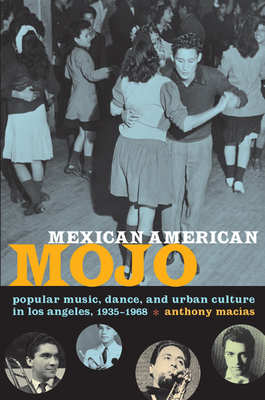
De (autor): Anthony Macas

Mexican American Mojo: Popular Music, Dance, and Urban Culture in Los Angeles, 1935-1968 - Anthony Macías

Mexican American Mojo: Popular Music, Dance, and Urban Culture in Los Angeles, 1935-1968

De (autor): Anthony Macas

Stretching from the years during the Second World War when young couples jitterbugged across the dance floor at the Zenda Ballroom, through the early 1950s when honking tenor saxophones could be heard at the Angelus Hall, to the Spanish-language cosmopolitanism of the late 1950s and 1960s, Mexican American Mojo is a lively account of Mexican American urban culture in wartime and postwar Los Angeles as seen through the evolution of dance styles, nightlife, and, above all, popular music. Revealing the links between a vibrant Chicano music culture and postwar social and geographic mobility, Anthony Macías shows how by participating in jazz, the zoot suit phenomenon, car culture, rhythm and blues, rock and roll, and Latin music, Mexican Americans not only rejected second-class citizenship and demeaning stereotypes, but also transformed Los Angeles.

Macías conducted numerous interviews for Mexican American Mojo, and the voices of little-known artists and fans fill its pages. In addition, more famous musicians such as Ritchie Valens and Lalo Guerrero are considered anew in relation to their contemporaries and the city. Macías examines language, fashion, and subcultures to trace the history of hip and cool in Los Angeles as well as the Chicano influence on urban culture. He argues that a grass-roots "multicultural urban civility" that challenged the attempted containment of Mexican Americans and African Americans emerged in the neighborhoods, schools, nightclubs, dance halls, and auditoriums of mid-twentieth-century Los Angeles. So take a little trip with Macías, via streetcar or freeway, to a time when Los Angeles had advanced public high school music programs, segregated musicians' union locals, a highbrow municipal Bureau of Music, independent R & B labels, and robust rock and roll and Latin music scenes.

Citește mai mult

-10%

transport gratuit

PRP: 392.18 Lei

!

Acesta este Prețul Recomandat de Producător. Prețul de vânzare al produsului este afișat mai jos.

352.96Lei

352.96Lei

392.18 Lei

Primești 352 puncte

Important icon msg

Primești puncte de fidelitate după fiecare comandă! 100 puncte de fidelitate reprezintă 1 leu. Folosește-le la viitoarele achiziții!

Indisponibil

Descrierea produsului

Stretching from the years during the Second World War when young couples jitterbugged across the dance floor at the Zenda Ballroom, through the early 1950s when honking tenor saxophones could be heard at the Angelus Hall, to the Spanish-language cosmopolitanism of the late 1950s and 1960s, Mexican American Mojo is a lively account of Mexican American urban culture in wartime and postwar Los Angeles as seen through the evolution of dance styles, nightlife, and, above all, popular music. Revealing the links between a vibrant Chicano music culture and postwar social and geographic mobility, Anthony Macías shows how by participating in jazz, the zoot suit phenomenon, car culture, rhythm and blues, rock and roll, and Latin music, Mexican Americans not only rejected second-class citizenship and demeaning stereotypes, but also transformed Los Angeles.

Macías conducted numerous interviews for Mexican American Mojo, and the voices of little-known artists and fans fill its pages. In addition, more famous musicians such as Ritchie Valens and Lalo Guerrero are considered anew in relation to their contemporaries and the city. Macías examines language, fashion, and subcultures to trace the history of hip and cool in Los Angeles as well as the Chicano influence on urban culture. He argues that a grass-roots "multicultural urban civility" that challenged the attempted containment of Mexican Americans and African Americans emerged in the neighborhoods, schools, nightclubs, dance halls, and auditoriums of mid-twentieth-century Los Angeles. So take a little trip with Macías, via streetcar or freeway, to a time when Los Angeles had advanced public high school music programs, segregated musicians' union locals, a highbrow municipal Bureau of Music, independent R & B labels, and robust rock and roll and Latin music scenes.

Citește mai mult

S-ar putea să-ți placă și

De același autor

Părerea ta e inspirație pentru comunitatea Libris!

Istoricul tău de navigare

Acum se comandă

Noi suntem despre cărți, și la fel este și

Newsletter-ul nostru.

Abonează-te la veștile literare și primești un cupon de -10% pentru viitoarea ta comandă!

*Reducerea aplicată prin cupon nu se cumulează, ci se aplică reducerea cea mai mare.

Mă abonez image one
Mă abonez image one
Accessibility Logo



